described the crowd and parade as "pretty listless and low-energy," adding that Trump apparel was far more prevalent than Army hats and shirts among attendees.
A household with an annual income of $50,000 can only afford 8.7% of listings in the US, down from 9.4% last year.
Homes are becoming increasingly less affordable for Americans. We need to pass my bill, the Stop Wall Street Landlords Act, to help more American families own…
Be very careful today and this weekend in American cities and tourist locations, especially if you are going to be in DC.
Iran has many sleeper cells in the US. Iranian proxies from HAMAS and Hezbollah will likely retaliate on US soil to kill Americans in acts of Islamic terror…
#UPDATE UN Security Council to meet at 3 PM New York time on the rapidly escalating situation in the Middle East following Israeli strikes against Iran and reported counterstrikes
The tanks are staged and ready to roll. Fencing and barriers are up. Here’s what to expect at the Army’s 250th anniversary parade on President Trump’s birthday. https://t.co/LWMtGDfrmz
No one - and I mean no one - is living a better life than the dog of a married couple who decided not to have kids. 🐾😂
— Thrilla the Gorilla (@ThrillaRilla369) June 13, 2025
Empires rise and fall. True civilization lies not in walls, but in the virtues of those who walk among them—courage, wisdom, justice. Collapse may come, but character endures. Each step, a choice.
After months of rumors and ring wearing, Dua Lipa confirmed that she and Callum Turner recently made a “decision to grow old together.” https://t.co/6ucWc50GA7
True, but you treated @DOGE like it was @neuralink You hire the people, set the vision, create some bombast, put the @SpeakerJohnson in a @WhatsApp group, and you leave, expecting the 2T saving to materialize. Political novice? A 2T Cut https://t.co/0dstvf4AMe@AOC
— Paramendra Kumar Bhagat (@paramendra) June 16, 2025
It's interesting how this terrorist could manage to fool Americans for more than 45 years, and he's still doing it!
Physical Motion and AI Regulation: A Matter of Urgency, Not Futurism
You don’t need a license to ride a bicycle. It’s light, relatively slow, and poses minimal danger to others. But to drive a car? You need a license, insurance, and you must obey traffic laws. If you want to fly a plane, the barriers are even higher. And only a select few are cleared to operate spacecraft.
This layered model of physical motion—from bike to car to airplane to rocket—is a useful metaphor for artificial intelligence regulation.
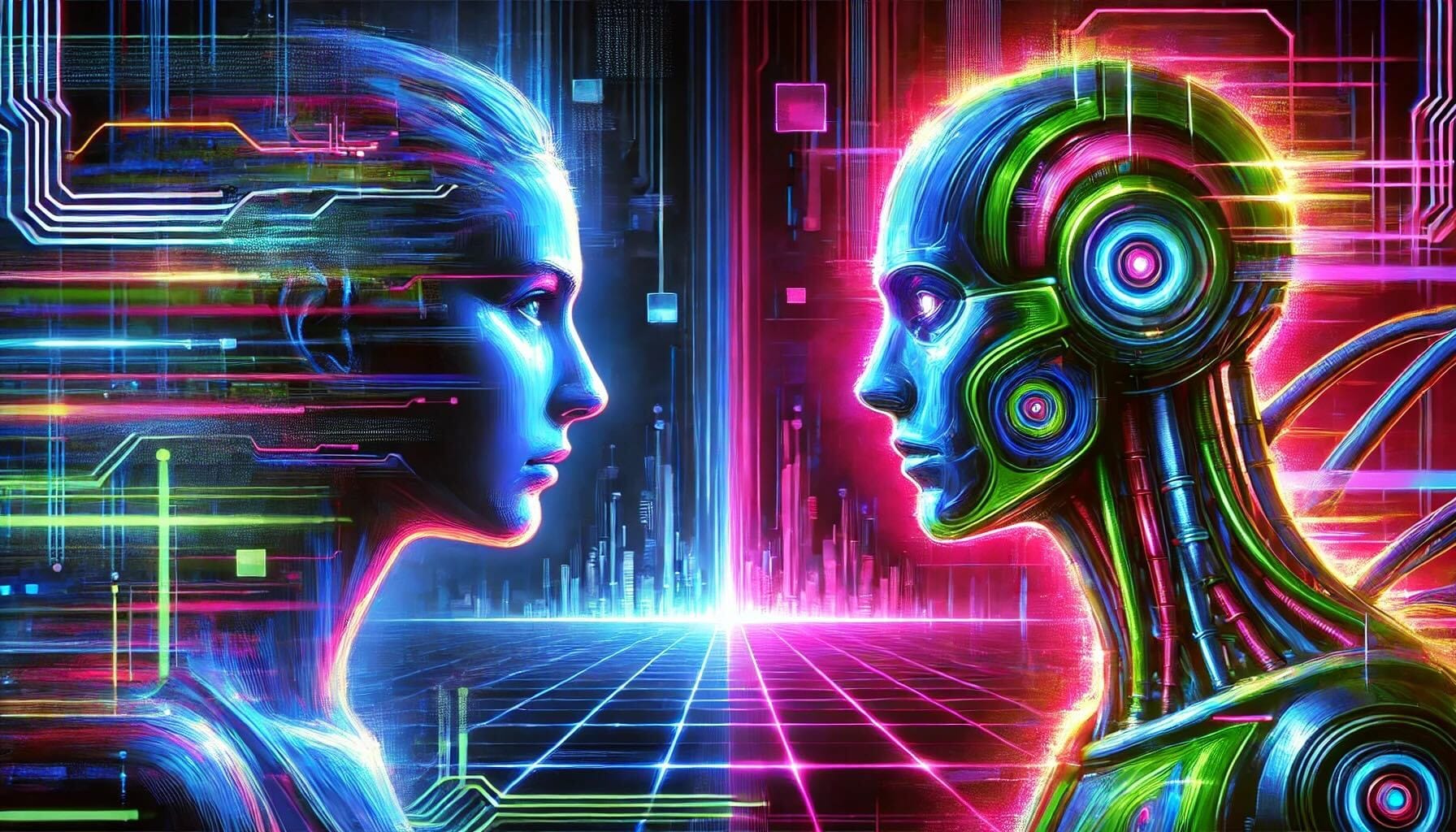
AI today spans a similar spectrum. Some applications are light and low-risk, like using AI to organize your inbox or improve grammar. But as we move up the chain—autonomous vehicles, predictive policing, LLMs capable of influencing elections, or general-purpose models that can replicate, deceive, or act independently—the potential for harm increases dramatically.
We’re entering an era where AI mishaps or misuse could be as catastrophic as nuclear weapons. The threat is not theoretical. It's already here. We’ve seen how pre-ChatGPT social media platforms like Facebook facilitated massive political polarization, disinformation, and even violence. That was before AI could convincingly mimic a human. Now, AI can do more than just shape discourse—it can impersonate, manipulate, and potentially act autonomously.
The idea that we can "figure it out later" is a dangerous illusion. The pace of AI development is outstripping our institutional capacity to respond.
That’s why AI regulation must be tiered and robust, just like the licensing and oversight regimes for transportation. Open-source experimentation? Maybe like riding a bike—broadly permitted with minimal oversight. Mid-level applications with real-world consequences? More like cars—licensed, insured, and regulated. Foundation models and autonomous agents with capabilities akin to nation-state power or influence? These are the rockets. And we need to treat them with that level of seriousness.
But regulation can’t work in isolation. A single nation cannot set guardrails for a technology that crosses borders and evolves daily. Just as nuclear nonproliferation required global coordination, AI safety demands a global consensus. The U.S. and China—despite rivalry—must find common ground on AI safety standards, because failure to do so risks not only accidents but deliberate misuse that could spiral out of control. The United Nations, or a new AI-specific body, may be needed to monitor, enforce, and evolve these standards.
The leading AI companies of the world, along with the leading robotics firms, must not wait for governments to catch up. They should initiate a shared, transparent AI safety framework—one that includes open auditing, incident reporting, and collaborative model alignment. Competitive advantage must not come at the cost of existential risk.
AI is not a gadget. It is a force—one that, if unmanaged, could destabilize economies, democracies, and the human condition itself.
The urgency isn’t theoretical or decades away. The emergency is now. And we need the moral imagination, political will, and technical cooperation to meet it—before the speed of innovation outruns our collective capacity to steer.
1/ You don’t need a license to ride a bike. But to drive a car? You need a license, insurance, and must follow rules. To fly a plane? Much harder. A rocket? Only a rare few. Bikes, cars, planes, rockets. A perfect metaphor for AI regulation. 🧵 @CodeByPoonam@OpenAI
— Paramendra Kumar Bhagat (@paramendra) June 16, 2025
Physical Motion and AI Regulation: A Matter of Urgency, Not Futurism https://t.co/qlekqiim7f
— Paramendra Kumar Bhagat (@paramendra) June 16, 2025
Tesla is undergoing a fundamental transformation—from an electric vehicle manufacturer to a robotics and AI company. CEO Elon Musk is increasingly positioning Tesla as a leader in autonomous driving technology, driven by the belief that a fleet-wide neural network can enable fully driverless cars. Tesla aims to launch up to one million robotaxis by the end of 2026 and recently began limited public testing in Austin, Texas (wsj.com, wsj.com).
Key highlights:
Strategic pivot: Tesla’s future is being anchored in robotics and AI, building on its acclaimed electric vehicle platform .
Robotaxi rollout: Musk has tentatively set June 22, 2025, as the start date for a pilot robotaxi service with 10–20 Model Y vehicles—software-upgraded, driverless on public roads in Austin (wsj.com).
Camera-based autonomy: In contrast to competitors like Waymo and Cruise that use lidar, Tesla relies solely on cameras and its proprietary AI, processing fleet data via its Dojo supercomputer (wsj.com).
Tech and valuation edge: Goldman Sachs praises Tesla’s scalable, cost-effective autonomy setup—claiming robotaxis could run at just $0.40 per mile—though they remain cautious on widespread deployment timelines (investopedia.com).
Commercial challenges: Tesla’s EV sales are softening, with lower Q1 2025 revenue and profit. The bold shift toward autonomy is seen as essential—but still fraught with safety, regulatory, and technological risk .
Competitive landscape: Tesla faces established players like Waymo, which already operates hundreds of robotaxis with strong safety credentials (nypost.com).
Bottom line: Tesla is doubling down on AI and robotics as its defining identity—transitioning from “electric car maker” to “robotics-first company.” Success hinges on executing a safe, reliable roll-out of driverless fleet vehicles by 2026. While the ambition remains massive, Tesla still needs to overcome significant hurdles in trust, regulation, and tech refinement.
Tesla's Fork in the Road: Visions, Realities, and the Race Tesla Can’t Afford to Lose
Tesla was once the undisputed pioneer of electric vehicles, riding a first-mover advantage that stunned the global auto industry into rethinking its future. But that dominance is being tested on multiple fronts—price, vision, competition, and execution. As Elon Musk increasingly leans into AI and robotics as Tesla’s identity, there’s a growing sense that the detour he took through Washington, D.C., and the FSD moonshot have cost the company something more valuable than capital: time.
Tesla's decision to open-source its early EV patents was seen as an altruistic move. And perhaps it was. But there was also a strategic undertone—create a dependence ecosystem that would eventually pull legacy automakers into Tesla’s Full Self-Driving (FSD) orbit. That bet hasn’t paid off. Other automakers—especially BYD—aren’t just resisting the pull; they’re surging ahead with their own platforms. BYD isn’t waiting in line for Tesla’s elusive autonomy package. In China, regulators even forced a name change: from “Full Self Driving” to the more honest “Advanced Assisted Driving.”
Tesla now faces price pressure that it can't dismiss with software updates or brand prestige. BYD is undercutting Tesla significantly and is only kept at bay in the U.S. due to geopolitical restrictions. That buffer won’t last forever. If Tesla is serious about competing globally, it must either meet the price challenge or offer capabilities that clearly justify the premium.
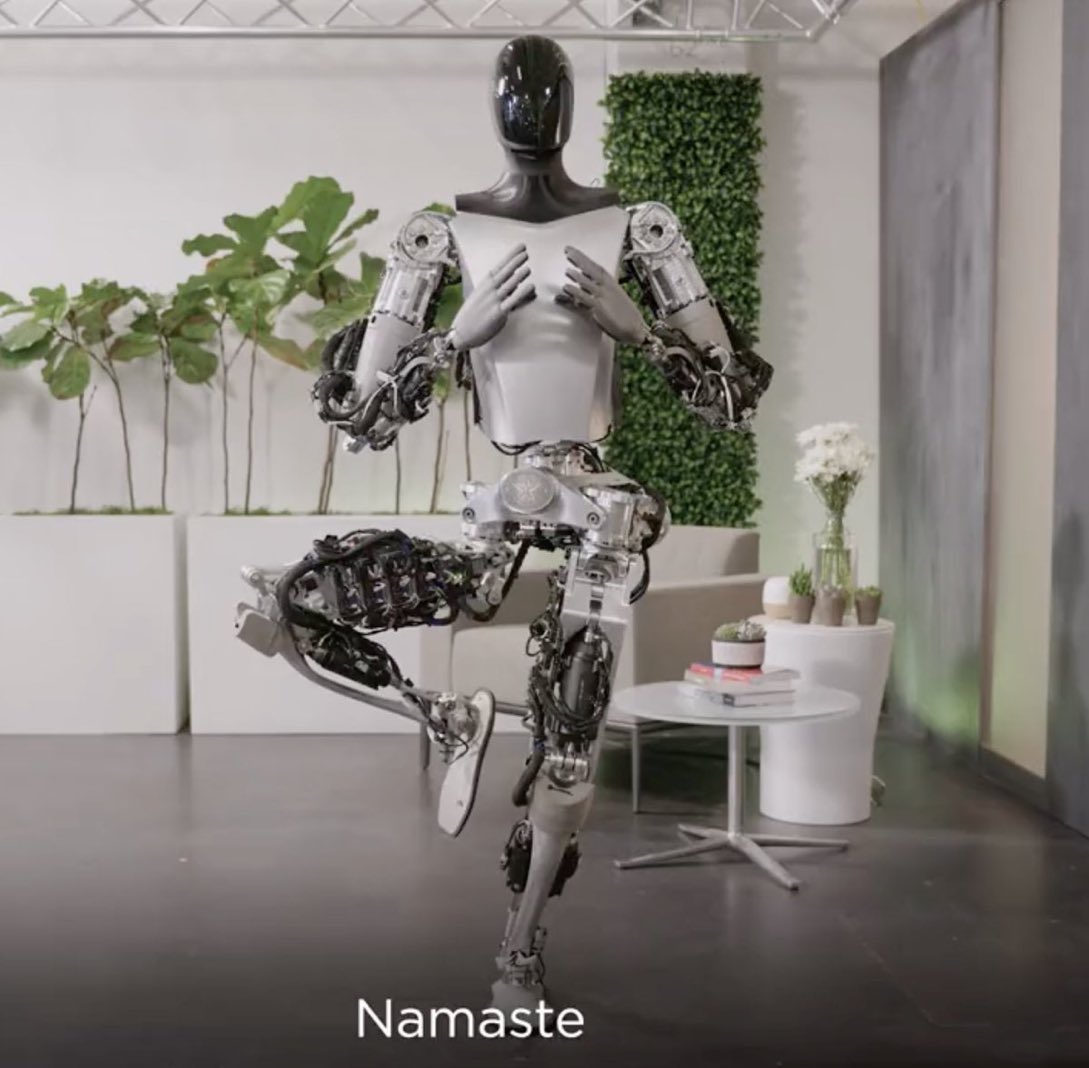
And that brings us to the bigger vision—robotaxis, humanoids, and Dojo-powered autonomy. These are ambitious and potentially trillion-dollar opportunities. But they are not today’s lifeline. Today’s battle is about affordable, scalable EVs. Humanoids are exciting, but they won’t save Tesla from losing the middle-class market. Most useful robots don’t walk on two legs. They sit in warehouses, factories, or hospitals and perform repetitive tasks with reliability—not flair. The edge Tesla seeks here will be hard-fought against Chinese manufacturers who already excel in robotics-driven production and supply chain dominance.
The missing piece is a credible, phased roadmap to FSD. Not just a vision. Not “two years away” forever. Think electric buses with driverless tech on pre-mapped, camera-assisted fixed routes. Think scalable autonomy where the environment helps the vehicle—not total, raw AI bravado. Tesla can lead here—if it gets practical.
Tesla doesn’t need to skip the car market to evolve. But it does need to stop pretending the old rules don’t apply. Price matters. Product timing matters. Execution matters. And right now, Tesla must win the EV war before it can lead the AI arms race. The vision may still be bold. But it must also be grounded.
The road to the future starts with keeping your wheels on the ground.
.@chamath: “I saw @elonmusk on Tuesday, and got to spend a couple hours with him at Tesla … He attracts these incredible men & women to work for him. They are inspiring. Sitting in a meeting and hearing what they're doing was amazing … I would not be sleeping on this company.” pic.twitter.com/TEHcB0RqV0
“I think Elon Musk actually might be a superhero. Almost every business he starts, everyone condemns it to immediate failure. Everyone thinks it's destined to fail. It cannot be achieved. It's always done on a massive grandiose scale with a massive grandiose plan” pic.twitter.com/fNxaAllWkh
— Tesla Owners Silicon Valley (@teslaownersSV) June 13, 2025
Elon Musk in 2018:
“If somebody makes a better electric car than Tesla, so much better than ours that we can't sell our cars, and we go bankrupt, it's still a good thing for the world.” pic.twitter.com/89mU6bGc05
Elon Musk explains why he slept on the Tesla factory floor for 3 years
“I was living in the factory in Fremont and the one in Nevada for three years straight. That was my primary residence. I’m not kidding. Literally. I slept on a couch, and at one point a tent on the roof, but… pic.twitter.com/hnktqtYCw5
Y Combinator is one of the most iconic institutions in the startup world. It has funded over 4,000 startups, including legendary names like Airbnb, Stripe, and Dropbox. It redefined what early-stage acceleration could mean. It made demo day a cultural event. It scaled.
But here’s the uncomfortable truth: Y Combinator never grew up. Yes, it scaled like a factory—like you used to make five ceramic cups and now you produce 50. But scale isn’t evolution. And YC hasn’t evolved for the era we’re in. It was designed for 2005, and it’s still running the same playbook in 2025.
Can the next OpenAI be born inside YC? The answer is clear: No. And here's why that matters.
The Myth of Scalability as Innovation
Y Combinator perfected the pipeline of churning out “fundable” startups, often with minimal innovation risk. You don’t go to YC to build a moonshot—you go to YC to get a bridge round and validation. The model optimizes for safe bets, not world-changing bets.
That’s why the biggest tech bets of the last decade didn’t come from YC:
OpenAI? Born out of an elite coalition of thinkers and capitalists, not a YC batch.
NVIDIA’s AI bet? Vision from within a hardware company with deep technical roots.
DeepMind? U.K.-based and far more academically anchored than YC-style hustle.
SpaceX? Elon didn't start it with $125k and a pitch deck.
YC didn’t—and perhaps couldn’t—incubate these.
The Platform Problem: YC Is Craigslist
YC today is like Craigslist. Once, it was everything—jobs, housing, gigs. But then a thousand verticals unbundled it: Airbnb took housing, LinkedIn took jobs, Uber took rides, and so on.
YC is waiting to be unbundled in the same way.
It is a generalist factory in a world now defined by the intersections of specialized, emerging technologies—AI + biotech, crypto + supply chain, robotics + mental health. These aren’t demo-day darlings. These are decade-long labs. These are fund-and-build platforms. They require long-term, infrastructure-level thinking.
The Old Playbook Can’t Win New Games
YC was built for Web 2.0. It flourished when minimal viable products and agile iterations could quickly lead to market traction. But the new wave of innovation doesn’t move in 3-month cycles. We’re entering a world of:
Pre-trained models that cost tens of millions
Deep tech that requires regulation-savvy founders
Climate tech with long feedback loops
Decentralized protocols with complex incentive engineering
What these ventures need is not YC’s playbook. They need patient capital, deep integration with research institutions, infrastructure support, cross-disciplinary expertise, and a new breed of founder networks.
YC Is IBM. Where’s the Next Apple?
In many ways, YC is IBM now—respected, still powerful, but stagnant. You know what that makes the opportunity? We need 100 new post-YCs. Each one laser-focused on a vertical. Each one optimized for depth, not breadth. Just like Airbnb pulled one vertical out of Craigslist and ran with it, the accelerators of the next decade will do the same with YC.
We’ll see:
An OpenAI-style research-to-commercialization lab for AGI
A biotech founder accelerator with embedded labs and FDA navigation
A climate moonshot studio building infrastructure, not MVPs
A sovereign-technology accelerator for deep geopolitical alignment
Each of these would make YC look like a hobby club for hustlers with slide decks.
Point Be Noted
Let’s not confuse ubiquity with relevance. YC’s continued dominance in the startup discourse is a legacy effect. Its true limitations are masked by volume. But volume is not vision. And in the AI era, in the climate era, in the post-scarcity, post-crypto, post-Web2 world, we need vision.
The most important companies of the next 20 years won’t come out of YC.
They will be born elsewhere—on new platforms, with new rules, under new accelerators that know how to build for complexity, capital intensity, and global impact.
At half the market price, as many engineers as you want. No benefits. Also management help. Which means you get to focus on the spec and design level ..... will allow you to scale fast. A1 talent pool. Best of the best. Commandos.
— Paramendra Kumar Bhagat (@paramendra) June 11, 2025
— Paramendra Kumar Bhagat (@paramendra) June 11, 2025
Hello @gdb@sama I am looking for a corporate sponsor for this blog https://t.co/4tF5jVpW0n 5K/month. You get five OpenAI focused blog posts per month. And a mention in the header. Can I get you interested?
— Paramendra Kumar Bhagat (@paramendra) June 11, 2025
At an upper estimate of $900 billion, YC’s stake would be:
📊 Summary
Assumed Portfolio Valuation
YC’s Stake (7%)
Estimated Worth
$600B
7%
$42 billion
$900B
7%
$63 billion
So, YC’s 7% equity across its ~5,000 companies is likely worth between $42 billion and $63 billion, depending on how you calculate “total portfolio value.”
I can't believe that nobody wanted it in 2016! I published my book Artificial Intuition in early 2017. I had thought the Deep Learning revolution was already in full swing! In fact, Transformers were introduced later that same year. https://t.co/47ksGt6ly7
They want to talk about anything other than the super unpopular thing they are doing. Our job is to continue to talk about the super unpopular thing they are doing. https://t.co/T42WmHrBL1
Opinion: First Lady Melania and Pope Leo are right — it’s “unum” time Unum doesn’t erase conflict or pretend we all agree. It’s not utopia. It’s the hard, daily work of choosing coexistence over chaos ..... a time when America — and the world — feels dangerously divided. ....... Unum means Jewish and Muslim Americans grieving side-by-side. It means a First Lady who grew up Catholic in Slovenia invoking a motto that speaks across American synagogues, mosques and churches alike. It means a Pope who spent years in Latin America calling for peace — not as an abstract dream, but as an urgent task. .......... In moments like these, we face two temptations. One is despair: to give up, to believe the divisions are too deep. The other is rage: to blame, punish and retreat into our tribes. ......... Pope Leo XIV said it plainly: “Be bridgebuilders, peace seekers, and companions on the journey.” That’s not just a prayer. It’s a plan. ......... Because in a world driven by algorithms that divide and outrage that sells, choosing Unum is radical. It means staying at the table when you’d rather storm out. It means believing that pluralism — people of different faiths, races, beliefs and stories — can still build a shared life. ......... belonging isn’t partisan. It’s American. It always has been.




.jpg/1200px-Tesla-optimus-bot-gen-2-scaled_(cropped).jpg)