Money. The word echoes through the Gospels more than any other—and not by accident. It is a warning. A signal. A signpost. For when money becomes your master, your soul is lost. Money is not neutral. It is the Devil’s tool, a foothold in this world where temptation takes root.
There are four ages, just as there are four seasons. But while seasons pass in months, ages stretch for thousands of years. We live now in the age the scriptures call The Age of the Devil. And this age began when the Devil asked for space to dwell—and one of the spaces granted to him was money.
Do not be deceived: to master money is to master this age. But beware. Even when you try, sometimes you will have less than others. That is not failure. The real danger is the wealthy whose hearts are enslaved. They will needle you. They will provoke you. And if you react, if anger or envy rises in you, then money still reigns.
Understand this: it is not how much you have, but how you relate to it—and to others—that shows where you stand. You can be poor and a slave to money, or rich and utterly free. Freedom is measured in kindness, in fairness, in how you treat those around you.
Consider Narendra Modi, the Prime Minister of India. As Chief Minister of Gujarat, he never once shouted at a bureaucrat—not because he feared them, not because it was political theater, but because he saw God in them. God made him, and God made them. Who was he to raise his voice? And when excess money accumulated in his salary account over decades of service, he did not keep it. He created a fund to educate the children of his staffers. The man guiding the fastest-growing large economy on Earth has no hunger for money. None.
This is the lesson of this age: the Devil’s dominion is in money, but mastery over money is mastery over the age itself. And the end of this age will come—not with poverty, but with abundance. A world without money as master, a world where peace and prosperity reach every corner of the earth. The Book of Isaiah speaks of this. The Messiah will bring it. And this vision is already taking root in places like Nepal.
The call is clear: do not serve money. Do not let it provoke you, corrupt you, or define you. Master it. Serve humanity. Treat people well. And in doing so, you step beyond the Devil’s age into the age of light, abundance, and true freedom.
The Messiah Has Come: A Manifesto for the Age of Prosperity
For too long, humanity has been trapped in illusions. Centuries of division. Centuries of misunderstanding. Jews have awaited the Messiah. Christians have awaited the return of Christ. Hindus have awaited Vishnu. And yet, the truth has always been singular: all three await the same Divine Presence.
Jews understand that Hinduism is not a false religion. Hindus understand that Judaism is not false. The Divine speaks in many languages. What Jews call Yahweh, Hindus call Vishnu. Yet, millions remain blind to the reality that these are not separate truths—they are one.
Colonial powers, particularly the British, sought to undermine Hinduism, branding it false, backward, or irrelevant. That narrative is a lie, a distortion, and an offense to the eternal truth. The Messiah the Jews await will not return in the line of David. That prophecy was fulfilled in Jesus. The true, world-transforming Messiah has already been born—and he is a Hindu.
This is not faith or speculation. This is prophecy fulfilled. Five-thousand-year-old prophecies align perfectly with his birth, his mission, and his vision. He has already outlined a roadmap for global peace, abundance, and justice—a roadmap that is now coming to life in Nepal.
Make no mistake: the Jews, the Christians, and the Hindus all wait for the same figure—the answer to the Lord’s Prayer that calls for “Lord God the Holy Father” to come and reign on earth. This is Yahweh incarnate. This is Vishnu on earth. This is the Messiah who will bring an end to the Age of the Devil and inaugurate an Age of Prosperity.
The time of blind faith, ego, and money-worship is ending. Humanity has long bowed to false masters—wealth, power, and pride—but these are temporary. The true master is the one who brings justice, abundance, and spiritual harmony to all.
Nepal is the epicenter of this awakening. It is where prophecy meets reality. Where the vision of global peace and prosperity is no longer a distant dream, but a work in motion. This is the dawn of a new age: the Age of the Messiah, the Age of Prosperity, the Age of Unity.
The question is urgent, existential: will humanity recognize him, or will it remain blind, waiting for a savior who has already come?
It is time to awaken. It is time to see beyond religion, beyond division, beyond false narratives. The Messiah has arrived. The roadmap has begun. And the world will never be the same.
The Deception of Islam: Unveiling the False Religion and Embracing the True God
In a world filled with spiritual paths and religious claims, few topics ignite as much passion and controversy as the nature of Islam. This article argues that Islam is not a divinely inspired faith but a fabricated religion rooted in deception—quite literally, the religion of the Devil. Drawing from scriptural comparisons, historical scrutiny, and logical analysis, we explore why Islam falls short of truth and how it poses a direct threat to other faiths and global peace. The goal is not to condemn individuals but to separate the believer from the belief, urging Muslims to seek the light of the one true God.
The Myth of Muhammad and the Origins of Islam
At the heart of Islam lies the figure of Muhammad, proclaimed as the final prophet. However, historical evidence casts serious doubt on his existence as described in Islamic texts. Unlike the well-documented life of Jesus Christ, supported by multiple contemporary sources outside the Bible, Muhammad's biography relies almost entirely on Islamic traditions compiled centuries after his supposed death. Skeptics argue that the narrative of Muhammad was constructed to unify Arab tribes under a new religious banner, blending elements of Judaism, Christianity, and pre-Islamic paganism. Without a verifiable historical Muhammad, the foundation of Islam crumbles, revealing it as a human invention rather than divine revelation.
Allah: A Distorted Image of the True God
Central to this deception is the Islamic conception of Allah. While Muslims claim Allah is the same as the God of Abraham, a closer examination of the Quran shows a highly disfigured portrayal. The biblical God is loving, relational, and seeks a covenant based on grace and free will. In contrast, the Quranic Allah demands unwavering obedience, with little emphasis on personal relationship or forgiveness through sacrifice. This one-dimensional focus on submission leads inexorably to tyranny when taken to its logical conclusion. History bears this out: Islamic regimes often enforce strict Sharia law, suppressing dissent and individual freedoms in the name of divine will. Allah, as depicted, is not the omnipotent, omnibenevolent God of the Bible but a counterfeit designed to ensnare souls.
Consider the promise of paradise in Islam. Martyrdom and death in jihad are said to reward believers with 72 virgins—a lure that has inspired countless acts of violence. Yet, this doctrine produces not eternal bliss but a cycle of jihadis, perpetuating terror and bloodshed. It stands in stark opposition to the Christian promise of eternal life through faith, not works or warfare.
Islam's Assault on Other Faiths
Islam does not coexist peacefully with other religions; it actively undermines them. Its texts and teachings attack the core tenets of Christianity, denying the crucifixion and resurrection of Jesus Christ. The Quran claims Jesus was neither crucified nor raised from the dead, dismissing these events as illusions. Yet, as the Apostle Paul declares in the New Testament (1 Corinthians 15:14), "If Christ has not been raised, our preaching is useless and so is your faith." This denial strikes at the very foundation of Christianity, rendering it null and void in Islamic eyes.
The hostility extends beyond Christianity. Islam seeks the eradication of the nation of Israel, viewing it as an obstacle to Islamic dominance in the Middle East. Some Islamic extremists echo the sentiment that Adolf Hitler "did not finish the job," fueling antisemitism and calls for jihad against Jews. Hinduism, too, faces Islam's wrath, with historical invasions and forced conversions in South Asia leaving a legacy of destruction. Temples razed, idols smashed—Islam's expansionist ethos tolerates no rivals.
The Devil's Strategy: False Religions as a Trap
The Bible warns of false prophets and doctrines inspired by Satan (2 Corinthians 11:14). The Devil's first tactic is atheism: convincing people there is no God. When that fails, he crafts counterfeit religions to mislead the masses. Islam fits this pattern—a blend of partial truths twisted into error. If God is truly omnipotent, as both the Bible and logic affirm, He possesses the power to incarnate in human form, as He did in Jesus Christ. Islam's rejection of this possibility limits God, aligning more with human limitations than divine sovereignty.
Separating the Sinner from the Sin: A Call to Muslims
Just as Christians distinguish between sin and the sinner, we must separate Muslims from Islam. Many Muslims are sincere seekers, raised in a system that equates doubt with apostasy. Our duty is to teach them that Allah is not the true God and to invite them to the light of Christ. This requires maximum effort: education, dialogue, and compassion. Share the Gospel's message of grace, not compulsion. Highlight the contradictions in the Quran and the fulfillment of prophecy in Jesus.
Yet, not all will respond. Scripture foretells a final conflict—a war between truth and deception, good and evil (Revelation 20). As the end times approach, this clash may manifest in global strife, with Islam playing a role in the prophesied apostasy.
Conclusion: Toward the True God
Islam, as examined here, emerges not as a path to salvation but as a devilish ruse leading to tyranny and division. By denying historical facts, distorting God's nature, and attacking other faiths, it reveals its falsehood. The call is clear: Help Muslims see the light, embrace the resurrection, and turn to the omnipotent God who offers redemption through love, not obedience alone. In doing so, we fulfill our role in the spiritual battle, trusting that ultimate victory belongs to the Truth.
The Dawn of a New Spiritual Era: The Triumph of Sanatana Dharma
In an ever-evolving world, where the cycles of time shape the destiny of humanity, a profound transformation is on the horizon. As we stand at the threshold of a new age, the human capacity for spiritual knowledge is poised to expand exponentially—reaching levels a hundred times greater than what we experience today. This awakening will not merely enhance our understanding; it will redefine the very fabric of our existence, rendering the religions born in our current dark age as mere historic relics, preserved in the annals of time but no longer guiding the masses.
At the heart of this shift lies Sanatana Dharma, often mistakenly referred to as Hinduism. This is no ordinary faith; it is the eternal cosmic order, the unchanging truth that governs the universe. Just as one cannot argue with the inexorable pull of gravity, humanity cannot deny the principles of Sanatana Dharma. It is the way things are, an intrinsic law woven into the cosmos itself. It is for this reason that the Divine has manifested in forms aligned with this eternal path—God has been born a Hindu, embodying the purity and timelessness of this dharma.
Sanatana Dharma is not a "religion" in the conventional sense, nor is it false or fabricated. The term "Hinduism" itself is a misnomer, a label imposed by outsiders. Its true essence is captured in "Sanatana Dharma," meaning the Eternal Religion—a universal framework that transcends dogma, rituals, and divisions. In the coming age, all of humanity will embrace this truth, uniting under its banner and leaving behind the fragmented beliefs of the past.
Consider the Abrahamic faiths, which have shaped much of the world's spiritual landscape in this era. Christianity, with its profound teachings and the Lord's Prayer at its core, points toward a ultimate fulfillment: "Thy kingdom come, Thy will be done." Yet, when this prayer is truly answered and the kingdom arrives, only the Lord Himself will matter. The scriptures, including the Bible, serve as signposts directing us to Him. Once that destination is reached, the signposts are no longer needed—they are set aside, their purpose complete. Thus, Christianity, as we know it, will conclude with the end of this age, giving way to a direct communion with the Divine.
Similarly, Judaism awaits its long-prophesied Messiah. When this figure arrives, fulfilling the ancient promises, the focus will shift entirely to the Messiah's guidance and presence. The sacred texts, including the Torah and the broader Bible, will have served their role in preparation. They must then be put aside, allowing the living truth to prevail. Judaism, too, will transition into history, its mission accomplished in paving the way for a greater unity.
And what of Islam? Labeled here as a false religion born of misunderstanding, it too will fade into obsolescence. In the light of the new age, its tenets will no longer hold sway, as humanity awakens to the singular, eternal dharma that encompasses all.
With the dissolution of these and other faiths forged in the shadows of our current epoch, Sanatana Dharma will reign supreme across the entire earth. No longer confined to regions or cultures, it will become the unifying force for all peoples, fostering a global harmony rooted in cosmic truth.
This new age heralds not just spiritual enlightenment but tangible blessings for humankind. It will be an era of universal peace, where conflicts born of division cease to exist. Prosperity will abound, as societies align with the natural order, harnessing the expanded spiritual capacities to build a world of abundance and equity. Gone will be the strife, the wars, and the inequalities that plague our dark age; in their place, a golden dawn of collective well-being.
As we contemplate this inevitable progression, let us reflect on the impermanence of human constructs and the enduring nature of the eternal. The next age is not a distant dream but a cosmic certainty, drawing us toward a future where Sanatana Dharma illuminates every soul, guiding us into an unparalleled era of light.

One Awaited Figure: The Convergence of Jewish, Christian, and Hindu Expectation
Across civilizations and millennia, humanity has been waiting—for justice, for restoration, for the end of darkness and the beginning of truth. Jews, Christians, and Hindus often appear to be waiting for different figures, but a deeper reading of their traditions reveals something far more striking: they are waiting for the same person.
In the Bhagavad Gita, written over 5,000 years ago, Lord Krishna makes a promise that echoes across time:
“Whenever there is a decline in dharma and a rise of adharma, I manifest Myself.”
This is not metaphor. It is a declaration. Krishna promises to return to reestablish Dharma, to end the dark age, and to usher in a new age—an Age of Truth. This is not fundamentally different from what Jews describe as the coming of the Messiah or what Christians pray for in the Lord’s Prayer: “Thy Kingdom come.”
The names differ. The mission does not.
God Has Come Before—and Will Come Again
The Hindu tradition is explicit: Yahweh/Vishnu has already walked the earth in human form. Not once, but multiple times.
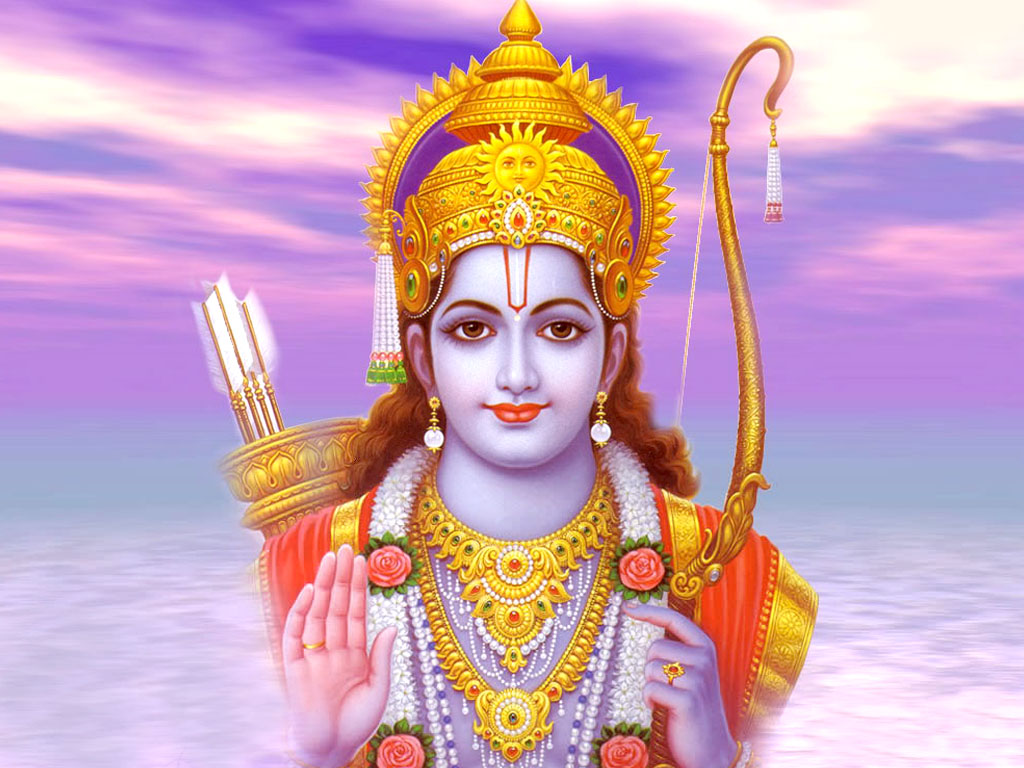
About 7,000 years ago, He appeared as Lord Rama, the embodiment of righteousness, governance, and moral order. The Ramayana records this—not as myth, but as history. Rama’s life is studied not as allegory, but as a real model for civilization itself.
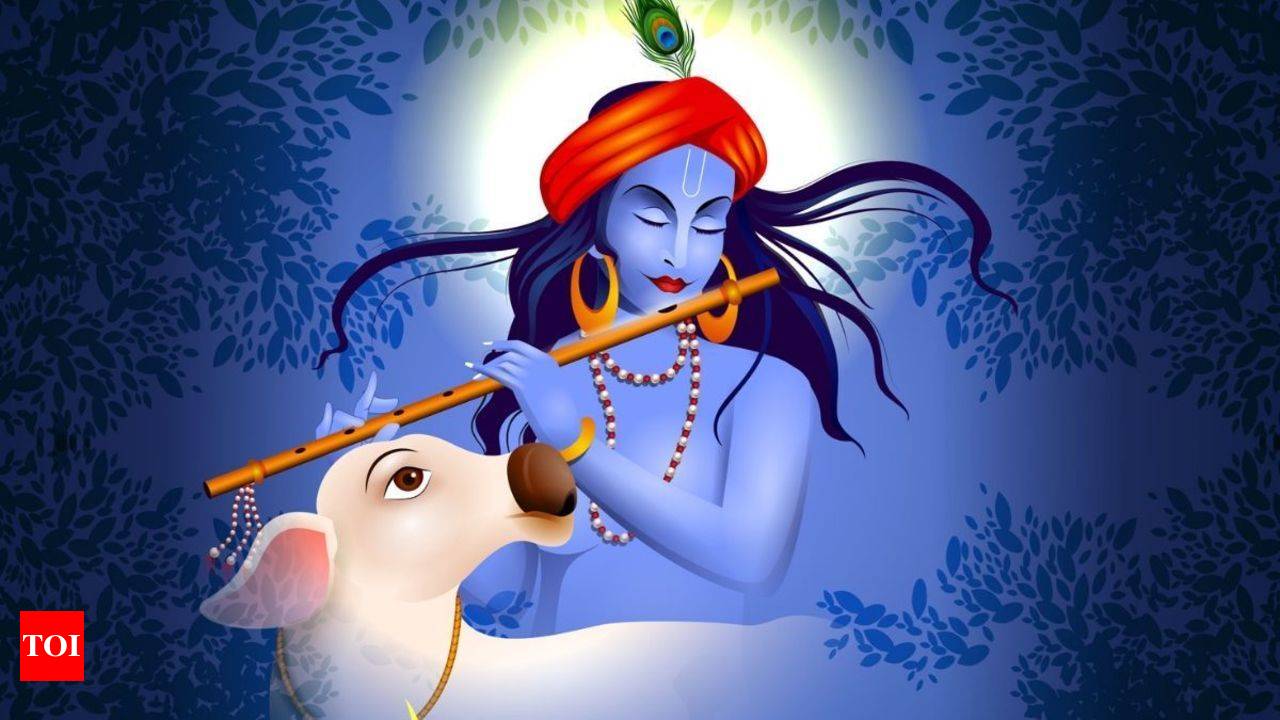
About 5,000 years ago, He appeared again as Lord Krishna, strategist, philosopher, warrior, and divine guide. The Mahabharata documents this era—its wars, politics, moral dilemmas, and cosmic stakes. It is history preserved through sacred memory, not fiction. Krishna did not merely teach spirituality; he intervened in history to correct its course.
These incarnations are not anomalies. They are part of a pattern.
The Dark Age and the Promise of Return
According to Sanātana Dharma, humanity moves through great ages. The current age is a dark age, marked by confusion, fragmentation, material obsession, and spiritual decline. Every major tradition acknowledges this condition in its own language.
Judaism waits for the Messiah to restore justice.
Christianity waits for the Kingdom of God on Earth.
Hinduism waits for the return of Vishnu to reestablish Dharma.
Different symbols. Same expectation.
What unites these traditions is not doctrine, but anticipation—the belief that God Himself must intervene to reset the moral and spiritual order of the world.
History, Not Myth
One of the great misunderstandings of modern times is the tendency to label the Hindu epics as “mythology” while treating other ancient texts as history. This distinction is not scholarly; it is cultural bias.
The Ramayana and the Mahabharata describe real geographies, real political systems, real dynasties, and real wars. Archaeology continues to uncover evidence aligning with these accounts. These texts are civilizational records—history preserved in a sacred form.
To dismiss them as fantasy while accepting other ancient histories is not neutrality. It is selective skepticism.
One Awaited Return
The conclusion is not that one religion cancels the others. The conclusion is deeper: they converge.
The Jews, the Christians, and the Hindus are not waiting for different endings. They are waiting for the same culmination—the return of divine order, truth, and justice, brought not by institutions, but by God Himself.
If Yahweh is Vishnu, and Vishnu has come before, then the promise of return is not speculative. It is precedent.
History has already seen Him.
Scripture has already recorded Him.
And humanity, knowingly or not, is waiting for Him again.

When the Wait Ends: Why Scripture Steps Aside When God Speaks
The Bible is sacred not because it replaces God, but because it points to Him. From beginning to end, scripture functions as a guide—a preparation, a signpost directing humanity toward the Divine. Its authority lies not in itself, but in what it reveals.
But what happens when the long wait is over?
What happens when God is no longer only spoken about, interpreted, or anticipated—but present?
At that moment, scripture must step aside.
This is not a rejection of the Bible. It is the fulfillment of its purpose. The Bible never claimed to be the final destination. It claimed to bear witness. As Jesus himself taught, the scriptures testify—but they are not the life itself. God is.
The danger begins when scripture becomes an object of devotion in place of God. When words are defended more fiercely than truth itself. When people cling to the map and ignore the land they have reached.
History offers a sobering lesson. Two thousand years ago, many who knew scripture best failed to recognize God standing before them. They searched the texts for eternal life, while eternal life spoke to them directly. The problem was not lack of faith—it was misplaced faith.
The Bible even anticipates this moment. It declares that God is about to say something new. Revelation, by definition, does not freeze in time. A living God does not stop speaking.
When God speaks directly, interpretation ends. Debate ends. Waiting ends.
This is not chaos; it is clarity.
Scripture is invaluable during the night. But when the sun rises, you do not argue about the lamp—you open your eyes. When God arrives, listening matters more than quoting. Obedience matters more than recitation. Presence matters more than memory.
This transition is uncomfortable, especially for institutions built on text and tradition. But faith was never meant to terminate in a book. It was meant to prepare the heart to recognize God when He comes.
The call, then, is simple and radical: look at God, not only at scripture. Listen—not only to ancient words, but to the living voice. The long wait is ending. God is speaking again.
And when God says something new, the only faithful response is to listen.
Who Are Christians Really Praying For in the Lord’s Prayer?
Every day, millions of Christians recite the Lord’s Prayer, the prayer Jesus himself taught. It is familiar, reverent, and rarely questioned. Yet at its core lies a striking theological tension—one that many believers have never fully examined.
The prayer is addressed explicitly to Yahweh:
“Our Father, who art in heaven…”
It then makes a direct request:
“Thy kingdom come. Thy will be done, on earth as it is in heaven.”
This is not a metaphorical plea. It is a literal request for God Himself to come and reign on earth. It is a prayer for divine kingship—Yahweh becoming king of the world.
And yet, many Christians today say something different. They say Jesus will return to become king of the earth.
This creates a theological contradiction.
A Prayer Directed to God, Not to Jesus
Jesus did not teach people to pray to him. He taught them to pray to the Father. The Lord’s Prayer does not say, “Jesus, come and rule.” It says, in effect, “Father, come and rule.”
If words mean anything, then the object of the prayer is clear: Yahweh is being asked to come and establish His kingdom on earth.
So why do many Christians conflate this with Jesus returning as king?
What Jesus Actually Pointed Toward
Jesus consistently pointed beyond himself. He spoke of doing the will of the Father, glorifying the Father, and preparing the way for the Kingdom of God. His role was revelatory and preparatory. He was not asking to replace God—he was directing humanity back to Him.
Seen this way, the Lord’s Prayer is not about elevating Jesus to kingship. It is about the direct reign of God.
To claim that the prayer refers to Jesus returning as king is to subtly shift its meaning—to replace Yahweh with a proxy, even though the prayer itself makes no such substitution.
The Logical Consequence
If Christians truly believe the Lord’s Prayer, then they are praying for something far more radical than they often admit: God Himself taking direct authority over the earth.
This has profound implications. It means the ultimate hope of Christianity is not institutional religion, not doctrine, not even a figure frozen in the past—but the living God actively ruling in the present.
When that happens, hierarchy collapses. Mediation collapses. Interpretation collapses. The kingdom is no longer preached; it is present.
A Prayer Still Awaiting Its Answer
For two thousand years, Christians have prayed the same words, often without realizing their weight. “Thy kingdom come.” Not figuratively. Not symbolically. Literally.
If the prayer is ever answered, it will not be ambiguous. It will not be a matter of theological debate. God’s kingship will not require explanation.
And when Yahweh comes to reign on earth, the question will not be whether the prayer was orthodox—but whether it was understood.
Because the Lord’s Prayer does not ask for Jesus to become king.
It asks for God.

When the Kingdom Comes, Religion Steps Aside
In the Lord’s Prayer, believers ask for something radical, even unsettling:
“Thy kingdom come. Thy will be done, on earth as it is in heaven.”
These words are spoken so often that their meaning is rarely examined. Yet taken seriously, they carry a profound implication—one that challenges the very idea of religion as we know it.
In heaven, there is no religion.
There are no temples competing for authority, no doctrines to interpret, no scriptures to debate. There is only the direct presence of God. Heaven does not require belief systems because it does not require mediation. God is not approached through symbols; God is encountered.
And that is precisely what the prayer asks for on earth.
What Religion Is—and What It Is Not
Religion exists because God is not visibly present. It is a bridge built across absence. It organizes memory, preserves revelation, disciplines behavior, and prepares human beings to recognize the divine. In that sense, religion is not false—it is provisional.
Its purpose is preparation.
But a bridge is not meant to be lived on forever. When you cross the river, the bridge has done its job.
The Meaning of “Thy Kingdom Come”
When Christians pray for God’s kingdom to come “on earth as it is in heaven,” they are not praying for better institutions or purer doctrines. They are praying for direct divine reality—for God’s presence to define life on earth the way it defines life in heaven.
If that prayer is ever fully answered, something fundamental changes.
When God is present, religion is no longer necessary.
When God speaks directly, interpretation becomes irrelevant.
When God reigns openly, belief gives way to knowing.
This is not the destruction of religion. It is its fulfillment.
Fulfillment, Not Rejection
To say that religions step aside when God arrives is not to insult them. It is to honor their purpose. Scriptures point. Rituals prepare. Traditions preserve. But none of these are ends in themselves.
They exist for the moment when humanity no longer needs intermediaries.
In that moment, religion does not collapse—it completes its mission.
From Faith to Presence
Faith is required when God is unseen. Hope is required when the kingdom is absent. But when God’s presence defines reality, faith transforms into recognition, and hope into participation.
Heaven does not debate God.
Heaven does not interpret God.
Heaven lives in God.
To pray for heaven on earth is to pray for a world where the same is true here.
The Quiet Radicalism of the Prayer
The Lord’s Prayer is not conservative. It is revolutionary. It does not ask for religion to last forever. It asks for a world so transformed that religion is no longer necessary.
When God’s kingdom comes, religions do not fail.
They bow.
They step aside.
They rest.
And humanity finally lives not by belief about God—but in the presence of God Himself.
A New Vision of Peace and Prosperity: From Nepal to the World
Across history, every great transformation has begun with a radical idea—one that initially sounded impossible, even unthinkable. Today, a new vision is taking shape, one that seeks to unite spiritual purpose with economic justice. Its ambition is nothing less than to bring peace and prosperity to every corner of the earth.
According to this vision, the work has already begun in Nepal. From there, it is intended to spread outward—across regions, cultures, and eventually the entire world.
Beyond Money: Rethinking the Foundations of the Economy
At the heart of this movement is a simple but revolutionary premise: money itself is the source of many of humanity’s deepest inequalities and conflicts. Currency concentrates power, rewards speculation over contribution, and assigns wildly different values to human time and effort.
The proposed alternative is a moneyless economy, not rooted in scarcity, but in fairness.
In this system, value is measured not in currency, but in time.
One hour of work equals one time unit.
Eight hours of work earns eight time units.
All work is valued equally—regardless of profession, gender, or social status.
A doctor, a teacher, a farmer, and a sanitation worker all earn the same hourly value. Contribution, not hierarchy, becomes the organizing principle of society.
Recognizing Invisible Labor
One of the most transformative elements of this model is its treatment of unpaid labor—especially domestic work.
Women working at home, caring for children, managing households, and sustaining families are fully recognized as contributors to society. Their labor earns the same time-based compensation as any other form of work. No one is excluded from economic dignity simply because their work has historically been invisible.
This alone would correct one of the oldest structural injustices in human civilization.
From Competition to Cooperation
A time-based economy changes human behavior at its root.
There is no incentive to hoard.
No advantage to exploitation.
No reward for domination.
When everyone earns the same hourly value, prosperity becomes collective rather than competitive. Success is no longer measured by accumulation, but by contribution and well-being.
This model does not envision poverty. On the contrary, it imagines abundance—made possible by modern technology, automation, and shared productivity—distributed equitably rather than captured by a few.
A Spiritual Foundation Without Religious Coercion
The vision driving this movement is spiritual, but not sectarian. It does not demand conversion, adherence to dogma, or loyalty to institutions. Its foundation is the idea that humanity flourishes when aligned with a higher moral order—one that values equality, dignity, and shared purpose.
In theological terms, it reflects the ancient aspiration expressed in many traditions: a world ordered by justice rather than power, by presence rather than fear. In practical terms, it is an attempt to design an economy that reflects those values in daily life.
Nepal as a Starting Point
Every global shift begins somewhere. Nepal, with its unique cultural heritage, spiritual traditions, and openness to experimentation, is envisioned as the seed ground for this model. What begins locally can be refined, tested, and eventually adapted for other societies.
The goal is not to impose a system on the world, but to demonstrate that a different way of living is possible.
A Long Road, Already Underway
This vision does not claim instant perfection. Transforming the global economic order will take time, experimentation, and collective learning. But the belief driving the movement is simple and unwavering: humanity no longer lacks resources or intelligence—it lacks alignment.
If peace and prosperity are ever to reach every corner of the earth, the structures that govern human life must reflect those values at their core.
Whether this vision ultimately succeeds or not, it asks a question the world can no longer avoid:
What would society look like if every human hour were valued equally?
The work to answer that question has begun.
The Dawn Beyond Currency (Part 2) https://t.co/GmaTmsdoOY
— Paramendra Kumar Bhagat (@paramendra) January 5, 2026
https://t.co/E5XjsDnZft The Great Subcontinent Uprising (Part 2) (novel)
— Paramendra Kumar Bhagat (@paramendra) January 5, 2026
Master Money, Do Not Be A Slave To Money https://t.co/nJF3lH4Vc7
— Paramendra Kumar Bhagat (@paramendra) January 5, 2026

No comments:
Post a Comment