Pages

Friday, May 30, 2025

Is Tesla Really a $25 Trillion Company Because of Optimus? A Deep Dive into Elon's Claim


Is Tesla Really a $25 Trillion Company Because of Optimus? A Deep Dive into Elon's Claim

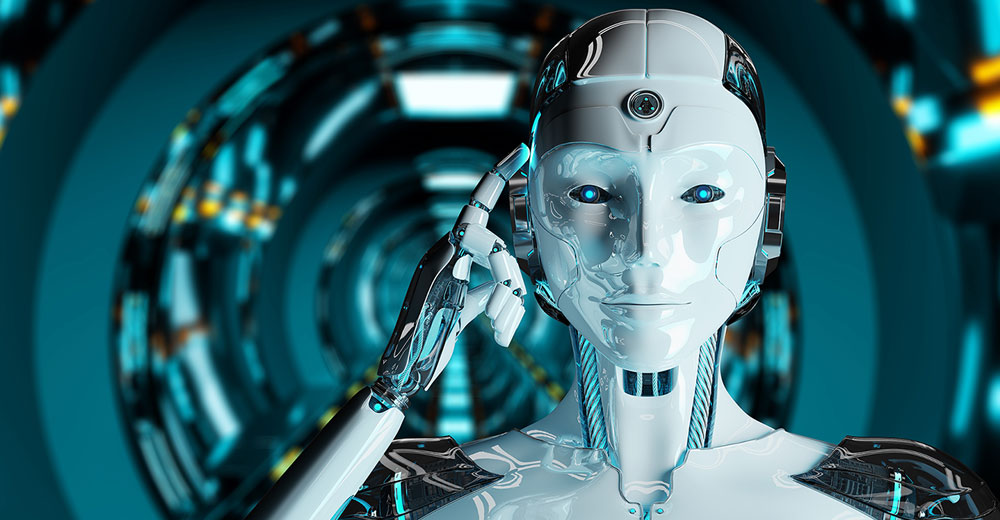
Elon Musk recently claimed that Optimus, Tesla’s humanoid robot project, could push the company’s valuation to $25 trillionmore than half the current S&P 500's combined market cap. That’s not just bold; it's possibly the most ambitious valuation claim in corporate history.

But is it believable? Let’s dissect the claim from multiple angles: technological feasibility, market size, competition, timeline, and Tesla’s real odds of dominance.


1. What Elon Means: A Singular AI-Powered Labor Force

Elon’s argument hinges on a few premises:

  • General-purpose humanoid robots will replace or augment human labor across industries.

  • Tesla will mass-produce millions (or billions) of Optimus units, essentially turning labor into a software problem.

  • Optimus will use Tesla’s vertically integrated AI stack (same as FSD), batteries, hardware, and Dojo training.

  • The result? Tesla captures the lion’s share of the global labor economy, an economy worth tens of trillions of dollars annually.

If Optimus works and becomes dominant, Tesla becomes the biggest company on Earth—potentially bigger than Apple, Microsoft, and Saudi Aramco combined.


2. What Elon Might Be Missing: Market Realities & Competitive Forces

Even if humanoids become as ubiquitous as smartphones or PCs, assuming Tesla will produce all or even most of them is unrealistic. Here’s why:

a. The Rise of Competitors

Many companies—big and small—are already building their own humanoids or robotic solutions:

  • Boston Dynamics (Hyundai): Decades of experience and deep robotics IP.

  • Figure AI: VC darling with OpenAI partnership.

  • Agility Robotics: Backed by Amazon; targeting warehouse and logistics.

  • Sanctuary AI: Canada-based; focused on general-purpose labor.

  • 1X Technologies (Norway): Backed by OpenAI, has humanoids in the field.

  • Apptronik: Partnered with NASA, already in advanced prototyping.

And then there’s China, which sees humanoids as a national strategic priority. Players like UBTech, Fourier Intelligence, and Xiaomi are moving fast.

Expect India, Japan, South Korea, Europe, and countless startups (including stealth-mode ones) to jump in.

This is like assuming IBM would own all of personal computing in the 1980s.


3. The Big Unknown: New Entrants and the Startup Tsunami

The humanoid robotics revolution is not just hardware. It’s AI, cloud, edge computing, energy, and systems integration. This creates a huge opportunity for new players:

  • Just as Apple disrupted IBM, new entrants with novel models—robots-as-a-service (RaaS), open-source humanoids, or local manufacturing—could eat Tesla’s lunch.

  • Think of what Android did to iPhone's early lead in global smartphone penetration.

  • A small startup today could become the future "AWS of robots," providing the intelligence layer.


4. Is the $25 Trillion Valuation Believable?

Let’s crunch the fantasy:

  • Global GDP is ~$110 trillion.

  • Labor accounts for ~60% of that: ~$66 trillion.

  • Even capturing 10% of global labor = $6.6 trillion in annual value.

  • If Tesla takes half that and gets a 5x revenue multiple, you’re at ~$16 trillion. Stretch that further with software margins, network effects, and platform monetization—and $25T becomes plausible, but not probable.

The real question is not whether the value exists—but whether Tesla will monopolize it.


5. Timelines Matter

Elon’s timeline is always... Elon time. For context:

  • In 2019, he said 1 million Robotaxis by 2020. Still waiting.

  • FSD is still not full autonomy.

  • Optimus demos are impressive but far from plug-and-play laborers.

Realistic Timeline:

  • 2025–2027: Optimus starts limited factory work.

  • 2028–2030: Early commercial deployment.

  • 2035+: Mass-market adoption possible—if breakthroughs continue.

Tesla may be first mover, but fast followers often dominate once the market is proven.


6. Platform vs. Product

Tesla’s strategy is classic vertical integration. But long-term, the market might favor platforms over closed ecosystems.

Just like:

  • Android beat iOS in volume.

  • Windows beat Mac in enterprise.

  • AWS beat all in cloud.

An open robotics OS, shared protocols, and customizable hardware might win global scale, not a walled Tesla garden.


Conclusion: A Billion Robots, But Not All Wearing the Tesla Logo

Elon Musk’s $25 trillion Tesla dream via Optimus is not impossible, but it is highly improbable—especially if it rests on near-total market domination. More likely, Tesla will be one of a handful of super-players in the humanoid robot race.

The real winners will be:

  • Those who nail scalability + cost efficiency.

  • Those who can integrate AI + hardware + labor services.

  • Those who create ecosystems, not just products.

Optimus might make Tesla a multi-trillion-dollar company. But the humanoid future will be a crowded playing field, not a one-company parade.


Tesla might be the IBM. But somewhere out there, a robotic Apple or Android is already being built.


The 20% Growth Revolution: Nepal’s Path to Prosperity Through Kalkiism
Rethinking Trade: A Blueprint for a Just and Thriving Global Economy
The $500 Billion Pivot: How the India-US Alliance Can Reshape Global Trade
Trump’s Trade War
Peace For Taiwan Is Possible
Formula For Peace In Ukraine
The Last Age of War, The First Age of Peace: Lord Kalki, Prophecies, and the Path to Global Redemption
AOC 2028: : The Future of American Progressivism

Velocity Money: Crypto, Karma, and the End of Traditional Economics
The Next Decade of Biotech: Convergence, Innovation, and Transformation
Beyond Motion: How Robots Will Redefine The Art Of Movement
ChatGPT For Business: A Workbook
Becoming an AI-First Organization
Quantum Computing: Applications And Implications
Challenges In AI Safety
AI-Era Social Network: Reimagined for Truth, Trust & Transformation

Remote Work Productivity Hacks
How to Make Money with AI Tools
AI for Beginners

View on Threads
View on Threads
View on Threads
View on Threads
View on Threads
View on Threads

30: AI Intimacy

“The world has fundamentally changed” - Nvidia CEO Jensen Huang wants it to be so much more than a chip maker an ambitious road map for the development of AI infrastructure. ....... Nvidia is “not a technology company only anymore, in fact, we’re an essential infrastructure company”. ......... Huang explained that just like electricity and the internet, AI, or “intelligence” will move from being a useful tool, to an essential part of life; “In 10 years time you will look back and you will realize that AI has now integrated into everything and in fact we need AI everywhere.” ........... As such, Nvidia isn’t building data centres anymore. Well, not in the same way. Huang described data centres as ‘data centres of the past,’ that provide information and storage. These are similar to what he envisions in that they come from the same industry, but in the future, these will “emerge as something completely different”. ......... These new AI data centres will be less like the data centres we know now, and more like “AI factories”, Huang argued. ........... “Agentic AI is basically; Understand, think, and act.” Huang explained. “Agentic AI is basically a robot in a digital form. These are going to be really important in the coming years, we're seeing enormous progress in this area.” .......... Moving forward, AI is going to be thinking incredibly fast, as Huang noted, “what used to be oneshot AI is now going to be thinking AI, reasoning AI, inference time scaling AI and that's going to take a lot more computation.” .......... “Nvidia has been scaling computing by about a million times every 10 years and we're still on that track,” Huang. ............ Huang also announced that in partnership with the Taiwanese Government, Foxconn, and TSMC, Nvidia is going to build the first “giant AI supercomputer, here for the AI infrastructure in the AI ecosystem of Taiwan.” ........ Nvidia is leading the charge in AI chips, and the continued investments into infrastructure and components outlines the ambitions for the company to widen its market share of a range of technologies .......... Finally, for corporations without in-house building capabilities, Nvidia is offering detailed blueprints to accelerate the process of building AI factories and infrastructure, helping remove the friction and ensure a seamless transition into the coming “Age of AI.”

How Trump's trade war is upending the global economy February 1 - Trump imposes 25% tariffs on Mexican and most Canadian imports and 10% on goods from China, demanding they curb the flow of fentanyl and illegal immigrants into the United States. .......... February 10 - Trump raises tariffs on steel and aluminum to a flat 25% "without exceptions or exemptions". .......... April 9 - Trump pauses for 90 days most of his country-specific tariffs that kicked in less than 24 hours earlier following an upheaval in financial markets that erased trillions of dollars from bourses around the world. .......... Trump says he will raise the tariff on Chinese imports to 125% from the 104% level that took effect a day earlier. This pushes the extra duties on Chinese goods to 145%, including the fentanyl-related tariffs imposed earlier. .......... May 12 - The U.S. and China agree to temporarily slash reciprocal tariffs. Under the 90-day truce, the U.S. will cut the extra tariffs it imposed on Chinese imports to 30% from 145%, while China's duties on U.S. imports will be slashed to 10% from 125%. .......... May 28 - A U.S. trade court blocked Trump's tariffs from going into effect in a sweeping ruling that the president overstepped his authority by imposing across-the-board duties on imports from U.S trade partners. The Trump administration said it would appeal the ruling. ......... May 29 - A federal appeals court temporarily reinstates the most sweeping of Trump's tariffs, saying it was pausing the lower court's ruling to consider the government's appeal, and ordered the plaintiffs in the cases to respond by June 5 and the administration by June 9.

Velocity Money: Crypto, Karma, and the End of Traditional Economics
The Next Decade of Biotech: Convergence, Innovation, and Transformation
Beyond Motion: How Robots Will Redefine The Art Of Movement
ChatGPT For Business: A Workbook
Becoming an AI-First Organization
Quantum Computing: Applications And Implications
Challenges In AI Safety
AI-Era Social Network: Reimagined for Truth, Trust & Transformation

Remote Work Productivity Hacks
How to Make Money with AI Tools
AI for Beginners

Velocity Money: Crypto, Karma, and the End of Traditional Economics
The Next Decade of Biotech: Convergence, Innovation, and Transformation
Beyond Motion: How Robots Will Redefine The Art Of Movement
ChatGPT For Business: A Workbook
Becoming an AI-First Organization
Quantum Computing: Applications And Implications
Challenges In AI Safety
AI-Era Social Network: Reimagined for Truth, Trust & Transformation

Remote Work Productivity Hacks
How to Make Money with AI Tools
AI for Beginners

Velocity Money: Crypto, Karma, and the End of Traditional Economics
The Next Decade of Biotech: Convergence, Innovation, and Transformation
Beyond Motion: How Robots Will Redefine The Art Of Movement
ChatGPT For Business: A Workbook
Becoming an AI-First Organization
Quantum Computing: Applications And Implications
Challenges In AI Safety
AI-Era Social Network: Reimagined for Truth, Trust & Transformation

Remote Work Productivity Hacks
How to Make Money with AI Tools
AI for Beginners

Velocity Money: Crypto, Karma, and the End of Traditional Economics
The Next Decade of Biotech: Convergence, Innovation, and Transformation
Beyond Motion: How Robots Will Redefine The Art Of Movement
ChatGPT For Business: A Workbook
Becoming an AI-First Organization
Quantum Computing: Applications And Implications
Challenges In AI Safety
AI-Era Social Network: Reimagined for Truth, Trust & Transformation

Remote Work Productivity Hacks
How to Make Money with AI Tools
AI for Beginners

Velocity Money: Crypto, Karma, and the End of Traditional Economics
The Next Decade of Biotech: Convergence, Innovation, and Transformation
Beyond Motion: How Robots Will Redefine The Art Of Movement
ChatGPT For Business: A Workbook
Becoming an AI-First Organization
Quantum Computing: Applications And Implications
Challenges In AI Safety
AI-Era Social Network: Reimagined for Truth, Trust & Transformation

Remote Work Productivity Hacks
How to Make Money with AI Tools
AI for Beginners

Velocity Money: Crypto, Karma, and the End of Traditional Economics
The Next Decade of Biotech: Convergence, Innovation, and Transformation
Beyond Motion: How Robots Will Redefine The Art Of Movement
ChatGPT For Business: A Workbook
Becoming an AI-First Organization
Quantum Computing: Applications And Implications
Challenges In AI Safety
AI-Era Social Network: Reimagined for Truth, Trust & Transformation

Remote Work Productivity Hacks
How to Make Money with AI Tools
AI for Beginners

Velocity Money: Crypto, Karma, and the End of Traditional Economics
The Next Decade of Biotech: Convergence, Innovation, and Transformation
Beyond Motion: How Robots Will Redefine The Art Of Movement
ChatGPT For Business: A Workbook
Becoming an AI-First Organization
Quantum Computing: Applications And Implications
Challenges In AI Safety
AI-Era Social Network: Reimagined for Truth, Trust & Transformation

Remote Work Productivity Hacks
How to Make Money with AI Tools
AI for Beginners

30: Amjad Masad

AI-Era Social Network: The Facebook Killer That Looks Nothing Like Facebook

Why Thinking Big Is the Safest Bet in the Age of AI and Exponential Technologies
AI-Era Social Network: Reimagined for Truth, Trust & Transformation
Corporate Culture/ Operating System: Greatness
Musk’s Management


AI-Era Social Network: The Facebook Killer That Looks Nothing Like Facebook

In the history of innovation, the next big thing often looks nothing like the thing it replaces. That's why predicting disruption is hard—and why incumbents almost always miss it. The public library wasn't replaced by a bigger library. It was replaced by Google. The faster carriage wasn't just a better horse; it was a car. These transformations feel obvious only in hindsight.

So what replaces Facebook?

Not another Facebook. The Facebook killer won't be another social feed with better privacy. It won't be a redesigned timeline or a new algorithm. It will be something entirely different—a platform that integrates truth, trust, and transformation at its core, designed not just to connect us but to elevate us.

We now have tools—AI, Blockchain, open data, decentralized governance—that give us the means to dream bigger. Not just "social" as in updates and likes. But social as in civilization. Culture. Learning. Meaning. Identity. Commerce.

Let’s break this down.


📌 History Is Full of Unlikely Replacements

  • The public library → Google.
    Instead of going to a building, you typed a few words. A universe of knowledge responded instantly.

  • The horse carriage → Car.
    Same core need: move from A to B. Radically different form.

  • Taxi dispatchers → Uber.
    Not better dispatchers. An entirely different layer that redefined access, pricing, and scale.

  • Video rental → Netflix.
    It didn’t just digitize Blockbuster. It killed the very idea of late fees and shelves.

  • Bookshelves → Kindle.
    A thousand books in your pocket. A new metaphor for reading.

  • Phone calls → Messaging apps.
    Short, asynchronous, often with emojis. Human communication, re-skinned.

  • Mail → Email → Slack/Discord.
    Each shift condensed space, time, and attention.

  • Banks → Mobile money (MPesa, UPI).
    You don’t need a bank. You need to move money.

  • TV → YouTube → TikTok.
    Power to the people. Content by anyone, for anyone.

  • Wikipedia → ChatGPT.
    Not just an encyclopedia, but an intelligent conversation with all the world’s knowledge.


🔮 So What Will Replace Facebook?

The next Facebook is already forming—but it looks nothing like Facebook.

It’s an AI-era social network designed from the ground up to fix what broke the old ones:

  • Instead of likes, truth-scoring powered by decentralized AI models.

  • Instead of ads and outrage, algorithmic transparency and intent-aware curation.

  • Instead of surveillance capitalism, user-owned data and sovereign digital identity.

  • Instead of doomscrolling, purposeful learning paths, career tracks, and community challenges.

  • Instead of social media influencers, peer mentors, citizen educators, and AI copilots.

  • Instead of one-size-fits-all feeds, personalized learning and civic dashboards.

  • Instead of platform addiction, time-well-spent design metrics.


🔗 Imagine This Platform

This isn’t just a Facebook killer. It’s a hybrid of:

  • Khan Academy (but personalized by AI and expanded globally)

  • Wikipedia (but gamified, verified, multilingual, and multimodal)

  • LinkedIn (but democratized—accessible to the village girl in Uganda or the boy in Dhaka)

  • Aadhaar + UPI (licensed and deployed as the digital backbone for the Global South)

  • GitHub meets Reddit (community-curated knowledge + open contribution + reputation layers)

It's also a global trust engine—a place where:

  • Farmers in Nigeria build AI-powered cooperatives.

  • Students in Brazil get matched with mentors in real-time.

  • Citizens in Kenya vote on local budgeting with blockchain receipts.

  • Nepali youth co-author multilingual AI textbooks with GPT-powered editors.

  • Diaspora communities bridge remittances and knowledge flows.


🌍 Infrastructure for the Next Billion Minds

The most powerful part? This platform is built for the Global South, from the Global South. We export India’s Aadhaar- and UPI-inspired infrastructure—identity and payments as open-source protocols.

Africa and Latin America skip past the legacy banking system. They skip past paper-based education. They leapfrog straight into an AI-first society—just as they leapfrogged landlines.

A global open identity layer + mobile payments + citizen-owned AI = civilizational leap.


🧠 Tools for Transformation

This isn’t about escaping reality. It’s about enhancing it.

It’s an ecosystem where:

  • Truth can win.

  • Trust is verifiable.

  • Transformation is collective.

This is the age of ambient intelligence, sovereign identity, and regenerative economies. Why should the most powerful tech of our age be used to show us cat videos, mine our attention, and fragment our societies?

Let’s use AI to rebuild what Facebook broke.


🚀 Final Thought: The AI-Era Is Not About Replicating the Past

The next Google was never a better library. The next Facebook will not be Facebook 2.0.

It will be something new—not just a tool, but a movement. A canvas for truth, trust, and transformation. A social operating system for the next billion digital citizens.

Let’s build it.


👉 Want more? Read:
AI-Era Social Network: Reimagined for Truth, Trust & Transformation
A manifesto for what's possible when you combine AI, blockchain, and courage.

10 Trends In ClimateTech


As of mid-2025, ClimateTech is experiencing rapid innovation across multiple sectors. Here are 10 leading trends shaping the industry:


1. AI-Driven Climate Solutions

Artificial Intelligence (AI) is increasingly utilized to tackle climate challenges. Projects funded by initiatives like the Bezos Earth Fund's "AI for Climate and Nature Grand Challenge" are applying AI to areas such as biodiversity monitoring, sustainable agriculture, and weather forecasting. (Axios)


2. Green Steel and Low-Carbon Manufacturing

Innovations in steel production, such as Direct Reduced Iron (DRI) using green hydrogen and electric arc furnaces, are reducing carbon emissions in heavy industries. Companies like Electra and Boston Metal are developing electrolytic processes to produce iron with lower energy consumption and emissions. (Reuters)


3. Long-Duration Energy Storage

To address the intermittency of renewable energy sources, advancements in long-duration energy storage are critical. Technologies like vanadium redox flow batteries and iron-air batteries are being developed to provide stable energy storage solutions. (Visible.vc)


4. Carbon Removal and Offsetting Initiatives

Corporations are investing in carbon offset projects to mitigate their emissions. For instance, Microsoft has committed to purchasing 3.5 million carbon credits over 25 years to support reforestation efforts in Brazil's Amazon and Atlantic forests. (Financial Times)


5. Circular Economy and Sustainable Packaging

Efforts to implement circular economy principles are gaining traction, focusing on reducing waste and promoting recycling. Innovations in sustainable packaging materials and recycling technologies are being scaled to meet corporate sustainability goals. (StartUs Insights)


6. Climate-Smart Agriculture

Agricultural practices are evolving to become more sustainable and resilient. Technologies such as precision farming, vertical agriculture, and AI-powered soil monitoring are enhancing crop yields while reducing environmental impact. (StartUs Insights)


7. Smart Grids and Grid-Enhancing Technologies

The modernization of power grids through smart technologies is improving energy distribution and resilience. Grid-enhancing technologies (GETs) enable better integration of renewable energy sources and enhance the grid's ability to withstand extreme weather events. (arXiv)


8. Hydrogen Economy Expansion

Green hydrogen is emerging as a key component in decarbonizing sectors like transportation and industry. Projects focusing on hydrogen production, storage, and utilization are expanding, supported by policy incentives and technological advancements.


9. Climate Risk Analytics and Insurance

The integration of climate risk analytics into financial services is helping businesses and governments assess and mitigate climate-related risks. This includes the development of climate-specific insurance products and investment strategies. (GlobeNewswire)


10. Quantum Computing for Climate Modeling

Quantum computing is being explored for its potential to enhance climate modeling and sustainability efforts. Quantum algorithms could improve the accuracy of climate predictions and optimize resource management strategies. (arXiv, arXiv)


These trends illustrate the multifaceted approach required to address climate change, involving technological innovation, policy support, and cross-sector collaboration.

30: Jay Shetty

The 20% Growth Revolution: Nepal’s Path to Prosperity Through Kalkiism
Rethinking Trade: A Blueprint for a Just and Thriving Global Economy
The $500 Billion Pivot: How the India-US Alliance Can Reshape Global Trade
Trump’s Trade War
Peace For Taiwan Is Possible
Formula For Peace In Ukraine
The Last Age of War, The First Age of Peace: Lord Kalki, Prophecies, and the Path to Global Redemption
AOC 2028: : The Future of American Progressivism

The 20% Growth Revolution: Nepal’s Path to Prosperity Through Kalkiism
Rethinking Trade: A Blueprint for a Just and Thriving Global Economy
The $500 Billion Pivot: How the India-US Alliance Can Reshape Global Trade
Trump’s Trade War
Peace For Taiwan Is Possible
Formula For Peace In Ukraine
The Last Age of War, The First Age of Peace: Lord Kalki, Prophecies, and the Path to Global Redemption
AOC 2028: : The Future of American Progressivism

Velocity Money: Crypto, Karma, and the End of Traditional Economics
The Next Decade of Biotech: Convergence, Innovation, and Transformation
Beyond Motion: How Robots Will Redefine The Art Of Movement
ChatGPT For Business: A Workbook
Becoming an AI-First Organization
Quantum Computing: Applications And Implications
Challenges In AI Safety
AI-Era Social Network: Reimagined for Truth, Trust & Transformation

Remote Work Productivity Hacks
How to Make Money with AI Tools
AI for Beginners

The 20% Growth Revolution: Nepal’s Path to Prosperity Through Kalkiism
Rethinking Trade: A Blueprint for a Just and Thriving Global Economy
The $500 Billion Pivot: How the India-US Alliance Can Reshape Global Trade
Trump’s Trade War
Peace For Taiwan Is Possible
Formula For Peace In Ukraine
The Last Age of War, The First Age of Peace: Lord Kalki, Prophecies, and the Path to Global Redemption
AOC 2028: : The Future of American Progressivism

Birth Control and Cancer Risk: Understanding the Science Beyond the Headlines

Birth Control and Cancer Risk: Understanding the Science Beyond the Headlines

In recent years, conversations around hormonal birth control and its health implications have become louder—and more polarizing. A viral claim making the rounds online says: “Birth control is now recognized as a Group 1 carcinogen, along with asbestos, tobacco, and alcohol.” That sounds alarming. It suggests that taking hormonal contraception may be as dangerous as chain-smoking or working in a coal mine. But is it true? And more importantly, what does the science actually say?

Let’s unpack the claim, examine the science, and provide a balanced, evidence-based perspective.


What Does “Group 1 Carcinogen” Actually Mean?

The International Agency for Research on Cancer (IARC), part of the World Health Organization (WHO), classifies substances based on the strength of the evidence that they cause cancer in humans—not necessarily how risky they are.

Group 1 means: “There is sufficient evidence that this agent causes cancer in humans.”

This category includes a wide range of things: from tobacco and alcohol to processed meats, sunlight, and even wood dust. Importantly, it doesn’t mean all Group 1 carcinogens are equally dangerous. Risk depends on dosage, duration, individual genetics, and context.

So yes, combined oral contraceptives (COCs)—which contain both estrogen and progestin—are indeed classified as Group 1 carcinogens by IARC. But context matters.


What Does the Research Show?

Scientific studies have linked combined hormonal contraceptives to a slightly increased risk of certain types of cancer, particularly:

  • Breast cancer

  • Cervical cancer

  • Liver cancer

But the same research also shows a decreased risk of:

  • Endometrial cancer

  • Ovarian cancer

  • Colorectal cancer

So, the overall picture is complex. A 2017 New England Journal of Medicine study of 1.8 million women in Denmark found that hormonal contraception increased breast cancer risk by about 20%, which sounds high until you look closer: this translates to roughly 1 extra case of breast cancer per 7,690 women per year.

Meanwhile, other studies suggest that long-term users of the pill may enjoy significant protection against deadly cancers like ovarian and endometrial, with this protection lasting years after stopping use.


Informed Consent: A Legitimate Concern

Now, let’s address the heart of the critique—informed consent and the medical system’s treatment of women’s concerns.

Many women have reported being prescribed hormonal birth control without:

  • Full discussion of risks and benefits

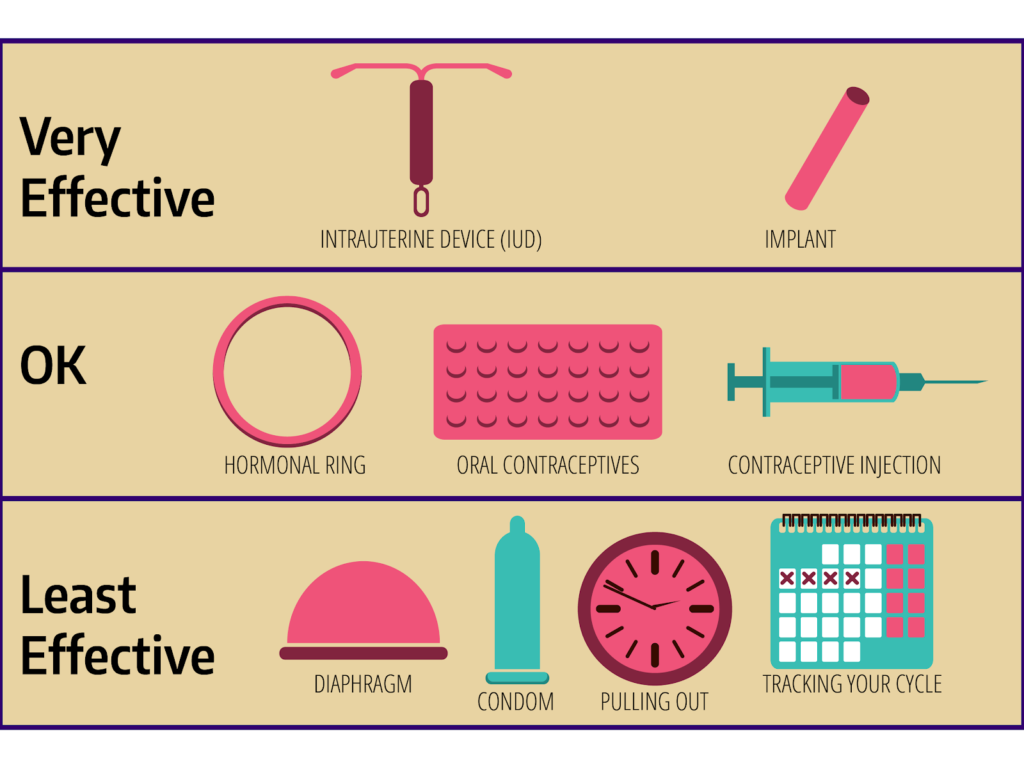
  • Explanation of alternatives (like copper IUDs, fertility tracking, barrier methods, etc.)

  • Adequate attention to side effects such as mood changes, depression, loss of libido, and even suicidal ideation

This isn’t just anecdotal. Research in journals like BMJ and Journal of Affective Disorders has found links between hormonal contraception and increased risk of depression—especially in teenagers.

Women who report these symptoms often say they’re dismissed with statements like “it’s all in your head” or told they’ll “get used to it.” That’s not just bad medicine—it’s disrespectful.


Risk is Not the Same for Everyone

It’s also crucial to remember that not all women face the same level of risk. Factors such as:

  • Family history of cancer

  • Personal history of blood clots

  • Age of first menstruation or childbirth

  • Smoking habits

…all influence how safe or risky hormonal contraception is for any individual.

This is why individualized, respectful, and transparent counseling is essential.


Conclusion: Respect the Science—And the Person

Yes, hormonal birth control is classified as a Group 1 carcinogen. But so is alcohol, and many people still choose to drink in moderation. The key is not to spread fear, but to empower people with accurate, nuanced information.

The science does not support blanket alarmism—but it does support the need for better informed consent, better listening from the medical community, and greater respect for women’s autonomy over their bodies and choices.

Let’s keep the conversation going—but let’s also keep it honest.


Sources:

  • IARC Monograph on the Evaluation of Carcinogenic Risks to Humans, Vol. 91

  • New England Journal of Medicine (Mørch et al., 2017)

  • BMJ: Hormonal contraception and risk of depression (Skovlund et al., 2016)

  • American Cancer Society: Cancer Facts & Figures


30: Rohan Pandey

The 20% Growth Revolution: Nepal’s Path to Prosperity Through Kalkiism
Rethinking Trade: A Blueprint for a Just and Thriving Global Economy
The $500 Billion Pivot: How the India-US Alliance Can Reshape Global Trade
Trump’s Trade War
Peace For Taiwan Is Possible
Formula For Peace In Ukraine
The Last Age of War, The First Age of Peace: Lord Kalki, Prophecies, and the Path to Global Redemption
AOC 2028: : The Future of American Progressivism

Velocity Money: Crypto, Karma, and the End of Traditional Economics
The Next Decade of Biotech: Convergence, Innovation, and Transformation
Beyond Motion: How Robots Will Redefine The Art Of Movement
ChatGPT For Business: A Workbook
Becoming an AI-First Organization
Quantum Computing: Applications And Implications
Challenges In AI Safety
AI-Era Social Network: Reimagined for Truth, Trust & Transformation

Remote Work Productivity Hacks
How to Make Money with AI Tools
AI for Beginners

Velocity Money: Crypto, Karma, and the End of Traditional Economics
The Next Decade of Biotech: Convergence, Innovation, and Transformation
Beyond Motion: How Robots Will Redefine The Art Of Movement
ChatGPT For Business: A Workbook
Becoming an AI-First Organization
Quantum Computing: Applications And Implications
Challenges In AI Safety
AI-Era Social Network: Reimagined for Truth, Trust & Transformation

Remote Work Productivity Hacks
How to Make Money with AI Tools
AI for Beginners

Velocity Money: Crypto, Karma, and the End of Traditional Economics
The Next Decade of Biotech: Convergence, Innovation, and Transformation
Beyond Motion: How Robots Will Redefine The Art Of Movement
ChatGPT For Business: A Workbook
Becoming an AI-First Organization
Quantum Computing: Applications And Implications
Challenges In AI Safety
AI-Era Social Network: Reimagined for Truth, Trust & Transformation

Remote Work Productivity Hacks
How to Make Money with AI Tools
AI for Beginners

Velocity Money: Crypto, Karma, and the End of Traditional Economics
The Next Decade of Biotech: Convergence, Innovation, and Transformation
Beyond Motion: How Robots Will Redefine The Art Of Movement
ChatGPT For Business: A Workbook
Becoming an AI-First Organization
Quantum Computing: Applications And Implications
Challenges In AI Safety
AI-Era Social Network: Reimagined for Truth, Trust & Transformation

Remote Work Productivity Hacks
How to Make Money with AI Tools
AI for Beginners

The 20% Growth Revolution: Nepal’s Path to Prosperity Through Kalkiism
Rethinking Trade: A Blueprint for a Just and Thriving Global Economy
The $500 Billion Pivot: How the India-US Alliance Can Reshape Global Trade
Trump’s Trade War
Peace For Taiwan Is Possible
Formula For Peace In Ukraine
The Last Age of War, The First Age of Peace: Lord Kalki, Prophecies, and the Path to Global Redemption
AOC 2028: : The Future of American Progressivism