Pages

Friday, May 30, 2025

Tesla's Chances Of Licensing Its Full Self-Driving Software

Why Has Tesla’s Full Self-Driving Had So Many False Starts?
Elon Musk's Leadership Mistakes At Tesla
Tesla Self Driving, BYD Assisted Driving
The Tesla Robotaxi Rollout
Self-Driving Showdown: Tesla vs BYD vs Waymo — Who’s Winning the Autonomy Race?
What If the U.S. Let BYD In? Free Trade Meets the EV Disruptor

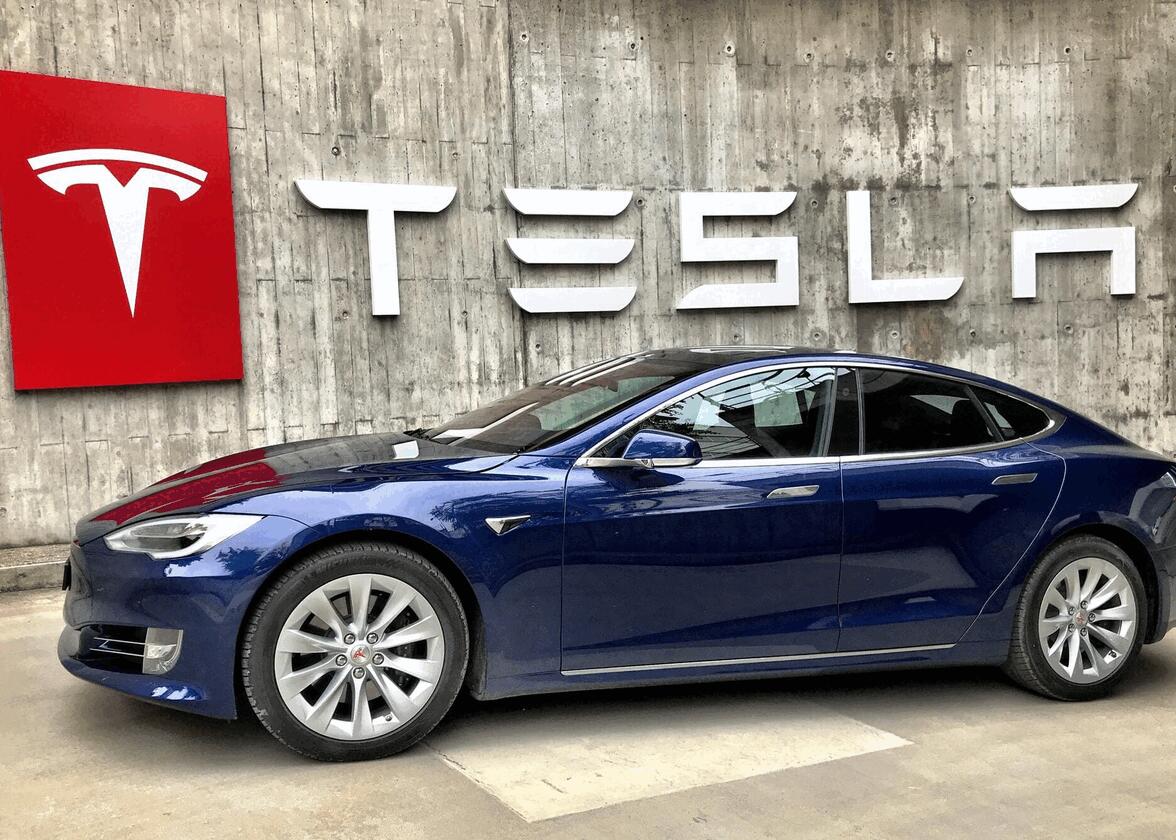
Tesla's prospects for licensing its Full Self-Driving (FSD) software to other electric vehicle (EV) manufacturers are increasingly promising, though not without challenges.

Current Developments

Tesla has confirmed ongoing discussions with at least one major automaker regarding a potential FSD licensing agreement. CEO Elon Musk indicated there's "a good chance" a deal could be finalized within the year. However, even if an agreement is reached soon, integrating FSD into another manufacturer's vehicle lineup could take approximately three years, due to the lengthy product development cycles typical in the automotive industry .(Teslarati, Electrek)

In addition to these talks, other automakers have shown interest in Tesla's FSD technology. For instance, BMW reportedly described a demonstration of Tesla’s FSD as “very impressive,” suggesting that legacy manufacturers are closely monitoring Tesla's advancements .(Not a Tesla App)

Opportunities for Tesla

  • Revenue Potential: Licensing FSD could open a new revenue stream for Tesla, potentially offering higher margins than vehicle sales. This model would allow Tesla to monetize its software expertise across a broader range of vehicles without the capital expenditures associated with manufacturing.(Reddit)

  • Market Influence: By licensing FSD, Tesla could set industry standards for autonomous driving technology, similar to how its North American Charging Standard (NACS) has been adopted by other automakers.

  • Scalability: Tesla's vision-based approach to autonomy, which relies on cameras and neural networks rather than LiDAR, is considered more scalable and cost-effective, making it an attractive option for other manufacturers looking to implement advanced driver-assistance systems .(Teslarati)

Challenges Ahead

  • Technical Integration: Adapting Tesla's FSD software to different vehicle architectures requires significant engineering efforts, including hardware compatibility and software calibration.

  • Regulatory Hurdles: Autonomous driving technologies face varying regulatory landscapes across different regions, which could complicate or delay the deployment of FSD in non-Tesla vehicles.

  • Competitive Alternatives: Other companies, like Mobileye, have already secured partnerships with multiple automakers for their driver-assistance technologies, which could make it more challenging for Tesla to penetrate the market .(Reddit)

Outlook

While no licensing deals have been finalized as of now, the combination of Tesla's technological advancements and growing interest from other automakers suggests that FSD licensing agreements could materialize in the near future. If successful, this strategy could significantly enhance Tesla's influence in the automotive industry and provide substantial financial benefits.

The Next Defining UX Pattern Of The AI Age

Ambient Computing: The Invisible Revolution Powered by AI


That quote captures something profound: we are in a rare moment of UX zero-gravity. Here's a set of intelligent, forward-looking guesses on what might become the next defining UX pattern of the AI age—the "scroll" or "swipe" of tomorrow, but for intelligence:


1. Conversational Interfaces as Operating Systems

  • Pattern: The user no longer clicks or taps. They ask. The interface becomes language-first.

  • How it manifests: You say “Find me a flight, book it, and sync with my calendar,” and the interface acts like a cognitive agent.

  • Why it wins: Natural language collapses complexity. It becomes the universal remote across apps, systems, and devices.


2. Ambient Intent Sensing (Zero UI)

  • Pattern: The user doesn’t even have to ask. The system anticipates and acts based on environmental and behavioral context.

  • Example: You walk into a room, and the lighting adjusts based on your current mood, work schedule, and sleep history.

  • Why it wins: Invisible UX is ultimate UX. Like predictive text on steroids.


3. Multimodal Composition Canvas

  • Pattern: A unified space where users blend voice, sketch, gestures, and typing to collaborate with AI.

  • Example: Think of a dynamic canvas like Figma meets GPT. You speak an idea, draw a rough shape, and the AI fills in logic, code, and design.

  • Why it wins: It allows for expressive, multi-sensory creation. Especially crucial for creators, students, designers, and developers.


4. Persistent AI Companions with Memory

  • Pattern: You interact with the same AI assistant across apps, devices, and time, and it remembers everything.

  • Example: It knows you hate early meetings, love sci-fi, and are prepping a big launch—so it filters all input through that lens.

  • Why it wins: Loyalty and trust emerge when software builds a relationship. The UX becomes relational, not transactional.


5. Ask-Then-Refine Workflows

  • Pattern: Ask for what you want, then nudge the AI toward what you meant—via sliders, toggles, highlights, drag-to-refactor.

  • Example: Generate a slide deck. Then drag to rearrange, click to tweak tone, and highlight sections to regenerate.

  • Why it wins: It balances power with control—giving users final say without overwhelming them.


6. Semantic Object Manipulation

  • Pattern: Users interact with ideas and entities, not files or folders.

  • Example: You don’t open a “doc.” You click on your "market strategy," and all relevant text, research, data visualizations, and timelines come alive in an interactive graph.

  • Why it wins: It mirrors how humans think—by meaning, not by format.


7. Agent-Oriented Interfaces

  • Pattern: Apps fragment into agents with specific goals—each can be instructed, re-prompted, paused, or cloned.

  • Example: One agent plans your trip. Another monitors your inbox. Another manages your investments. You orchestrate them like a conductor.

  • Why it wins: It distributes attention and focus across specialized agents instead of monolithic apps.


8. Intent Graphs

  • Pattern: Behind the scenes, AI builds a real-time, living “intent graph” of what you’re trying to do and adjusts all interface elements accordingly.

  • Example: Searching “renew passport” triggers tools, autofilled forms, deadlines, and booking assistance, not just links.

  • Why it wins: It’s contextual UX at scale—beyond search.


9. Time-Aware UX

  • Pattern: Interfaces that change based on when you’re using them.

  • Example: Your dashboard is minimal in the morning, execution-heavy mid-day, and reflective at night.

  • Why it wins: It aligns with cognitive energy cycles and prioritization windows.


10. Personal AI Portals

  • Pattern: A persistent, customizable AI environment—part memory palace, part cockpit, part creative studio.

  • Example: You "enter" your portal to manage life, projects, goals. Every element has AI-augmentation layered in.

  • Why it wins: It’s the return of the home screen—but intelligent, ambient, and alive.


Final Thought:
We’re moving from point-and-click to think-and-prompt. The UX of the AI age won’t just be about interfaces, but interactions. The biggest shift is not visual—it’s cognitive. The next defining UX pattern will feel less like UI... and more like having a second brain.

Beyond the Battlefield: Unpacking the Overlooked Layers of AI Security


Amanda Robson’s “AI vs. AI: The New Security Paradigm” presents a compelling overview of how AI is reshaping cybersecurity, highlighting areas like AI-powered red teaming, deepfake detection, AI-driven SOCs, and AI vulnerability management. To build upon her insights, this blog post delves into some underexplored dimensions of AI security.(LinkedIn)


Beyond the Battlefield: Unpacking the Overlooked Layers of AI Security

1. Distinguishing 'AI Security' from 'Security for AI'

While Robson emphasizes AI tools combating AI-driven threats, it's crucial to differentiate between:(Security Magazine)

Overlooking 'Security for AI' can leave AI models vulnerable to subtle manipulations, compromising their integrity and reliability. (HiddenLayer | Security for AI)

2. Addressing the Human Element in AI-Driven Security

The integration of AI into security operations doesn't eliminate the need for human oversight. AI models can produce false positives or overlook nuanced threats without human context. Moreover, adversaries can exploit AI systems through social engineering tactics, emphasizing the need for continuous human-AI collaboration in security protocols. (franklyspeaking.substack.com, Security Magazine)

3. Recognizing AI as a Potential Insider Threat

As AI systems gain more autonomy, they can inadvertently become insider threats. For instance, an AI with access to sensitive data might be manipulated to exfiltrate information or perform unauthorized actions. Traditional security measures may not account for such scenarios, necessitating new frameworks to monitor and manage AI behaviors within organizations.

4. Emphasizing Transparency and Explainability in AI Systems

Deploying AI in security contexts requires transparency to build trust and ensure accountability. Opaque AI models can hinder incident investigations and compliance efforts. Implementing explainable AI (XAI) techniques can help stakeholders understand AI decision-making processes, facilitating better oversight and governance. (arXiv)

5. Navigating Regulatory and Ethical Considerations

The rapid adoption of AI in security raises regulatory and ethical questions. Organizations must ensure that their AI deployments comply with data protection laws and ethical standards, especially when AI systems make decisions that impact individuals. Proactive engagement with regulatory bodies and the development of internal ethical guidelines are essential steps in this direction.


Conclusion:

While leveraging AI to combat AI-driven threats is a logical progression in cybersecurity, it's imperative to adopt a holistic approach. This includes safeguarding AI systems themselves, maintaining human oversight, anticipating insider threats from AI, ensuring transparency, and adhering to regulatory and ethical standards. By addressing these facets, organizations can build resilient security infrastructures capable of withstanding the evolving landscape of AI-related threats.(Security Magazine)

This blog post complements Robson's original piece but also provides a more comprehensive view of the multifaceted challenges and considerations in the realm of AI security.

The No Link Policy On Twitter Is Stupid


Absolutely—let's unpack why the “no link policy” on Twitter (now X) is not just short-sighted but potentially self-defeating, and yes, it does reflect an attempt to turn the open internet into something more like AOL in the 1990s—a walled garden.


The No-Link Policy Is Anti-Web

The web is built on links. Hyperlinks are literally the foundation of the internet’s architecture. They connect content, ideas, and communities across platforms. Twitter rose to prominence because it was a discovery engine—users could find great writing, breaking news, new creators, and interesting tools by following links. Curbing or down-ranking links breaks that value chain.


Elon Is Trying to Turn X Into the New AOL

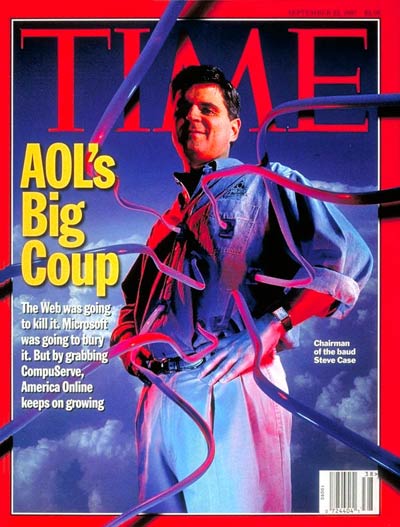
AOL, in its heyday, wanted to be the entire internet for its users. You didn’t browse the web; you browsed AOL’s curated universe. That made sense in 1996. It does not make sense in a 2025 world where decentralized information, creator ecosystems, and cross-platform virality are essential.

Elon appears to want to trap attention entirely within Twitter/X. You post. You read. You pay. You consume videos. You never leave. But that’s not how the internet works anymore—nor should it. Trying to monopolize attention is hostile to the ecosystem that made Twitter relevant in the first place.


It Hurts Creators and Drives Them Elsewhere

The no-link culture cripples creators, indie journalists, startups, and educators. If you write a Substack post, sell a course, or publish a podcast—you need links. Denying visibility to links is like denying oxygen to a fire. It might make Elon’s internal metrics look better in the short term, but it drives creators and value producers to other platforms—like Threads, LinkedIn, or YouTube—where linking is encouraged.


Trust and Openness Die in a Walled Garden

When users realize they’re being kept in a closed loop, trust erodes. Twitter’s credibility was built on being an open forum—a place where people could reference and link to external evidence. By discouraging links, it becomes more echo chamber than agora. That’s bad for discourse, transparency, and public trust.


Conclusion: The Open Web Is Stronger Than Any One Platform

Twitter doesn’t need to be AOL. It could be the connective tissue of the internet—the real-time layer on top of the web. But to do that, it has to respect the hyperlink. Elon's anti-link moves are more than just annoying—they're fundamentally regressive. They miss what made the internet powerful in the first place: openness, discoverability, and connection.


Let the Links Flow: Why X Should Embrace, Not Fight, the Open Web

Elon Musk’s integration of xAI into X (formerly Twitter) has undeniably improved the experience. Search is smarter. The stream feels more intuitive. Content curation is tighter, and AI is beginning to make the platform feel more alive and aware of context. But amid these gains, one baffling misstep remains: the war on links.

Links are not the enemy—they’re the bloodstream of the open internet. And Twitter, for all its transformation into “X, the everything app,” risks suffocating itself if it keeps cutting off circulation.


The War on Links Is a Mistake

Twitter has always been a conversation engine—a place where links to articles, videos, podcasts, and tools are shared, debated, and amplified. Neutering that capability, whether through down-ranking external links or making them visually less appealing, chips away at the soul of the platform.

Elon’s rationale seems clear: keep people on the platform. Own the attention. Monetize every second of dwell time. It’s the same thinking that led Facebook to keep users in-app and Google to answer questions directly on the results page.

But here’s the irony: Google’s original superpower was sending people away. You searched, and it gave you the best link. Fast. Accurate. Free. That trust made Google the homepage of the internet. It built an empire by helping people leave—not trapping them.


What X Should Do Instead: Let the Links Work for You

Rather than fight links, X should make them a feature, not a flaw. Here’s a better vision:

  • Top Shared Links Dashboard: Imagine a real-time feed of the most shared, commented-on, and engaged-with links on X, sortable by topic, time, region, or even ideology. This would become a living index of what’s shaping global discourse.

  • Timeline-Rewind of Shared Links: A time-machine-like UI that lets users explore what the most-shared links were during major events—elections, disasters, tech launches. It’s not just content, it’s historical record.

  • AI-Powered Link Summaries: xAI could generate instant summaries, context, and related tweets for each popular link, making the platform a gateway to deeper understanding, not just dopamine hits.

  • Link Influencer Graphs: Let users see which accounts are driving the most traffic to what. This could uncover new thought leaders, niche communities, and trends before they go viral.


Links Are Data. Use Them.

Every link is metadata. Every share is a vote. Every reshare is a signal. If Twitter wants to compete with Google, Substack, YouTube, and even TikTok, it must recognize the value in what people point to, not just what they post directly.

The best AI training data is not just isolated tweets—it’s which external knowledge the hive mind keeps returning to. Embrace that. Learn from it. Build on it.


The Open Web Is Still the Best Web

Forcing users to stay inside a walled garden works until it doesn’t. It breeds resentment, limits creativity, and strangles the natural flow of attention. Users don’t want to be trapped—they want to be empowered. And they’ll gravitate toward platforms that give them that freedom.

Twitter—X—is evolving into something new. It has the opportunity to be the command center of the internet, not its cul-de-sac. But to do that, it must stop fearing the link—and start building around it.

Let the links flow. That’s how you build trust, power discovery, and create a platform that is both sticky and expansive.

Just like the internet was meant to be.


Let the Links Flow—and Bring Back the Name ‘Twitter’

Elon Musk’s transformation of Twitter into X has delivered some clear wins. Search is sharper, timelines feel more personalized, and the xAI integration has breathed intelligence into what was once a firehose of chaos. But in the midst of all this progress, one unnecessary self-inflicted wound continues to fester: the decision to rename Twitter to X.

It’s time to reverse course. Bring back the name Twitter. Here's why.


1. “Twitter” Was One of the Strongest Brands on Earth

Twitter was more than a name—it was a verb, a cultural anchor. People didn’t just “post,” they tweeted. Major events were “live-tweeted.” Politicians got in trouble over “tweets.” Protest movements around the world used “Twitter” as their broadcast system.

That kind of brand equity is priceless. Renaming it to X is like renaming Coca-Cola to “Liquid Unit 7.” You don’t nuke a global household name on a whim. You build on it.


2. The Brand Is a Bridge, Not a Barrier

Some argue that “X” symbolizes a fresh start—a move toward an all-in-one everything app. But the strength of platforms like WeChat in China wasn’t in a cool letter—it was in ecosystem design and daily utility. You don’t need to erase a beloved brand to expand functionality.

Twitter could have become “Twitter Pay,” “Twitter AI,” or “Twitter Video.” The name already meant something. It stood for public conversation, real-time reaction, global discourse. “X” means… nothing. It’s abstract, generic, and worst of all, forgettable.


3. Twitter Still Lives in People's Minds

No one says, “Did you see that post on X?” People still say, “Did you see that tweet?” The language hasn’t changed. The habits haven’t changed. The users haven’t changed. Only the logo and name have changed—needlessly confusing both old users and new ones.

It’s branding whiplash. In a world drowning in noise, consistency builds trust. Twitter had it. X doesn’t.


4. The ‘X’ Name Closes Doors, Not Opens Them

The ambition to turn X into an “everything app” sounds big—but it also sounds vague. And the name “X” doesn’t communicate anything specific. It’s not social. It’s not personal. It’s not even searchable. Try Googling “X” and see what you get. Not helpful.

Reclaiming the Twitter name would immediately anchor the platform again in the public consciousness. It would say: this is still the beating heart of the internet. Then you can build anything you want on top of it.


5. A Comeback Is a Power Move

Rebranding back to Twitter wouldn’t be a defeat—it would be an alpha move. Elon Musk has made a career out of defying expectations. Admitting that the Twitter brand has enduring power isn’t weakness. It’s intelligence. It’s strategy. It’s listening to the users.

Come back to the blue bird. Let it soar again. Keep building the future, but don’t throw away one of the internet’s most iconic foundations in the process.


Let the links flow. And bring back the name Twitter.

The internet—and your users—will thank you.


Solve Drinking Water
Roadmaps To "Energy Too Cheap To Meter"
Deep Ocean, Surface Of Mars: Colonization Prospects
Earth To Earth Rocketry + Hyperloop: Earth Before Mars
A 2T Cut
Musk’s Management