
Pages

Monday, May 26, 2025

Self-Driving Showdown: Tesla vs BYD vs Waymo — Who’s Winning the Autonomy Race?


Self-Driving Showdown: Tesla vs BYD vs Waymo — Who’s Winning the Autonomy Race?

The race to full self-driving (FSD) is one of the most transformative technological battles of our era. It’s not just about who builds the smartest car, but who redefines transportation itself. Among the frontrunners, three giants stand out: Tesla, BYD, and Waymo (Google). Each brings a different philosophy, tech stack, and roadmap to the table. But who’s ahead, and is FSD even achievable?


Tesla: The Vision-First Maverick

Approach: Tesla’s strategy is bold: achieve full autonomy using just cameras (vision) and AI, skipping LIDAR entirely. Tesla believes that if a human can drive with eyes and a brain, a machine can too—with better precision, memory, and reaction speed.

Strengths:

  • Huge fleet data advantage: millions of Teslas worldwide feeding back real-world driving data.

  • Fast software iteration via over-the-air (OTA) updates.

  • Arguably the best AI training infrastructure in the industry (Dojo).

Weaknesses:

  • Current FSD Beta (v12) is not truly autonomous—it still requires driver supervision.

  • Lacks redundancy; no LIDAR or high-definition mapping.

Current Status: Level 2 autonomy with strong aspirations for Level 4+.

Bottom Line: Ambitious, risky, and very much still in testing. Elon Musk claims it's close—but we’ve heard that for years.


Waymo (Google): The Cautious Scientist

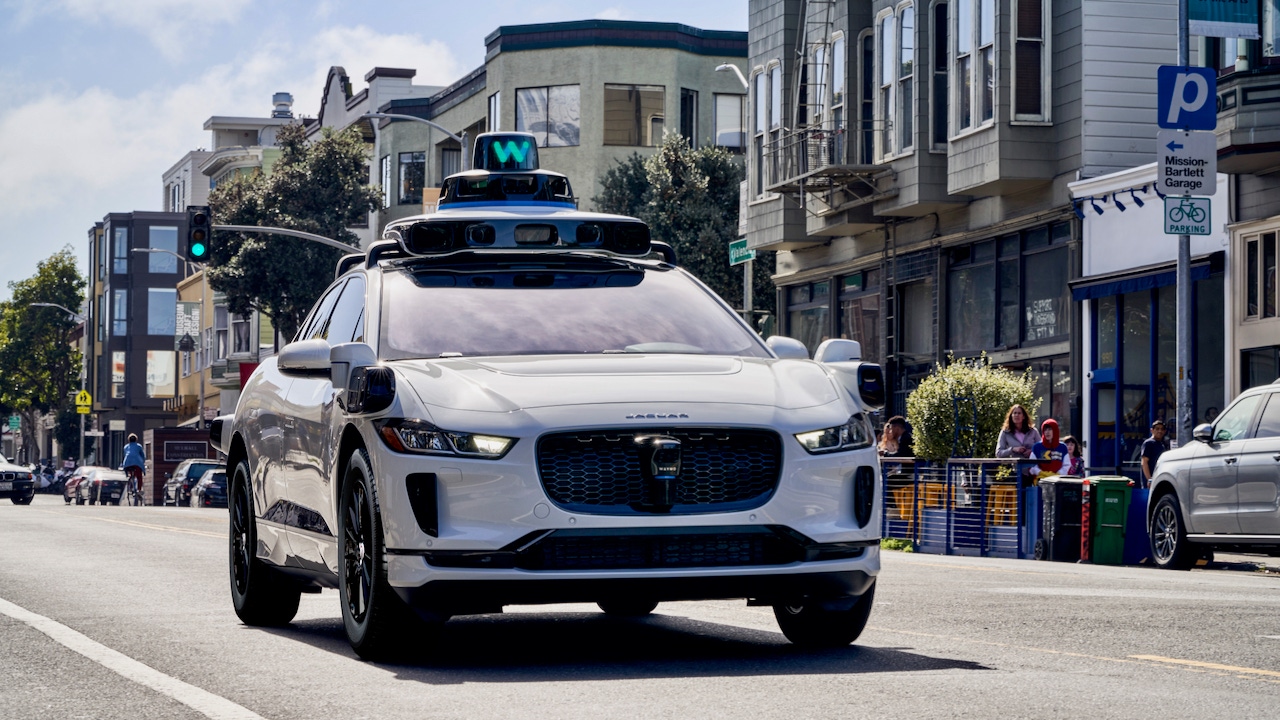
Approach: Waymo uses a sensor fusion approach—LIDAR, radar, cameras, and HD maps—to build a “belt-and-suspenders” system. It’s methodical, safety-first, and geofenced.

Strengths:

  • Operates driverless taxis in Phoenix and San Francisco, without a human in the car.

  • Emphasizes safety and real-world deployment over hype.

  • Has logged millions of miles fully autonomously.

Weaknesses:

  • Slow rollout. Operational only in select urban zones.

  • Heavily dependent on pre-mapped environments, which limits scalability.

Current Status: Level 4 autonomy in geofenced areas. Commercial service operational.

Bottom Line: The most proven, safest, but least scalable—so far.


BYD: The Quiet Challenger

Approach: BYD is rapidly advancing, but focuses more on ADAS (Advanced Driver Assistance Systems) than true autonomy—for now. It partners with Nvidia, Huawei, and Baidu for autonomy R&D.

Strengths:

  • Massive production scale gives it deployment potential.

  • Deep partnerships with top AI and chip companies in China.

  • Strong government backing and access to Chinese roads/data.

Weaknesses:

  • Currently lags behind Tesla and Waymo in autonomy.

  • More focused on electrification and cost-efficiency than cutting-edge autonomy—for now.

Current Status: Level 2+ (highway assist, lane keep, adaptive cruise), working toward Level 3.

Bottom Line: Not leading the self-driving race yet, but could surge quickly with Chinese regulatory and tech tailwinds.


Other Key Players

  • Cruise (GM): Level 4 in cities like San Francisco, paused after safety incidents. Risk of overreach.

  • Apple: Still stealthy, unclear roadmap, reportedly scaled back.

  • Nvidia / Mobileye / Baidu / Pony.ai: Providing backbone tech for others. Powering the ecosystem, not leading consumer brands.


So Who’s Winning?

Company Autonomy Level (Max Deployed) Safety Record Scalability Tech Stack Overall Score
Waymo Level 4 (geofenced) ✅ Safest ❌ Limited ✅ Sensor-rich 8/10
Tesla Level 2+ (Beta testing L4) ⚠️ Riskier ✅ Scalable ⚡ AI-only 7.5/10
BYD Level 2+ (Basic ADAS) ✅ Conservative ✅ Scale potential ๐Ÿงฉ Partner-led 6/10

Is Full Self-Driving (FSD) Even Possible?

That depends on what you mean by “FSD.”

  • Level 3: Driver must take over when required. Possible today, but rare.

  • Level 4: No driver needed within geofenced areas. Waymo and Cruise are here already.

  • Level 5: No driver, anywhere, anytime. The holy grail—and we’re not there yet.

Tesla aims to brute-force Level 5 with vision and data. Waymo is building it brick-by-brick with sensors and maps. But neither has cracked true Level 5 in the wild.


When Will We Get There?

Most experts now say true Level 5 autonomy is still 5–10 years away, despite the marketing hype. Why?

  • Edge case complexity: Deer, snowstorms, construction zones, unpredictable human behavior.

  • Legal and regulatory frameworks are not ready.

  • Machine common sense is still primitive.


The Real Future: FSD + Connected Car Infrastructure?

A truly autonomous world may require:

  • 100% of vehicles to be FSD,

  • All cars to communicate with each other (V2V),

  • Smart infrastructure (traffic lights, signage),

  • And possibly, removal of human drivers altogether in urban zones.

This is closer to a “smart mobility ecosystem” than just smarter cars. It’s theoretically doable, but would require:

  • Global coordination,

  • Billions in infrastructure upgrades,

  • And time.


Final Verdict

  • Best Right Now: Waymo, for safety and real-world deployment.

  • Most Ambitious: Tesla, for its “data eats sensors” vision.

  • Sleeper to Watch: BYD, especially if China makes an autonomy leap.

Is FSD possible? Yes, but not alone. It won’t be one company or one technology. It will be a systems-level achievement, fusing AI, hardware, regulation, and infrastructure.

Until then, keep your hands on the wheel—and your eyes on the road ahead. The race is far from over.


The Rise of the Super Niche: Launching a Multimedia Empire at the Intersection of AI and Robotics

The Rise of the Super Niche: Launching a Multimedia Empire at the Intersection of AI and Robotics


In a world where content overload is the norm and generic tech blogs feel like yesterday’s news, there’s an emerging opportunity—an opening for those bold enough to go super niche. Not another TechCrunch clone. Not another podcast with recycled Silicon Valley soundbites. We're talking about a true content platform built with surgical focus. Something as precise as the fields it covers: AI and Robotics. Not "tech." Not even "AI." Something more refined.

Imagine this:

A blog not for everyone. Not even for most AI folks. A blog just for the people who care deeply about embodied AI, robot control systems, swarm intelligence, human-robot interaction, soft robotics, and neuro-symbolic systems powering mechanical limbs. The ones who want to know how AI learns to move.

This is not about chasing mass appeal. It’s about becoming the TechCrunch of intelligent motion. The Airbnb of thought leadership in AI robotics.

The Core Idea

The blog is just the beginning. The goal: to build a multimedia knowledge ecosystem centered on the future of movement, intelligence, and machine embodiment.

Vertical: AI + Robotics.
Niche: Cognitive and embodied intelligence.
Persona: Researchers, builders, investors, and futurists obsessed with machines that move, think, and adapt.

Components of the Launch

1. The Blog: Deep Dives Only

No news aggregation. No press release rewrites. Every post is an original, research-rich exploration:

  • "Why Swarm Intelligence Will Redefine Global Logistics"

  • "The Hidden Complexity of Robot Balance and Human Motion Imitation"

  • "LLMs and Actuators: The Emerging Bridge Between Language and Muscle"

Each article reads like a whitepaper but flows like a Wired story. Data-driven, visual-heavy, deeply researched.

2. The YouTube Channel

A blend of visual storytelling and expert analysis:

  • Animated explainers: "How Soft Robotics Are Changing Prosthetics"

  • Field reporting from robotics labs and AI summits

  • Interviews with roboticists and AI researchers

  • Weekly 5-minute video updates on breakthroughs in the field

3. The Newsletter

A crisp, weekly briefing:

  • One deep idea

  • Two startup spotlights

  • Three must-read links

  • Four industry job posts
    For inboxes of investors, engineers, and startup founders.

4. Text Message Alerts

Opt-in SMS alerts with:

  • Major funding rounds in AI robotics

  • Key conference drops (e.g. ICRA, NeurIPS, CVPR)

  • Groundbreaking papers released on arXiv

It’s immediate. It’s rare. It makes you feel like you're on the inside.

5. Community

Not open forums. Not Reddit. Think invite-only Slack or Discord:

  • Channels for different AI+Robotics subfields

  • Founder intros

  • Paper clubs

  • Hackathons & grant announcements

Why Now?

AI is exploding. Robotics is becoming real. The intersection—embodied intelligence—is where trillion-dollar industries will emerge. Autonomous vehicles, warehouse automation, personal robots, elder care machines, battlefield drones, exoskeletons—all will be shaped by the minds decoding how robots think and move.

Yet, there’s no go-to voice. No trusted brand in this narrow but powerful vertical. That’s the gap. That’s the opportunity.

A Note on Monetization

Start niche, monetize deep:

  • Premium memberships with early research access

  • Sponsorships from robotics companies and chipmakers

  • Courses and workshops

  • Job board for AI roboticists

  • Affiliate for robotics hardware kits

  • Events and virtual summits

Final Word

TechCrunch was Craig's list. Airbnb was a niche carved out of Craig's list. This is the Airbnb of robotic intelligence. And it starts with one blog post, one video, one newsletter—laser-focused and utterly obsessed with a niche no one else is owning.

If you build it right, they won’t just come. They’ll stay, subscribe, and bring their teams.


Velocity Money: Crypto, Karma, and the End of Traditional Economics
The Next Decade of Biotech: Convergence, Innovation, and Transformation
Beyond Motion: How Robots Will Redefine The Art Of Movement
ChatGPT For Business: A Workbook
Becoming an AI-First Organization
Quantum Computing: Applications And Implications
Challenges In AI Safety
AI-Era Social Network: Reimagined for Truth, Trust & Transformation

The AI-Era Browser Is Not a Browser—It’s the Beginning of a New Operating System

AI-Era Web Browser, Brought To You By Perplexity


The AI-Era Browser Is Not a Browser—It’s the Beginning of a New Operating System

The AI-era browser is a misnomer. What’s emerging isn’t just a better web browser—it’s the gateway to a radical redefinition of computing itself. If the browser was once a portal to the internet, the AI-era "browser" collapses the distinction between application, operating system, and assistant. This isn’t Chrome 2.0. It’s Windows, Google Docs, and Outlook all dissolving into one ambient, intelligent workspace.

The Collapse of Layers

For decades, computing has been organized around layers: the OS (Windows/macOS/Linux), the browser (Chrome, Safari), applications (Office, Gmail, Slack), and finally the content layer (documents, email threads, web pages). But AI flattens these distinctions.

Why open an email app when your AI assistant already synthesized the message and extracted the tasks into your workspace? Why switch between browser tabs when your AI knows the context of your work and surfaces relevant research in a single view? The AI-era browser isn’t a tabbed chaos engine—it’s a cognitive environment.

From Search to Presence

The old web browser was built for searching, clicking, and consuming. The AI-era browser is built for presence, action, and decision-making. It's not something you “use”—it's something that lives with you, learns you, and acts with you.

At the core of this transformation is ambient computing: the seamless blending of device, interface, and intention. You’re not just typing into a box anymore. You’re engaging with an intelligence that understands your project, your goals, your calendar, your files, your team, and your knowledge graph.

Email, Meet Your End

AI doesn't just triage your inbox—it eliminates the need for one. Conversations become actions. Notifications become workflows. Email as a separate silo becomes obsolete when your assistant already summarized the key points and turned them into decisions. You don’t open Gmail. You just approve, edit, or delegate within your fluid workstream.

OS + Browser + Workspace = One

This is why calling it a “browser” misses the point. What’s being birthed is a unified interface layer—a meta-OS—that sits atop everything and integrates all. In time, it might replace the OS itself. Imagine a workspace that flows across devices, geographies, and mediums, tied together by persistent AI memory and personal context. This is not Chrome vs. Edge. This is post-OS computing.

Intersections Ahead

Interesting intersections are fast approaching:

  • LLMs meet filesystems – No more folders. Just ideas and relationships.

  • Personal knowledge graphs – Everything you’ve ever read, written, or watched, organized by context.

  • Agentic workflows – AI agents don’t just fetch; they act, iterate, and improve.

  • Persistent memory + spatial UI – A workspace that remembers, visualizes, and adapts.

The End of the App Era

Apps were the natural interface for the touchscreen generation. But now, instead of apps, we’ll have roles and functions powered by agents. Instead of “opening Zoom,” your AI connects you to the right person and manages the meeting. Instead of “opening Word,” your assistant begins drafting based on voice notes, research context, and prior documents. The app metaphor is dying. Workflows are what matter now.

Final Thought: The AI-Era Browser Is a Transitional Name

“Browser” is just the label we’re using because it’s familiar. But it’s like calling the Model T a “horse-drawn carriage.” What we’re seeing is the emergence of a new computing layer—part assistant, part memory, part workspace, all integrated. It’s the start of a new human-machine interface, one that transcends the keyboard, the mouse, and even the screen.

We are witnessing not the next browser war—but the dawn of the post-browser age. The future isn’t in tabs. It’s in tasks, context, and intelligent presence.

Welcome to the era of AI-native computing.

Sunday, May 25, 2025

AI-Era Web Browser, Brought To You By Perplexity

The AI-Era Web Browser: What Will Finally Make People Quit Chrome?

For years, Google Chrome has dominated the browser market. It’s fast, reliable, and deeply integrated into Google’s ecosystem. But we’re entering a new era—an AI-native era—where the browser is no longer just a window into the web, but a full-fledged AI-powered operating layer for your digital life. So, what will finally compel users to abandon Chrome?

Not just better performance. Not just ad-blocking. Something fundamentally different. Let’s explore what an AI-era browser could look like—and how it could create strong incentives that make sticking with Chrome feel like using dial-up in the age of fiber.


๐Ÿ”ฎ The AI-Era Browser: More Than Just a Viewer

In the AI era, the browser must become your intelligent interface, personal assistant, and digital guardian—not just a place to access web content. Here's how it can leapfrog Chrome:


๐Ÿง  1. Embedded AI Agents: Co-Browsing, Not Just Browsing

Imagine a browser where every tab is agent-augmented:

  • Summarizes pages in real-time, across multiple tabs.

  • Suggests actions—from replying to emails, drafting blog posts, to booking travel—based on your web activity.

  • Knows your goals and proactively finds tools, forms, and contacts.

  • Cross-site memory: Your AI remembers what you saw three days ago across 12 different tabs and brings it up when relevant.

Incentive: The browser becomes a second brain. Chrome is just a memoryless screen.


๐Ÿ›ก️ 2. Built-in Scam Shield and Ad Firewall

Rather than relying on extensions, the browser itself can:

  • Auto-detect scammy websites and dark patterns.

  • Strip out ads—not just block them, but rewrite pages with human-readable content.

  • Warn users about affiliate spam, fake reviews, and misleading buttons.

Incentive: Peace of mind. The web is cleaner, safer, and faster by default.


๐ŸŽฏ 3. Goal-Oriented Mode

Let’s say you want to plan a trip, write a grant proposal, or compare B2B SaaS tools. Switch to Goal Mode and the browser:

  • Assembles a workspace tailored to your task.

  • Gathers templates, autofills forms, and schedules tasks.

  • Highlights only relevant pages and skips SEO sludge.

Incentive: Finish work in 2 hours instead of 8. That’s real time saved.


๐Ÿ’ธ 4. Earn While You Browse

Microsoft tried Bing Rewards. But what if you earned tokens not just for searches, but for:

  • Letting the browser use anonymized data for AI training.

  • Giving feedback on LLM outputs.

  • Participating in low-friction microtasks powered by GPTs.

These tokens could be redeemable for:

  • Cloud storage

  • Premium agent features

  • App store credits or subscriptions

Incentive: Passive income, ethical data monetization, and free perks.


๐Ÿงฉ 5. Deep App Integration

Why should a browser be separate from your apps?

  • Integrate Notion, Slack, Gmail, etc., directly into the browser with agents watching and assisting.

  • Toggle between "browse mode" and "work mode" seamlessly.

  • Multi-app dashboards, powered by LLMs, for cross-platform insights.

Incentive: Unified digital workflow. One browser to rule them all.


๐Ÿ” 6. AI-Powered Search That Doesn't Suck

Forget traditional search. AI-first search is:

  • Conversation-driven

  • Context-aware

  • Results-rich without SEO games

  • Highlights why something ranks, and lets users tweak priorities

Bonus: Let users build their own search agents—tailored to shopping, research, coding, legal work, or medical queries.

Incentive: Save hours. Eliminate spam. Get clarity, not confusion.


๐ŸŒ 7. Agent-Curated Internet

Your browser can evolve into a curated universe:

  • Feeds, portals, and dashboards curated by agents trained on your values and needs.

  • Auto-generated personal newsfeeds, creative inspiration boards, and social media digests.

  • Your web, your way.

Incentive: Reclaim attention. Own your information diet.


๐Ÿ‘ฅ 8. Community + AI Synergy

Imagine a browser that lets users:

  • Share prompts, templates, and workflows.

  • Build public agent profiles to help others.

  • Access community-reviewed summaries of trending topics.

A browser becomes a knowledge-sharing platform, not just a consumption tool.

Incentive: Network effects. Social proof. Smart crowds.


๐Ÿ’ก Final Thought: You Don’t Kill Chrome by Competing on Speed

You kill Chrome by doing what Chrome can’t.

The AI-era browser isn’t about browsing better. It’s about living smarter online—saving time, avoiding scams, automating work, and even earning while doing it. It’s your operating system for the web age 2.0.

When the browser does everything—search, task management, AI prompting, content generation, app control, personal protection—why would anyone stick with a glorified tab manager?

The time to build this is now. The incentives are ripe. And the future is open.


Excellent. Let’s build the Chrome killer.

๐Ÿ”ฅ The Vision: A Chrome Killer for the AI Era

Not just a browser, but an AI-native operating layer for the internet—a platform that:

  • Embeds AI agents in every tab

  • Turns browsing into doing

  • Pays users, protects their data, and curates a better internet


Now, here are 10 interlocking startup ideas that can form the core modules of this browser—and a step-by-step launch roadmap to bring it to life.


๐Ÿš€ 10 Startup Ideas That Power the Chrome Killer

1. Agent OS (Core Browser Engine)

An open-source Chromium or WebKit fork redesigned to support:

  • Embedded agent memory per tab

  • Agent actions via web interface layer (click, form fill, summarize, suggest)

  • Modular plugin architecture for agents + AI features

2. PromptFlow (AI Agent Workflow Layer)

Drag-and-drop or natural language configuration of:

  • Multi-step agent routines ("Find 5 alternatives, compare features, draft pros/cons")

  • Goal-based browsing ("Plan a Bali trip under $1500")

3. SpamRadar (Real-Time Web Clutter Filter)

An LLM-powered backend that flags:

  • SEO spam

  • Fake buttons / dark patterns

  • Scammy affiliate sites

  • Misinformation clusters

→ Users get clean, high-signal content with visual overlays.

4. Earnnet (User Earning Protocol)

Browser-native way to:

  • Earn crypto or points for anonymized AI training data

  • Run optional microtasks in-browser (e.g., summarizing articles, rating content)

  • Monetize prompt sharing / agent workflows

5. GhostShield (Privacy + Ad Firewall)

Native features that:

  • Strip third-party tracking

  • De-identify fingerprints

  • Block malware and abusive scripts

  • Offer “ghost tab” private browsing with local-only memory

6. Search+, the AI-Native Search Engine

Forget 10 blue links. This:

  • Answers with sources and explainer cards

  • Offers AI-curated search clusters (“Best budget laptops under $700”)

  • Enables promptable, editable search agents

7. TabMind (Memory & Intent Engine)

Each tab remembers:

  • Why you opened it

  • What you were doing

  • What’s next in the workflow

→ Users can “resume” tasks anytime or let agents auto-complete.

8. GoalView Dashboards

When you browse for a purpose (e.g. “get a job,” “launch a podcast”), GoalView:

  • Creates custom dashboards

  • Curates web resources

  • Offers progress-tracking agent support

9. CollabVerse (Social + Shared Browsing)

A co-browsing mode where:

  • Users share agent workflows

  • Friends & teams can browse together, annotate, co-plan

  • Smart syncing of discoveries + pages

Think Figma, but for research and planning.

10. EdgeStore (Decentralized Extension Store)

A curated app store:

  • AI agents

  • Custom prompts

  • Templates

  • Community workflows

  • Revenue share for creators

No Google monopoly. User-owned AI economy.


๐Ÿ“ Step-by-Step Launch Roadmap

๐Ÿ› ️ Phase 1: MVP Alpha (0–6 Months)

Goal: Prove agent-enhanced browsing is 10x better

  • Fork Chromium or start from Electron/Playwright

  • Integrate a browser sidebar with GPT-4-turbo or Claude 3

  • Add AI overlay (summarize page, rewrite, click suggestion, form fill)

  • Add spam detector for news + shopping sites

  • Launch invite-only test group for research and productivity users

→ Outcome: Validate agent co-browsing UX


๐ŸŒ Phase 2: Browser Beta (6–12 Months)

Goal: Build a browser worth switching to

  • Create full UI with tab memory, workspaces, and GoalView

  • Build Agent Workflow Engine (PromptFlow)

  • Launch Search+ with 3–5 domains (tech, travel, shopping, health)

  • Launch EdgeStore with agent templates

  • Monetize via optional Earnnet opt-in

→ Outcome: 100K users, cult following


⚙️ Phase 3: Public v1 Launch (Year 2)

Goal: Convert early adopters → ecosystem

  • Add user profiles, synced agent memory

  • Release full GhostShield + scam protection

  • Offer team & community features (CollabVerse)

  • Mobile + tablet versions

  • Seed initial currency economy for Earnnet + Store

→ Outcome: 1M users, AI-native browsing becomes a trend


๐ŸŒ Phase 4: Platform Expansion (Year 3–5)

Goal: Become the web operating system

  • SDK for building third-party agents

  • Goal marketplace (AI-powered research agents, freelance agents)

  • Deep integrations (Notion, Slack, Google Docs)

  • Partnerships with Web3 or privacy-first ecosystems

  • Launch an LLM search model fine-tuned on user-curated web

→ Outcome: 10M+ users, competing with Chrome + Edge head-on


๐Ÿ’ก Why This Wins

  • Chrome is legacy: It was built for an old internet. Yours is built for the AI web.

  • Data is king: You incentivize users to stay with rewards, privacy, productivity, and protection.

  • Community flywheel: PromptFlow + EdgeStore lets you grow like GitHub meets Chrome Store.

  • AI-first UX: This isn’t just about faster pages—it’s about helping people do more with less.


But all that is only 1/3rd of the roadmap. The other 2/3rd are elsewhere: The Most Exciting Thing Happening in AI: Going Beyond the Internet Box

Why Tesla's Only Path to Survival Runs Through India
From Chaos to World Class: A Bold Infrastructure Roadmap for Bengaluru, India’s Silicon Valley
Rethinking VC and Angel Investing for India’s Ground Realities
Why Aravind Srinivas Should Stay at Perplexity: The Path to a Trillion-Dollar Valuation
CEO Material For Apple: A Sundar, A Satya: Aravind Srinivas
Is Tim Cook the Steve Ballmer of Apple? A Cautionary Tale of Missed Tech Waves
Ambient Computing: The Invisible Revolution Powered by AI
Beyond Laptops and Smartphones: The New Era of AI-Native Devices
The AI-Era Smartphone: Creating, Not Consuming—Connecting, Not Waiting
Redesigning the Laptop for the AI Era: A Glimpse Into the Future of Computing