
Pages

Thursday, May 22, 2025

BYD, Tesla, And Self-Driving

 BYD God's Eye More Advanced Than Tesla Full Self Driving (FSD ...

In the rapidly evolving landscape of electric vehicles (EVs), self-driving technology stands out as a pivotal frontier. Companies like Tesla and BYD are at the forefront, each charting distinct paths toward autonomous driving. This blog post delves into their approaches, compares them with other leading EV brands, and explores the current state and future prospects of self-driving technology.


BYD's Approach to Self-Driving

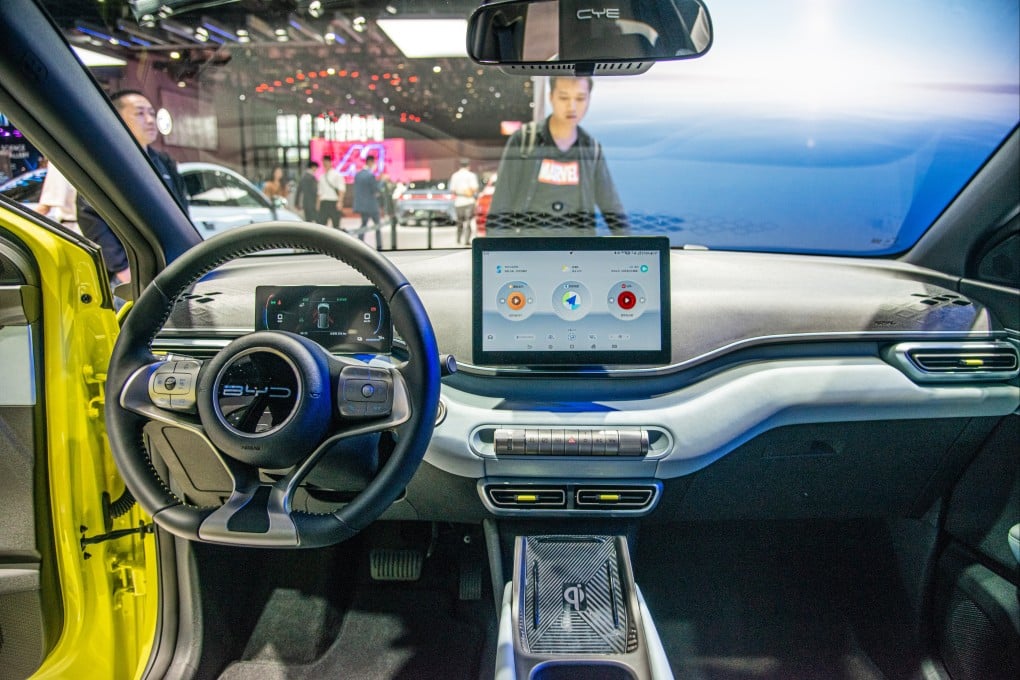
BYD, a Chinese automotive giant, has been making significant strides in integrating advanced driver-assistance systems (ADAS) into its vehicles. Their proprietary system, known as "God's Eye," offers features like lane keeping, adaptive cruise control, and automated parking. Notably, BYD has begun equipping even its most affordable models, such as the $9,500 Seagull EV, with this technology at no additional cost .(Wikipedia, Reddit)

While "God's Eye" enhances driving convenience and safety, it's essential to note that it operates at SAE Level 2 automation. This means that while the system can control steering and speed under certain conditions, the driver must remain engaged and ready to take control at all times.(Wikipedia, Wikipedia)


Tesla's Full Self-Driving (FSD) Capabilities

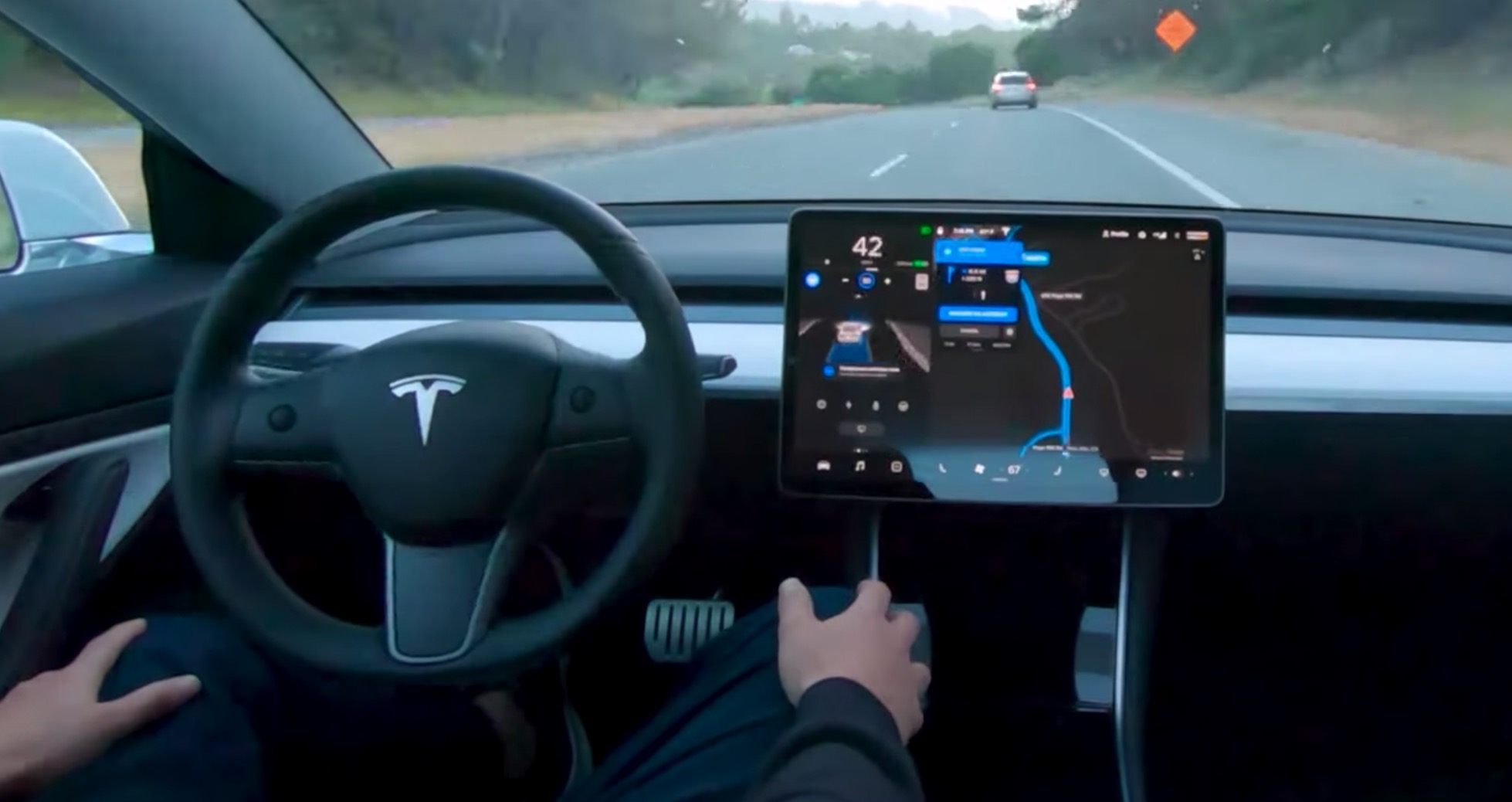
Tesla's approach to autonomous driving is encapsulated in its Full Self-Driving (FSD) system. FSD offers features such as Navigate on Autopilot, Auto Lane Change, Autopark, and Traffic Light and Stop Sign Control. Despite its name, FSD currently operates under SAE Level 2, requiring driver supervision .(Wikipedia)

Tesla continues to develop its FSD technology, with plans to launch a robotaxi service in Austin, Texas, by the end of June 2025 . This service aims to utilize a fleet of autonomous vehicles, marking a significant step toward higher levels of vehicle autonomy.(MySA)


Comparing Leading EV Brands in Self-Driving Technology

Beyond Tesla and BYD, several other EV manufacturers are advancing their self-driving technologies:

  • Mercedes-Benz: Offers Drive Pilot, a Level 3 system allowing hands-free driving under specific conditions.(Car ADAS)

  • General Motors: Features Super Cruise, enabling hands-free driving on compatible highways.

  • Ford: Provides BlueCruise, a hands-free highway driving system.(Wikipedia)

  • Nissan: Equips its Ariya model with ProPILOT Assist 2.0, facilitating hands-free highway driving .(U.S. News Cars)

These systems vary in capabilities and operational domains, reflecting different strategies toward achieving higher automation levels.


Circumstances Requiring Active Driver Engagement

Despite advancements, current self-driving systems have limitations. Drivers must remain attentive and ready to take control in situations such as:

  • Complex Urban Environments: Navigating through construction zones, unmarked roads, or areas with heavy pedestrian traffic.

  • Adverse Weather Conditions: Rain, snow, or fog can impair sensor functionality.

  • Unpredictable Road Events: Sudden obstacles, erratic behavior from other drivers, or emergency vehicles.

These scenarios underscore the importance of driver vigilance, even when advanced systems are active.


The Road Ahead: Toward Full Autonomy

Achieving full self-driving capability (SAE Level 5) remains a complex challenge. While Tesla aims to deploy a significant number of autonomous vehicles by the end of 2026 , regulatory approvals, technological hurdles, and public acceptance are critical factors influencing this timeline.(Wikipedia, AP News)

As the industry progresses, collaborations between automakers, tech companies, and regulators will be pivotal in shaping the future of autonomous driving.


In conclusion, while significant progress has been made in self-driving technology, widespread adoption of fully autonomous vehicles will depend on continued innovation, rigorous testing, and robust regulatory frameworks.




From CPUs to GPUs—And Beyond: The Evolution of Computing Power


From CPUs to GPUs—And Beyond: The Evolution of Computing Power

In the ever-accelerating world of computing, the distinctions between CPUs and GPUs have become both more pronounced and more blurred. As artificial intelligence, gaming, and data science reshape the tech landscape, the hardware driving these revolutions is evolving just as quickly. What began as a straightforward division of labor between Central Processing Units (CPUs) and Graphics Processing Units (GPUs) is now giving way to a new era of specialized chips—where AI accelerators and quantum processors are starting to make their mark.


The CPU: The Classic Workhorse

What it is:
The Central Processing Unit (CPU) is often described as the "brain" of the computer. It handles all general-purpose tasks—running the operating system, executing application code, and managing system resources.

History:

  • 1940s-1950s: Early CPUs were massive machines built from vacuum tubes.

  • 1971: Intel introduced the Intel 4004, the first commercially available microprocessor.

  • 1980s-1990s: x86 architecture from Intel and AMD took off, dominating the PC era.

  • 2000s–present: CPUs evolved to include multiple cores, integrated memory controllers, and hyper-threading.

Top Players Today:

  • Intel: Dominant in PCs and data centers for decades.

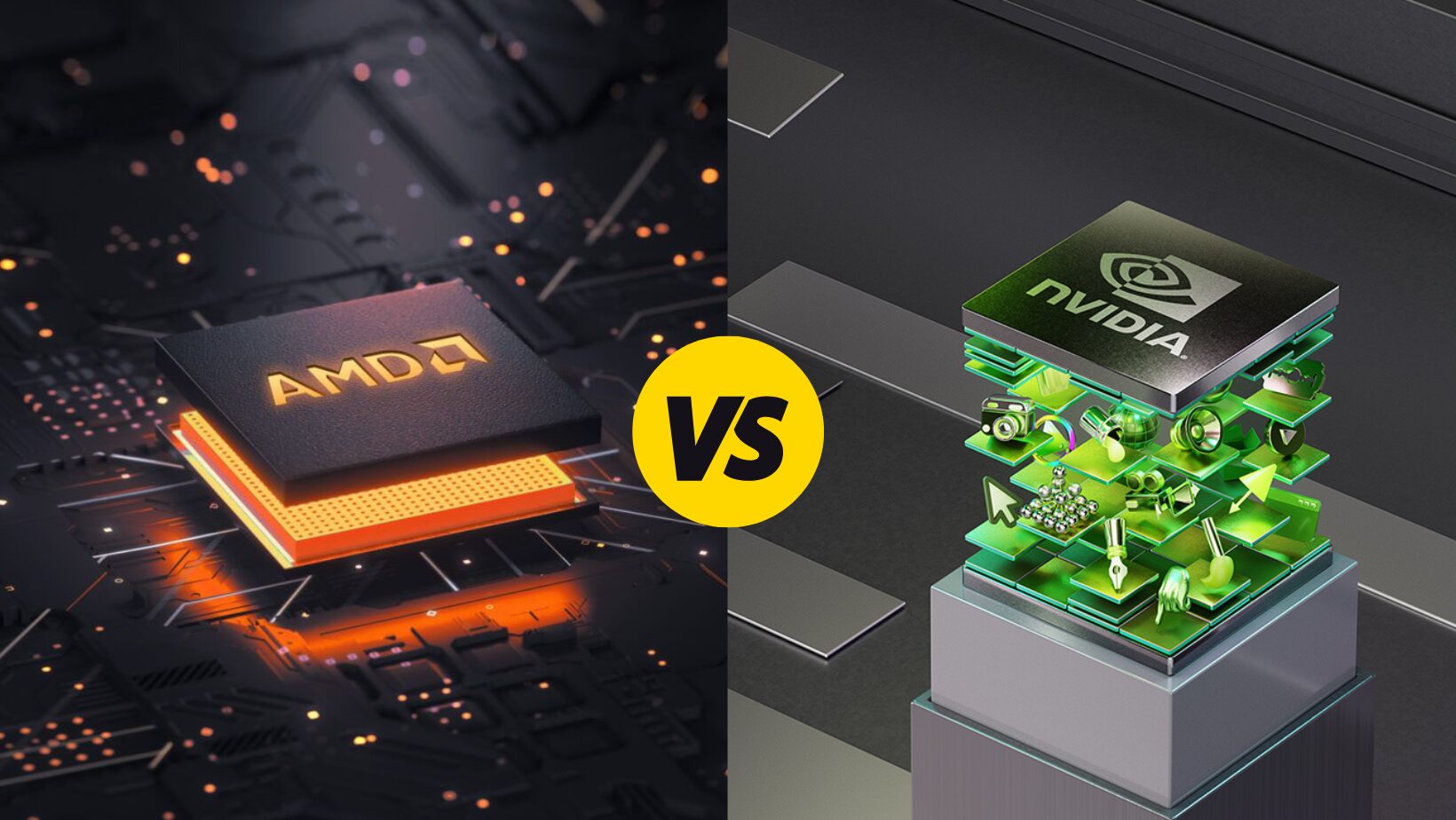
  • AMD: Competitive with its Ryzen and EPYC lines.

  • Apple: Disrupted the market with its ARM-based M1, M2, and M3 chips, integrating CPU, GPU, and neural engines.


The GPU: Parallel Power for the Data Age

What it is:
Originally designed to render graphics, the Graphics Processing Unit (GPU) specializes in parallel processing—performing thousands of calculations simultaneously, making it perfect for graphics and, later, machine learning.

History:

  • 1999: NVIDIA introduced the GeForce 256, the first GPU marketed as such.

  • 2006: With the launch of CUDA, NVIDIA enabled developers to use GPUs for general-purpose computing.

  • 2010s–present: GPUs became essential for deep learning, gaming, video editing, and cryptocurrency mining.

Top Players Today:

  • NVIDIA: Unquestionably dominant in AI and high-performance computing.

  • AMD: Known for Radeon GPUs and increasing traction in data centers.

  • Intel: Entered the GPU market with Arc and Xe products.


The Present and Future: What Comes After GPUs?

As demand for computing power explodes—fueled by AI, big data, and simulation—the industry is moving beyond general-purpose CPUs and GPUs to even more specialized hardware:


1. AI Accelerators / Neural Processing Units (NPUs)

Purpose: Tailored for machine learning tasks like training neural networks or running inference models.

Key Players:

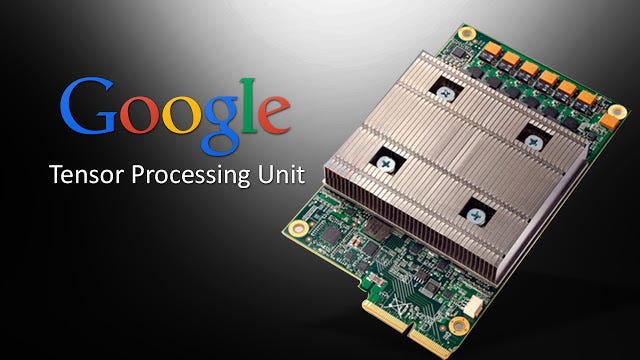
  • Google: Tensor Processing Units (TPUs), powering Google Search and Google Cloud AI.

  • Apple: Neural engines in its M-series chips optimize on-device AI.

  • Tesla: Dojo supercomputer for self-driving AI.

  • Amazon: Inferentia and Trainium chips for AWS cloud AI workloads.


2. FPGAs and ASICs

Field Programmable Gate Arrays (FPGAs): Flexible hardware you can program for specific tasks.

Application-Specific Integrated Circuits (ASICs): Hard-wired chips for ultra-efficient task execution, like Bitcoin mining or edge AI.

Key Players:

  • Intel (Altera): Leader in FPGAs.

  • Xilinx (AMD): Competes with high-performance programmable logic.

  • Bitmain: Dominates ASIC-based crypto mining.


3. Quantum Processors

Still in early stages, quantum computing promises to outperform classical systems in certain tasks like optimization, chemistry simulations, and encryption.

Key Players:

  • IBM: Quantum roadmap to 1,000+ qubits.

  • Google: Achieved “quantum supremacy” in 2019.

  • D-Wave: Specializes in quantum annealing for optimization.


4. Optical and Photonic Computing

Computing using light instead of electricity, offering faster speeds and lower power consumption.

Key Players:

  • Lightmatter, Ayar Labs, and Intel’s photonic research labs are pioneering this frontier.


The Convergence: Heterogeneous Computing

The future isn’t about CPUs vs. GPUs—it’s about everything working together. Apple’s M-series chips already integrate CPUs, GPUs, and NPUs on a single SoC (system on chip). Cloud giants like Google and Amazon are optimizing workloads by dynamically routing tasks to the most efficient hardware: CPU for logic, GPU for parallelism, TPU for deep learning, and FPGA for real-time edge inferencing.


Conclusion: Silicon Is Just the Start

We are entering a post-Moore’s Law world, where architecture innovation matters more than raw transistor count. The real breakthroughs will come from custom silicon, hardware-software co-design, and new physics.

The CPU isn’t dead. The GPU isn’t obsolete. But the age of hyper-specialized computing is upon us—and what comes next will be as much about use case and context as about raw performance.


Which chip will power your future? The answer is: all of them. Seamlessly. Invisibly. Intelligently. Welcome to the era of compute convergence.


22: Harvard

Rethinking Trade: A Blueprint for a Just and Thriving Global Economy
The $500 Billion Pivot: How the India-US Alliance Can Reshape Global Trade
Trump’s Trade War
Peace For Taiwan Is Possible
Formula For Peace In Ukraine
The Last Age of War, The First Age of Peace: Lord Kalki, Prophecies, and the Path to Global Redemption
AOC 2028: : The Future of American Progressivism

Velocity Money: Crypto, Karma, and the End of Traditional Economics
The Next Decade of Biotech: Convergence, Innovation, and Transformation
Beyond Motion: How Robots Will Redefine The Art Of Movement
ChatGPT For Business: A Workbook
Becoming an AI-First Organization
Quantum Computing: Applications And Implications
Challenges In AI Safety
AI-Era Social Network: Reimagined for Truth, Trust & Transformation

Velocity Money: Crypto, Karma, and the End of Traditional Economics
The Next Decade of Biotech: Convergence, Innovation, and Transformation
Beyond Motion: How Robots Will Redefine The Art Of Movement
ChatGPT For Business: A Workbook
Becoming an AI-First Organization
Quantum Computing: Applications And Implications
Challenges In AI Safety
AI-Era Social Network: Reimagined for Truth, Trust & Transformation

Velocity Money: Crypto, Karma, and the End of Traditional Economics
The Next Decade of Biotech: Convergence, Innovation, and Transformation
Beyond Motion: How Robots Will Redefine The Art Of Movement
ChatGPT For Business: A Workbook
Becoming an AI-First Organization
Quantum Computing: Applications And Implications
Challenges In AI Safety
AI-Era Social Network: Reimagined for Truth, Trust & Transformation

Rethinking Trade: A Blueprint for a Just and Thriving Global Economy
The $500 Billion Pivot: How the India-US Alliance Can Reshape Global Trade
Trump’s Trade War
Peace For Taiwan Is Possible
Formula For Peace In Ukraine
The Last Age of War, The First Age of Peace: Lord Kalki, Prophecies, and the Path to Global Redemption
AOC 2028: : The Future of American Progressivism

22: Waymo

Velocity Money: Crypto, Karma, and the End of Traditional Economics
The Next Decade of Biotech: Convergence, Innovation, and Transformation
Beyond Motion: How Robots Will Redefine The Art Of Movement
ChatGPT For Business: A Workbook
Becoming an AI-First Organization
Quantum Computing: Applications And Implications
Challenges In AI Safety
AI-Era Social Network: Reimagined for Truth, Trust & Transformation

Velocity Money: Crypto, Karma, and the End of Traditional Economics
The Next Decade of Biotech: Convergence, Innovation, and Transformation
Beyond Motion: How Robots Will Redefine The Art Of Movement
ChatGPT For Business: A Workbook
Becoming an AI-First Organization
Quantum Computing: Applications And Implications
Challenges In AI Safety
AI-Era Social Network: Reimagined for Truth, Trust & Transformation

Rethinking Trade: A Blueprint for a Just and Thriving Global Economy
The $500 Billion Pivot: How the India-US Alliance Can Reshape Global Trade
Trump’s Trade War
Peace For Taiwan Is Possible
Formula For Peace In Ukraine
The Last Age of War, The First Age of Peace: Lord Kalki, Prophecies, and the Path to Global Redemption
AOC 2028: : The Future of American Progressivism

22: Gemini

Rethinking Trade: A Blueprint for a Just and Thriving Global Economy
The $500 Billion Pivot: How the India-US Alliance Can Reshape Global Trade
Trump’s Trade War
Peace For Taiwan Is Possible
Formula For Peace In Ukraine
The Last Age of War, The First Age of Peace: Lord Kalki, Prophecies, and the Path to Global Redemption
AOC 2028: : The Future of American Progressivism

Velocity Money: Crypto, Karma, and the End of Traditional Economics
The Next Decade of Biotech: Convergence, Innovation, and Transformation
Beyond Motion: How Robots Will Redefine The Art Of Movement
ChatGPT For Business: A Workbook
Becoming an AI-First Organization
Quantum Computing: Applications And Implications
Challenges In AI Safety
AI-Era Social Network: Reimagined for Truth, Trust & Transformation

Velocity Money: Crypto, Karma, and the End of Traditional Economics
The Next Decade of Biotech: Convergence, Innovation, and Transformation
Beyond Motion: How Robots Will Redefine The Art Of Movement
ChatGPT For Business: A Workbook
Becoming an AI-First Organization
Quantum Computing: Applications And Implications
Challenges In AI Safety
AI-Era Social Network: Reimagined for Truth, Trust & Transformation

Rethinking Trade: A Blueprint for a Just and Thriving Global Economy
The $500 Billion Pivot: How the India-US Alliance Can Reshape Global Trade
Trump’s Trade War
Peace For Taiwan Is Possible
Formula For Peace In Ukraine
The Last Age of War, The First Age of Peace: Lord Kalki, Prophecies, and the Path to Global Redemption
AOC 2028: : The Future of American Progressivism

Rethinking Trade: A Blueprint for a Just and Thriving Global Economy
The $500 Billion Pivot: How the India-US Alliance Can Reshape Global Trade
Trump’s Trade War
Peace For Taiwan Is Possible
Formula For Peace In Ukraine
The Last Age of War, The First Age of Peace: Lord Kalki, Prophecies, and the Path to Global Redemption
AOC 2028: : The Future of American Progressivism

Rethinking VC and Angel Investing for India’s Ground Realities


Rethinking VC and Angel Investing for India’s Ground Realities

When Alibaba reimagined e-commerce for China, it didn’t just clone Amazon. It built something uniquely tailored to China’s infrastructure, behaviors, and socioeconomic terrain. It factored in low credit card penetration, informal small businesses, and a deeply fragmented logistics system. The result wasn’t just a local success—it became a global case study in adaptation-driven innovation.

Now, imagine applying the same principle to venture capital (VC) and angel investing in India.

Too often, Indian startups are judged by Silicon Valley metrics: blitzscale or die, grow at all costs, burn capital fast, and chase unicorn status. But India’s ground realities demand a fundamentally different model—one that’s more patient, locally informed, and impact-oriented.

1. Smaller Checks, Longer Runways

In the US, angel rounds often start at $500K+. In India, a $50K investment can sustain a small team for a year. Instead of pushing startups to burn cash fast, Indian investing should prioritize frugality, sustainability, and iterative growth—something that aligns more with India’s jugaad (creative problem-solving) culture.

2. Beyond Tier-1 Cities

Silicon Valley VCs mostly fund startups in tech hubs. In India, real innovation is happening in Tier-2 and Tier-3 cities—in agri-tech, ed-tech for vernacular learners, micro-finance platforms, rural healthcare delivery, and more. A grounded VC model would focus on these regions, understanding hyper-local needs rather than importing urban elite assumptions.

3. Profit Before Valuation

In the US, profitability is often sacrificed in favor of rapid valuation growth. In India, the priority should be unit economics. A small profitable startup serving 10,000 customers in Bihar might have more long-term value than a loss-making urban app chasing 10 million downloads.

4. Tech for Bharat, Not Just India

India isn’t one market; it’s a patchwork of languages, cultures, and access levels. A grounded VC approach would fund tools in local languages, USSD-based fintech for feature phones, or AI-powered tutoring for government school students. These ventures may not look “sexy” to a Silicon Valley lens—but they solve deep problems for the 800 million Indians living outside the digital elite bubble.

5. Blended Returns: Financial + Social

Indian VCs must rethink success metrics. Impact investing, often treated as a niche in the US, should be mainstream in India. A startup that lifts 100,000 people out of poverty and makes a 5x return should be celebrated more than one that burns through $100M to build a food delivery app for millionaires.

6. Infrastructure as Opportunity

In the US, investors avoid sectors that depend on state infrastructure. In India, infrastructure gaps—poor roads, patchy internet, unbanked populations—are the opportunity. The VC that funds solutions to these systemic holes (like mobile education vans or solar-powered micro-ATMs) is not only backing future unicorns—they’re building the rails of the new economy.

7. Mentorship Over Capital

Capital alone doesn’t build companies—mentorship does. Grounded investing in India means local mentorship: investors who speak the language, understand local policy, know the panchayat system, and can guide founders through the maze of Indian bureaucracy, corruption, and grassroots marketing.


Conclusion: India Needs Indigenous Capitalism

Just as Alibaba adapted to China's context, India needs a VC and angel investing ecosystem that is made for India, not just imported to India. This means embracing local ingenuity, focusing on deep impact, and redefining success beyond Silicon Valley norms. The next generation of Indian unicorns won’t be built in glass towers—they’ll emerge from dusty classrooms, rural farms, and narrow startup lanes in Jaipur, Ranchi, and Coimbatore.

It’s time to fund India from the ground up.


Velocity Money: Crypto, Karma, and the End of Traditional Economics
The Next Decade of Biotech: Convergence, Innovation, and Transformation
Beyond Motion: How Robots Will Redefine The Art Of Movement
ChatGPT For Business: A Workbook
Becoming an AI-First Organization
Quantum Computing: Applications And Implications
Challenges In AI Safety
AI-Era Social Network: Reimagined for Truth, Trust & Transformation

Remote Work Productivity Hacks
How to Make Money with AI Tools
AI for Beginners

Gemini Can Supercharge Veo 3


Google Gemini and Veo 3 are both cutting-edge products from Google, but they come from different innovation streams: Gemini is Google DeepMind's advanced multimodal AI model (text, image, code, audio, video), while Veo 3 is a generative video model capable of creating high-quality, cinematic, long-form videos from text prompts. When combined strategically, Gemini can supercharge Veo 3 in several transformative ways:


1. Multimodal Prompt Engineering and Refinement

Gemini can act as a smart assistant or co-pilot for crafting highly detailed prompts for Veo 3. Instead of manually entering plain text, creators could:

  • Describe a general idea, and Gemini refines it into rich, scene-by-scene prompts.

  • Automatically generate detailed camera movements, lighting descriptions, character behavior, emotion arcs, etc., tailored for Veo's cinematic engine.

Example:
User: "I want a sci-fi chase scene at sunset."
Gemini-enhanced prompt: "A neon-lit drone chase through the narrow alleys of a future Tokyo at dusk, with golden rays piercing through metallic skyscrapers and dynamic camera shifts tracking every twist."


2. Real-Time Video Editing & Iteration via Conversational AI

Gemini could make Veo 3 an interactive video creation tool. Instead of iterating with prompt tweaks manually:

  • Users talk to Gemini: “Make it more emotional,” “Add slow motion,” or “Change the background to a forest.”

  • Gemini interprets and refines the Veo 3 settings live, almost like having a creative film director on standby.


3. Fusion of Storytelling + Video Creation

Gemini excels at storytelling, narrative structure, and dialogue. Paired with Veo 3:

  • Gemini can generate full scripts or storyboards, with Veo 3 generating each shot.

  • Ideal for short films, advertisements, educational videos, or animations.

  • Gemini could also inject character arcs, plot twists, pacing suggestions, etc., and Veo visualizes them.


4. Context-Aware Scene Expansion

Gemini understands context across sequences — so it can ensure continuity and coherence across multiple scenes Veo generates.

  • Maintaining wardrobe consistency, weather conditions, character expressions.

  • Smooth transitions and thematic unity throughout longer videos.


5. Personalization and Branding at Scale

With Gemini’s understanding of brand tone, audience profiles, and style guides, it could help Veo 3 generate:

  • On-brand videos for different audiences (e.g., Gen Z, professionals, different regions).

  • Versions of a video localized in tone, language, symbolism using Gemini's language and cultural intelligence.


6. Deep Integration with Google Ecosystem

Gemini is baked into Google Workspace and Search. This can allow:

  • Integration with Google Slides to auto-generate video intros.

  • Real-time data visualizations in Veo using Gemini’s ability to turn spreadsheets into animated charts and scenes.

  • Video summaries, captions, scripts auto-generated from Docs or Gmail threads.


7. AI-Assisted Filmmaking Tools for All

Together, Gemini and Veo 3 could democratize filmmaking by offering:

  • An end-to-end AI video studio, from idea to script to visuals to narration.

  • Filmmakers, educators, marketers, and kids can bring ideas to life with a conversation.


8. Future Vision: AI-Directed Movies

Gemini could one day serve as an AI director, guiding Veo 3 through:

  • Mood boards

  • Shot composition

  • Scene pacing

  • Actor direction (for animated humans)

It’s not just about generating a video — it’s about directing a cohesive, intelligent audiovisual experience.


In Summary

Google Gemini can elevate Veo 3 from a powerful generative video tool to a full-fledged intelligent creative partner. The combination brings together:

  • Gemini's narrative reasoning, multimodal understanding, and conversational fluency

  • Veo’s high-fidelity, cinematic-quality video generation

Together, they don't just generate videos—they co-create stories, emotions, experiences, at the speed of thought.