
Breaking the Limits of Flight: How Benjamin Biggs Set the World Speed Record for a Battery-Powered Drone
On December 8, 2025, in Melbourne, Australia, Benjamin Biggs—an Australian aerospace engineer with more than 15 years of experience in drone piloting—achieved a feat that would capture the imagination of drone enthusiasts and engineers worldwide. Biggs set the Guinness World Record for the fastest ground speed by a battery-powered remote-controlled (RC) quadcopter, clocking an astonishing 626.42 km/h (389.24 mph). This figure aligns closely with previous reports of 388 mph, a minor discrepancy likely due to rounding.
From Hollywood Drones to Personal Ambition
Biggs, who works professionally for XM2, a drone photography company renowned for providing cutting-edge equipment for blockbuster films such as John Wick 4, initially embarked on this project as a personal challenge. Inspired by a YouTube video of a high-speed drone, he resolved to build one that could exceed 600 km/h.
Leveraging his deep expertise in aerodynamics, CAD modeling, electrical systems, and piloting, Biggs took a hands-on approach, designing and constructing the aircraft from scratch. What began as a self-funded endeavor eventually attracted sponsorship from Drone Pro Hub, helping him secure the resources for the final build.
Engineering a Speed Demon
Biggs devoted roughly 18 months to the project, meticulously overseeing every aspect—from 3D modeling and aerodynamics to electronics and component selection—working primarily out of XM2’s workshop.
Key design specifications and features included:
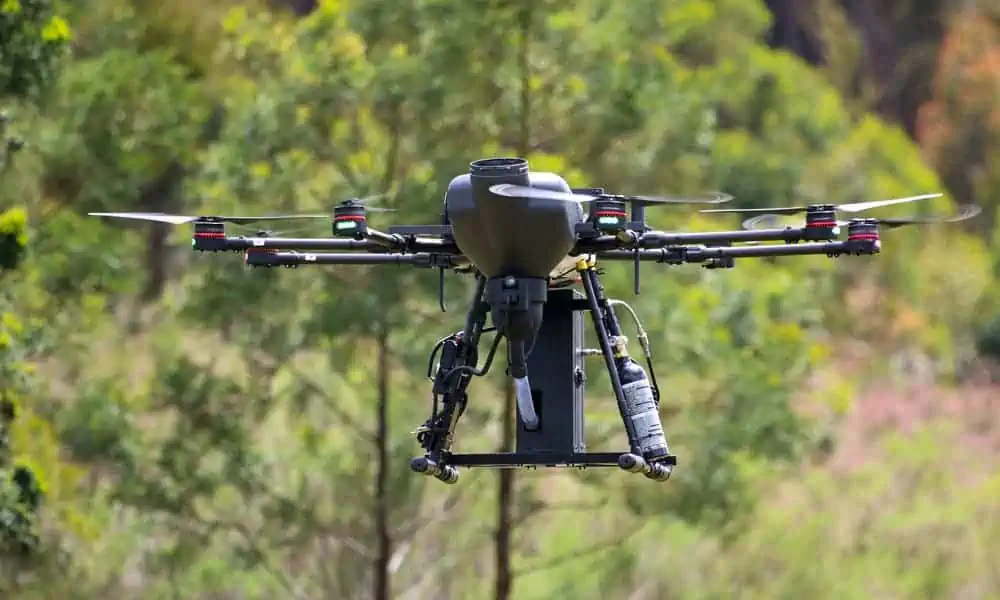
Weight and Dimensions: At approximately 4.4 lbs (2 kg), with a height of 15.7 inches and width of 9.8 inches, the drone was engineered to be light enough to accelerate rapidly while structurally robust to carry its powerful battery pack.
Power and Performance: Its 16-kilowatt peak power output translates to a power-to-weight ratio nearly ten times that of a Formula 1 car, allowing it to rival—and surpass—the top speeds of hypercars such as the Koenigsegg Jesko Absolut (330 mph).
Aerodynamics and Construction: The greatest challenge was packing this power into a tiny, aerodynamic frame that could withstand extreme forces. Iterative design, drag reduction strategies, and careful material selection were key to ensuring both speed and durability.
Pushing the Boundaries
Early prototypes reached 280 mph, providing critical data for refinement. Persistent tuning and optimization eventually propelled the drone to unofficial speeds of 655 km/h (406 mph) under ideal downwind conditions. For the Guinness World Record attempt, however, speeds were measured under controlled conditions to comply with official standards.
Biggs’s record eclipsed previous holders, including a 480 km/h drone flown by a father-son duo in 2024, marking a significant leap forward in RC drone performance.
A Passion Project with Global Impact
Biggs documented his journey and shared the historic achievement on Instagram (@biggsy_fpv), celebrating a milestone that exemplifies the fusion of personal passion and professional engineering skill.
This record is more than a personal triumph—it is a testament to how individual ingenuity can push technological boundaries. As drones continue to evolve, Biggs’s achievement underscores the limitless potential of DIY innovation, hinting at a future where small, battery-powered aircraft may one day challenge the very limits of speed and aerodynamics.
उड़ान की सीमाओं को तोड़ते हुए: कैसे बेंजामिन बिग्स ने बैटरी-पावर्ड ड्रोन की विश्व गति रिकॉर्ड तोड़ी
8 दिसंबर, 2025 को मेलबोर्न, ऑस्ट्रेलिया में बेंजामिन बिग्स—एक ऑस्ट्रेलियाई एयरोस्पेस इंजीनियर और 15 से अधिक वर्षों के ड्रोन पायलट अनुभव के साथ—ने एक ऐसा कारनामा किया जिसने दुनिया भर के ड्रोन उत्साही और इंजीनियरों को मंत्रमुग्ध कर दिया। बिग्स ने गिनीज़ वर्ल्ड रिकॉर्ड अपने बैटरी-पावर्ड रिमोट-कंट्रोल (RC) क्वाडकॉप्टर के लिए सबसे तेज़ ग्राउंड स्पीड के लिए स्थापित किया, जिसकी रफ्तार थी 626.42 किमी/घंटा (389.24 मील/घंटा)। यह संख्या पहले रिपोर्ट की गई 388 मील/घंटा के लगभग मेल खाती है, जो मामूली गोलाई का अंतर हो सकता है।
हॉलीवुड ड्रोन से व्यक्तिगत महत्वाकांक्षा तक
बिग्स, जो पेशेवर रूप से XM2 के लिए काम करते हैं—एक ड्रोन फोटोग्राफी कंपनी जो ब्लॉकबस्टर फिल्मों जैसे John Wick 4 के लिए अत्याधुनिक उपकरण प्रदान करती है—ने इस परियोजना की शुरुआत व्यक्तिगत चुनौती के रूप में की। एक यूट्यूब वीडियो में तेज़ ड्रोन देखकर उन्होंने इसे पार करने का संकल्प लिया।
अपने गहन अनुभव का लाभ उठाते हुए एयरोडायनामिक्स, CAD मॉडलिंग, इलेक्ट्रिकल सिस्टम और पायलटिंग में, बिग्स ने ड्रोन को खुद से डिजाइन और निर्मित किया। शुरुआत में यह परियोजना स्वयं वित्त पोषित थी, लेकिन बाद में इसे अंतिम निर्माण के लिए Drone Pro Hub से प्रायोजन मिला।
गति का राक्षस तैयार करना
बिग्स ने लगभग 18 महीने इस परियोजना को समर्पित किए, हर पहलू की बारीकी से निगरानी करते हुए—3D मॉडलिंग, एयरोडायनामिक्स, इलेक्ट्रॉनिक्स और घटक चयन—मुख्य रूप से XM2 के कार्यशाला से।
मुख्य डिज़ाइन विनिर्देश और विशेषताएँ:
वजन और आयाम: लगभग 2 किलोग्राम (4.4 lbs) वजन और 15.7 इंच ऊँचाई, 9.8 इंच चौड़ाई के साथ, यह ड्रोन इतनी हल्की थी कि तेज़ी से गति प्राप्त कर सके और बैटरी पैक को सुरक्षित रूप से संभाल सके।
शक्ति और प्रदर्शन: इसका 16 किलोवॉट पीक पावर आउटपुट लगभग एक फॉर्मूला 1 कार की तुलना में दस गुना अधिक पावर-टू-वेट अनुपात प्रदान करता है, जिससे यह हाइपरकारों जैसे Koenigsegg Jesko Absolut (330 mph) की रफ्तार को भी मात दे सकता है।
एयरोडायनामिक्स और निर्माण: सबसे बड़ी चुनौती इतनी शक्ति को छोटे, एयरोडायनामिक और टिकाऊ फ्रेम में समेटना थी। डिजाइन के कई संस्करणों, ड्रैग कम करने की रणनीतियों और सामग्री चयन के माध्यम से इसे संतुलित किया गया।
सीमाओं को चुनौती देना
प्रारंभिक प्रोटोटाइप ने 280 mph तक गति प्राप्त की, जिसने सुधार के लिए महत्वपूर्ण डेटा प्रदान किया। लगातार अनुकूलन और ट्यूनिंग के बाद ड्रोन ने आदर्श डाउनविंड परिस्थितियों में 655 किमी/घंटा (406 mph) तक अनौपचारिक गति प्राप्त की। हालांकि, गिनीज़ वर्ल्ड रिकॉर्ड प्रयास के लिए, गति को नियंत्रित परिस्थितियों में मापा गया ताकि आधिकारिक मानकों का पालन हो सके।
बिग्स का रिकॉर्ड पहले रिकॉर्डधारियों को पीछे छोड़ देता है, जिनमें 2024 में 480 किमी/घंटा का ड्रोन उड़ाने वाला एक पिता-पुत्र जोड़ा शामिल है, जो RC ड्रोन प्रदर्शन में एक महत्वपूर्ण छलांग है।
व्यक्तिगत जुनून और वैश्विक प्रभाव
बिग्स ने अपने Instagram (@biggsy_fpv) पर इस यात्रा और ऐतिहासिक उपलब्धि को साझा किया, एक ऐसे मील का पत्थर का जश्न मनाते हुए जो दर्शाता है कि व्यक्तिगत जुनून और पेशेवर इंजीनियरिंग कौशल मिलकर तकनीकी सीमाओं को कैसे आगे बढ़ा सकते हैं।
यह रिकॉर्ड केवल एक व्यक्तिगत सफलता नहीं है—यह इस बात का प्रमाण है कि व्यक्तिगत रचनात्मकता और नवाचार ड्रोन तकनीक की सीमाओं को कैसे चुनौती दे सकते हैं। भविष्य में छोटे, बैटरी-पावर्ड विमान अत्यधिक गति और एयरोडायनामिक्स की सीमाओं को और आगे धकेल सकते हैं, और बिग्स की उपलब्धि इसे स्पष्ट रूप से दिखाती है।

Riding the Storm: Inside Benjamin Biggs’s Record-Breaking Drone
The morning air in Melbourne felt electric. The kind of cold, crisp breeze that bites your cheeks and fills your lungs with anticipation. Benjamin Biggs crouched beside his creation—a tiny, feather-light quadcopter that looked more like a toy than a weapon of speed. And yet, today, it was going to fly faster than anything of its size had ever flown before.
He hit the start button. The rotors whirred to life, a high-pitched scream that vibrated through his hands and chest. The drone trembled like a wild animal on the verge of sprinting. Then, with a sudden jolt, it lifted off the ground.
And then it was gone.
The Rush of 626 km/h
Imagine the world blurred into streaks of color: green fields smeared into ribbons, fences flattened into lines, the wind roaring past like the voice of a hurricane. That’s what 626.42 km/h (389 mph) feels like—enough to turn the familiar into the abstract, to make the ordinary seem impossible. For a drone barely 2 kg in weight, it was a symphony of precision engineering and sheer audacity.
Every vibration of the motors was a pulse of raw power. Every fraction of a second mattered. One miscalculation, and the tiny aircraft could spiral into the earth in a blaze of sparks. But Biggs had tested, tuned, and retested for 18 months, chasing the perfect balance of aerodynamics, power, and weight.
From Obsession to Breakthrough
The journey began innocuously: a YouTube video of a fast drone. But obsession has a way of magnifying small sparks into roaring fires. With over 15 years of drone piloting experience and a degree in aerospace engineering, Biggs transformed inspiration into innovation. CAD models became reality, wires became lifeblood, and his workshop became a laboratory of velocity.
His drone was tiny—15.7 inches tall, 9.8 inches wide—but inside its frame raged a 16-kilowatt engine, a power-to-weight ratio that dwarfed even Formula 1 cars. Each rotor sliced the air with surgical precision. Each component was fine-tuned for a singular purpose: absolute speed.
The Heartbeat of a Record
As the drone shot across the test course, the world seemed to fold. Trees elongated into streaks, the horizon flattened, and the wind screamed past with a force that made the skin tingle. This wasn’t just a record attempt—it was a ballet of physics, engineering, and adrenaline.
Early prototypes had reached 280 mph. He had pushed the limits unofficially to 406 mph. But now, under Guinness-controlled conditions, 626 km/h was the number that would forever be etched in history.
Biggs’s drone didn’t just beat the previous record of 480 km/h—it redefined what a battery-powered RC quadcopter could achieve. It wasn’t just faster; it was untouchable, a tiny streak of human ingenuity racing the wind itself.
Beyond Speed
Biggs documented the flight on Instagram (@biggsy_fpv), sharing the thrill, the sweat, the calculations, and the triumph. But this is more than a record; it’s a testament to what obsession, skill, and imagination can achieve when untethered by convention.
He isn’t finished. Somewhere in his mind, a new challenge is already taking shape. A faster drone. A wilder course. Another boundary to break. Because for Benjamin Biggs, speed isn’t just a number—it’s a horizon, and he’s racing toward it faster than anyone else ever could.
तूफ़ान की सवारी: बेंजामिन बिग्स के रिकॉर्ड-ब्रेकिंग ड्रोन के अंदर
मेलबोर्न की सुबह में एक अजीब सी बिजली सी महसूस हो रही थी। वह ठंडी, ताज़ा हवा, जो गालों को चुभती है और फेफड़ों में उत्साह भर देती है। बेंजामिन बिग्स अपने निर्माण के पास झुके—एक छोटा, हल्का-फुल्का क्वाडकॉप्टर, जो खिलौने जैसा दिखता था, लेकिन आज यह किसी भी इसी आकार के विमान की तुलना में तेज़ उड़ने वाला था।
उन्होंने स्टार्ट बटन दबाया। रोटर ज़ोर से घूमने लगे, एक तीखी चीख़ जैसी आवाज़, जो उनके हाथों और छाती में कंपन पैदा कर रही थी। ड्रोन कांपने लगा, जैसे कोई जंगली जानवर दौड़ने के लिए तैयार हो। फिर अचानक, एक झटका और वह उड़ गया।
626 किमी/घंटा की रफ्तार का रोमांच
कल्पना कीजिए, दुनिया रंगों की धुंधली रेखाओं में बदल गई: हरे मैदान रिबन जैसे खिंच गए, बाड़ें रेखाओं में बदल गईं, हवा गरजती हुई गुज़री। यही 626.42 किमी/घंटा (389 mph) का अनुभव है—इतना तेज़ कि आम चीज़ें असंभव सी लगने लगती हैं। 2 किलोग्राम से भी हल्के इस ड्रोन के लिए, यह पूर्ण शक्ति और साहस का संगम था।
हर मोटर की कंपन शक्ति की धड़कन थी। हर सेकंड कीमती था। एक छोटी सी गलती, और यह छोटा विमान पृथ्वी से टकरा सकता था। लेकिन बिग्स ने 18 महीनों तक परीक्षण, ट्यूनिंग और पुनः परीक्षण किया, हवा में परफेक्ट बैलेंस पाने के लिए।
जुनून से उपलब्धि तक
यात्रा शुरू हुई थी एक साधारण यूट्यूब वीडियो देखकर। लेकिन जुनून छोटे-छोटे विचारों को आग में बदल देता है। 15 साल के ड्रोन पायलटिंग अनुभव और एयरोस्पेस इंजीनियरिंग की डिग्री के साथ, बिग्स ने कल्पना को वास्तविकता में बदला। CAD मॉडल वास्तविकता बने, तार और घटक जीवनदान बने, और कार्यशाला गति की प्रयोगशाला बन गई।
ड्रोन आकार में छोटा था—15.7 इंच ऊँचा, 9.8 इंच चौड़ा—लेकिन इसके भीतर दैत्य शक्ति थी: 16 किलोवॉट की मोटर, जिसका पावर-टू-वेट अनुपात फॉर्मूला 1 कार से दस गुना अधिक था। हर रोटर हवा को शल्य-क्रिया की तरह काट रहा था। हर घटक सिर्फ एक उद्देश्य के लिए: पूर्ण गति।
रिकॉर्ड की धड़कन
जैसे ही ड्रोन परीक्षण मार्ग पर दौड़ा, दुनिया फैल गई। पेड़ लंबाई में खिंच गए, क्षितिज समतल हो गया, और हवा इतनी तेज़ गुज़री कि त्वचा पर झुनझुनी हुई। यह केवल रिकॉर्ड प्रयास नहीं था—यह भौतिकी, इंजीनियरिंग और एड्रेनालाईन का नृत्य था।
प्रारंभिक प्रोटोटाइप ने 280 mph की रफ्तार हासिल की थी। उन्होंने अनौपचारिक रूप से 406 mph तक भी पहुँचाया। लेकिन अब, गिनीज़ नियंत्रित परिस्थितियों में, 626 किमी/घंटा वह संख्या थी जो इतिहास में दर्ज हो गई।
बिग्स का ड्रोन केवल 480 किमी/घंटा का पिछला रिकॉर्ड तोड़ने तक ही सीमित नहीं था—यह अपराजेय बन गया, एक छोटा सा मानव कल्पना का तीर, हवा के खिलाफ दौड़ता हुआ।
गति से परे
बिग्स ने अपने अनुभव, पसीना, गणना और विजय की झलक Instagram (@biggsy_fpv) पर साझा की। लेकिन यह केवल रिकॉर्ड नहीं है; यह इस बात का प्रमाण है कि जुनून, कौशल और कल्पना सीमाओं को चुनौती दे सकते हैं।
बिग्स रुके नहीं। उनके मन में कहीं नया चुनौती आकार ले रही है। एक तेज़ ड्रोन। एक ज़्यादा साहसी मार्ग। और एक और सीमा को तोड़ने का अवसर। क्योंकि बेंजामिन बिग्स के लिए, गति सिर्फ़ एक संख्या नहीं है—यह एक क्षितिज है, और वह उससे तेज़ दौड़ रहा है।