
Pages

Sunday, December 21, 2025

21: India

The Convergence Age: Ten Forces Reshaping Humanity’s Future
Liquid Computing: The Future of Human-Tech Symbiosis
Velocity Money: Crypto, Karma, and the End of Traditional Economics
The Next Decade of Biotech: Convergence, Innovation, and Transformation
Beyond Motion: How Robots Will Redefine The Art Of Movement
ChatGPT For Business: A Workbook
Becoming an AI-First Organization
Quantum Computing: Applications And Implications
Challenges In AI Safety
AI-Era Social Network: Reimagined for Truth, Trust & Transformation AI And Robotics Break Capitalism
Musk’s Management
Corporate Culture/ Operating System: Greatness
CEO Functions

The Convergence Age: Ten Forces Reshaping Humanity’s Future
Liquid Computing: The Future of Human-Tech Symbiosis
Velocity Money: Crypto, Karma, and the End of Traditional Economics
The Next Decade of Biotech: Convergence, Innovation, and Transformation
Beyond Motion: How Robots Will Redefine The Art Of Movement
ChatGPT For Business: A Workbook
Becoming an AI-First Organization
Quantum Computing: Applications And Implications
Challenges In AI Safety
AI-Era Social Network: Reimagined for Truth, Trust & Transformation AI And Robotics Break Capitalism
Musk’s Management
Corporate Culture/ Operating System: Greatness
CEO Functions
The Convergence Age: Ten Forces Reshaping Humanity’s Future
Liquid Computing: The Future of Human-Tech Symbiosis
Velocity Money: Crypto, Karma, and the End of Traditional Economics
The Next Decade of Biotech: Convergence, Innovation, and Transformation
Beyond Motion: How Robots Will Redefine The Art Of Movement
ChatGPT For Business: A Workbook
Becoming an AI-First Organization
Quantum Computing: Applications And Implications
Challenges In AI Safety
AI-Era Social Network: Reimagined for Truth, Trust & Transformation AI And Robotics Break Capitalism
Musk’s Management
Corporate Culture/ Operating System: Greatness
CEO Functions
The Convergence Age: Ten Forces Reshaping Humanity’s Future
Liquid Computing: The Future of Human-Tech Symbiosis
Velocity Money: Crypto, Karma, and the End of Traditional Economics
The Next Decade of Biotech: Convergence, Innovation, and Transformation
Beyond Motion: How Robots Will Redefine The Art Of Movement
ChatGPT For Business: A Workbook
Becoming an AI-First Organization
Quantum Computing: Applications And Implications
Challenges In AI Safety
AI-Era Social Network: Reimagined for Truth, Trust & Transformation AI And Robotics Break Capitalism
Musk’s Management
Corporate Culture/ Operating System: Greatness
CEO Functions

The Convergence Age: Ten Forces Reshaping Humanity’s Future
Liquid Computing: The Future of Human-Tech Symbiosis
Velocity Money: Crypto, Karma, and the End of Traditional Economics
The Next Decade of Biotech: Convergence, Innovation, and Transformation
Beyond Motion: How Robots Will Redefine The Art Of Movement
ChatGPT For Business: A Workbook
Becoming an AI-First Organization
Quantum Computing: Applications And Implications
Challenges In AI Safety
AI-Era Social Network: Reimagined for Truth, Trust & Transformation AI And Robotics Break Capitalism
Musk’s Management
Corporate Culture/ Operating System: Greatness
CEO Functions

The Convergence Age: Ten Forces Reshaping Humanity’s Future
Liquid Computing: The Future of Human-Tech Symbiosis
Velocity Money: Crypto, Karma, and the End of Traditional Economics
The Next Decade of Biotech: Convergence, Innovation, and Transformation
Beyond Motion: How Robots Will Redefine The Art Of Movement
ChatGPT For Business: A Workbook
Becoming an AI-First Organization
Quantum Computing: Applications And Implications
Challenges In AI Safety
AI-Era Social Network: Reimagined for Truth, Trust & Transformation AI And Robotics Break Capitalism
Musk’s Management
Corporate Culture/ Operating System: Greatness
CEO Functions

The Convergence Age: Ten Forces Reshaping Humanity’s Future
Liquid Computing: The Future of Human-Tech Symbiosis
Velocity Money: Crypto, Karma, and the End of Traditional Economics
The Next Decade of Biotech: Convergence, Innovation, and Transformation
Beyond Motion: How Robots Will Redefine The Art Of Movement
ChatGPT For Business: A Workbook
Becoming an AI-First Organization
Quantum Computing: Applications And Implications
Challenges In AI Safety
AI-Era Social Network: Reimagined for Truth, Trust & Transformation AI And Robotics Break Capitalism
Musk’s Management
Corporate Culture/ Operating System: Greatness
CEO Functions

The Convergence Age: Ten Forces Reshaping Humanity’s Future
Liquid Computing: The Future of Human-Tech Symbiosis
Velocity Money: Crypto, Karma, and the End of Traditional Economics
The Next Decade of Biotech: Convergence, Innovation, and Transformation
Beyond Motion: How Robots Will Redefine The Art Of Movement
ChatGPT For Business: A Workbook
Becoming an AI-First Organization
Quantum Computing: Applications And Implications
Challenges In AI Safety
AI-Era Social Network: Reimagined for Truth, Trust & Transformation AI And Robotics Break Capitalism
Musk’s Management
Corporate Culture/ Operating System: Greatness
CEO Functions

The Convergence Age: Ten Forces Reshaping Humanity’s Future
Liquid Computing: The Future of Human-Tech Symbiosis
Velocity Money: Crypto, Karma, and the End of Traditional Economics
The Next Decade of Biotech: Convergence, Innovation, and Transformation
Beyond Motion: How Robots Will Redefine The Art Of Movement
ChatGPT For Business: A Workbook
Becoming an AI-First Organization
Quantum Computing: Applications And Implications
Challenges In AI Safety
AI-Era Social Network: Reimagined for Truth, Trust & Transformation AI And Robotics Break Capitalism
Musk’s Management
Corporate Culture/ Operating System: Greatness
CEO Functions

Friday, December 19, 2025

19: India

The Convergence Age: Ten Forces Reshaping Humanity’s Future
Liquid Computing: The Future of Human-Tech Symbiosis
Velocity Money: Crypto, Karma, and the End of Traditional Economics
The Next Decade of Biotech: Convergence, Innovation, and Transformation
Beyond Motion: How Robots Will Redefine The Art Of Movement
ChatGPT For Business: A Workbook
Becoming an AI-First Organization
Quantum Computing: Applications And Implications
Challenges In AI Safety
AI-Era Social Network: Reimagined for Truth, Trust & Transformation AI And Robotics Break Capitalism
Musk’s Management
Corporate Culture/ Operating System: Greatness
CEO Functions

The Convergence Age: Ten Forces Reshaping Humanity’s Future
Liquid Computing: The Future of Human-Tech Symbiosis
Velocity Money: Crypto, Karma, and the End of Traditional Economics
The Next Decade of Biotech: Convergence, Innovation, and Transformation
Beyond Motion: How Robots Will Redefine The Art Of Movement
ChatGPT For Business: A Workbook
Becoming an AI-First Organization
Quantum Computing: Applications And Implications
Challenges In AI Safety
AI-Era Social Network: Reimagined for Truth, Trust & Transformation AI And Robotics Break Capitalism
Musk’s Management
Corporate Culture/ Operating System: Greatness
CEO Functions

The Convergence Age: Ten Forces Reshaping Humanity’s Future
Liquid Computing: The Future of Human-Tech Symbiosis
Velocity Money: Crypto, Karma, and the End of Traditional Economics
The Next Decade of Biotech: Convergence, Innovation, and Transformation
Beyond Motion: How Robots Will Redefine The Art Of Movement
ChatGPT For Business: A Workbook
Becoming an AI-First Organization
Quantum Computing: Applications And Implications
Challenges In AI Safety
AI-Era Social Network: Reimagined for Truth, Trust & Transformation AI And Robotics Break Capitalism
Musk’s Management
Corporate Culture/ Operating System: Greatness
CEO Functions

The Convergence Age: Ten Forces Reshaping Humanity’s Future
Liquid Computing: The Future of Human-Tech Symbiosis
Velocity Money: Crypto, Karma, and the End of Traditional Economics
The Next Decade of Biotech: Convergence, Innovation, and Transformation
Beyond Motion: How Robots Will Redefine The Art Of Movement
ChatGPT For Business: A Workbook
Becoming an AI-First Organization
Quantum Computing: Applications And Implications
Challenges In AI Safety
AI-Era Social Network: Reimagined for Truth, Trust & Transformation AI And Robotics Break Capitalism
Musk’s Management
Corporate Culture/ Operating System: Greatness
CEO Functions

The Convergence Age: Ten Forces Reshaping Humanity’s Future
Liquid Computing: The Future of Human-Tech Symbiosis
Velocity Money: Crypto, Karma, and the End of Traditional Economics
The Next Decade of Biotech: Convergence, Innovation, and Transformation
Beyond Motion: How Robots Will Redefine The Art Of Movement
ChatGPT For Business: A Workbook
Becoming an AI-First Organization
Quantum Computing: Applications And Implications
Challenges In AI Safety
AI-Era Social Network: Reimagined for Truth, Trust & Transformation AI And Robotics Break Capitalism
Musk’s Management
Corporate Culture/ Operating System: Greatness
CEO Functions

The Convergence Age: Ten Forces Reshaping Humanity’s Future
Liquid Computing: The Future of Human-Tech Symbiosis
Velocity Money: Crypto, Karma, and the End of Traditional Economics
The Next Decade of Biotech: Convergence, Innovation, and Transformation
Beyond Motion: How Robots Will Redefine The Art Of Movement
ChatGPT For Business: A Workbook
Becoming an AI-First Organization
Quantum Computing: Applications And Implications
Challenges In AI Safety
AI-Era Social Network: Reimagined for Truth, Trust & Transformation AI And Robotics Break Capitalism
Musk’s Management
Corporate Culture/ Operating System: Greatness
CEO Functions

The Convergence Age: Ten Forces Reshaping Humanity’s Future
Liquid Computing: The Future of Human-Tech Symbiosis
Velocity Money: Crypto, Karma, and the End of Traditional Economics
The Next Decade of Biotech: Convergence, Innovation, and Transformation
Beyond Motion: How Robots Will Redefine The Art Of Movement
ChatGPT For Business: A Workbook
Becoming an AI-First Organization
Quantum Computing: Applications And Implications
Challenges In AI Safety
AI-Era Social Network: Reimagined for Truth, Trust & Transformation AI And Robotics Break Capitalism
Musk’s Management
Corporate Culture/ Operating System: Greatness
CEO Functions

The Convergence Age: Ten Forces Reshaping Humanity’s Future
Liquid Computing: The Future of Human-Tech Symbiosis
Velocity Money: Crypto, Karma, and the End of Traditional Economics
The Next Decade of Biotech: Convergence, Innovation, and Transformation
Beyond Motion: How Robots Will Redefine The Art Of Movement
ChatGPT For Business: A Workbook
Becoming an AI-First Organization
Quantum Computing: Applications And Implications
Challenges In AI Safety
AI-Era Social Network: Reimagined for Truth, Trust & Transformation AI And Robotics Break Capitalism
Musk’s Management
Corporate Culture/ Operating System: Greatness
CEO Functions

The Convergence Age: Ten Forces Reshaping Humanity’s Future
Liquid Computing: The Future of Human-Tech Symbiosis
Velocity Money: Crypto, Karma, and the End of Traditional Economics
The Next Decade of Biotech: Convergence, Innovation, and Transformation
Beyond Motion: How Robots Will Redefine The Art Of Movement
ChatGPT For Business: A Workbook
Becoming an AI-First Organization
Quantum Computing: Applications And Implications
Challenges In AI Safety
AI-Era Social Network: Reimagined for Truth, Trust & Transformation AI And Robotics Break Capitalism
Musk’s Management
Corporate Culture/ Operating System: Greatness
CEO Functions

The Convergence Age: Ten Forces Reshaping Humanity’s Future
Liquid Computing: The Future of Human-Tech Symbiosis
Velocity Money: Crypto, Karma, and the End of Traditional Economics
The Next Decade of Biotech: Convergence, Innovation, and Transformation
Beyond Motion: How Robots Will Redefine The Art Of Movement
ChatGPT For Business: A Workbook
Becoming an AI-First Organization
Quantum Computing: Applications And Implications
Challenges In AI Safety
AI-Era Social Network: Reimagined for Truth, Trust & Transformation AI And Robotics Break Capitalism
Musk’s Management
Corporate Culture/ Operating System: Greatness
CEO Functions

The Convergence Age: Ten Forces Reshaping Humanity’s Future
Liquid Computing: The Future of Human-Tech Symbiosis
Velocity Money: Crypto, Karma, and the End of Traditional Economics
The Next Decade of Biotech: Convergence, Innovation, and Transformation
Beyond Motion: How Robots Will Redefine The Art Of Movement
ChatGPT For Business: A Workbook
Becoming an AI-First Organization
Quantum Computing: Applications And Implications
Challenges In AI Safety
AI-Era Social Network: Reimagined for Truth, Trust & Transformation AI And Robotics Break Capitalism
Musk’s Management
Corporate Culture/ Operating System: Greatness
CEO Functions

The Convergence Age: Ten Forces Reshaping Humanity’s Future
Liquid Computing: The Future of Human-Tech Symbiosis
Velocity Money: Crypto, Karma, and the End of Traditional Economics
The Next Decade of Biotech: Convergence, Innovation, and Transformation
Beyond Motion: How Robots Will Redefine The Art Of Movement
ChatGPT For Business: A Workbook
Becoming an AI-First Organization
Quantum Computing: Applications And Implications
Challenges In AI Safety
AI-Era Social Network: Reimagined for Truth, Trust & Transformation AI And Robotics Break Capitalism
Musk’s Management
Corporate Culture/ Operating System: Greatness
CEO Functions

The Convergence Age: Ten Forces Reshaping Humanity’s Future
Liquid Computing: The Future of Human-Tech Symbiosis
Velocity Money: Crypto, Karma, and the End of Traditional Economics
The Next Decade of Biotech: Convergence, Innovation, and Transformation
Beyond Motion: How Robots Will Redefine The Art Of Movement
ChatGPT For Business: A Workbook
Becoming an AI-First Organization
Quantum Computing: Applications And Implications
Challenges In AI Safety
AI-Era Social Network: Reimagined for Truth, Trust & Transformation AI And Robotics Break Capitalism
Musk’s Management
Corporate Culture/ Operating System: Greatness
CEO Functions

The Convergence Age: Ten Forces Reshaping Humanity’s Future
Liquid Computing: The Future of Human-Tech Symbiosis
Velocity Money: Crypto, Karma, and the End of Traditional Economics
The Next Decade of Biotech: Convergence, Innovation, and Transformation
Beyond Motion: How Robots Will Redefine The Art Of Movement
ChatGPT For Business: A Workbook
Becoming an AI-First Organization
Quantum Computing: Applications And Implications
Challenges In AI Safety
AI-Era Social Network: Reimagined for Truth, Trust & Transformation AI And Robotics Break Capitalism
Musk’s Management
Corporate Culture/ Operating System: Greatness
CEO Functions

The Convergence Age: Ten Forces Reshaping Humanity’s Future
Liquid Computing: The Future of Human-Tech Symbiosis
Velocity Money: Crypto, Karma, and the End of Traditional Economics
The Next Decade of Biotech: Convergence, Innovation, and Transformation
Beyond Motion: How Robots Will Redefine The Art Of Movement
ChatGPT For Business: A Workbook
Becoming an AI-First Organization
Quantum Computing: Applications And Implications
Challenges In AI Safety
AI-Era Social Network: Reimagined for Truth, Trust & Transformation AI And Robotics Break Capitalism
Musk’s Management
Corporate Culture/ Operating System: Greatness
CEO Functions

When Bureaucracy Meets the Moon: Elon Musk, a “Permanent Lunar Outpost,” and the Art of Thinking Too Small


When Bureaucracy Meets the Moon: Elon Musk, a “Permanent Lunar Outpost,” and the Art of Thinking Too Small

In late 2025, a single tweet exposed the vast gulf between how governments talk about space—and how Elon Musk imagines it.

The exchange began when Eric Berger (@SciGuySpace), senior editor at Ars Technica and one of the most respected space journalists working today, shared a screenshot from a U.S. space policy document. The passage, written in familiar Washington prose, stated:

“(ii) Establishing the initial elements of a permanent lunar outpost by 2030 to ensure a sustained American presence in space and enable the next steps in Mars exploration.”

Berger’s reaction was not ideological but analytical. What, exactly, does a “permanent lunar outpost” mean?

Is it:

  • A small surface habitat on the Moon?

  • NASA’s Lunar Gateway—an orbiting station often described as a “spaceport”?

  • Or deliberately vague language designed to satisfy multiple stakeholders without committing to any one vision?

The phrasing matters. Words like initial elements and permanent presence sound bold, but they can just as easily mask incrementalism. In space policy, ambiguity is often a feature, not a bug—allowing budgets to pass today while deferring hard decisions to tomorrow.

Enter Elon Musk.

Elon’s Reply: Escalation as a Philosophy

Musk responded to Berger’s tweet with a single line:

“Giant lunar base with AI satellite factories and a mass driver to shoot them into deep space (of course)”

At first glance, it reads like a joke—classic Elon: deadpan, hyperbolic, casually sci-fi. But as with many Musk statements, the humor is merely the sugar coating for a serious provocation.

This was not an interpretation of the policy. It was a deliberate escalation.

Where government language tiptoes, Musk pole-vaults.

Let’s unpack what he’s actually implying.


1. A Giant Lunar Base: Beyond Flags and Footprints

When policymakers say “initial elements of a lunar outpost,” they often mean something modest: a few modules, rotating crews, limited duration stays.

Musk’s phrase—giant lunar base—obliterates that framing.

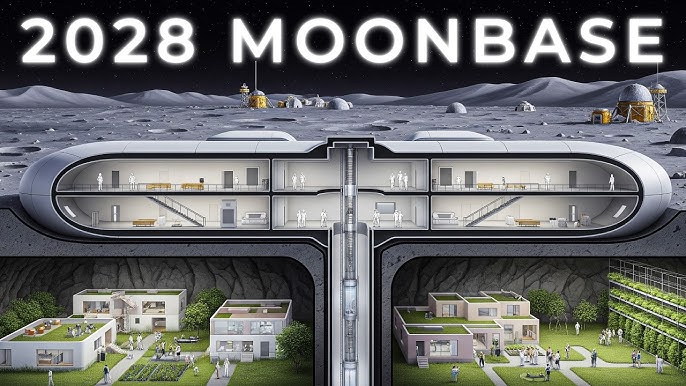
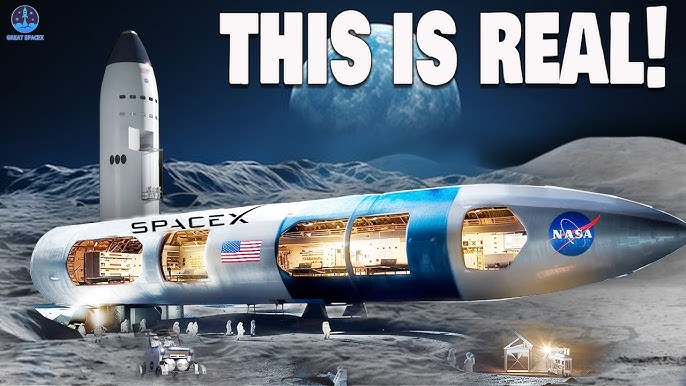
He is imagining something closer to an off-world industrial city: large-scale, semi-autonomous, and designed not just for exploration, but for production. A place that doesn’t merely exist on the Moon, but uses the Moon.

This aligns with his long-standing vision of humanity as a multi-planetary species. In that vision, the Moon is not a destination—it’s infrastructure. A logistics hub between Earth and Mars. A staging ground, warehouse, refinery, and launchpad rolled into one.

With SpaceX’s Starship—designed for massive payloads and rapid reusability—the Moon stops being a distant rock and starts looking like a nearby industrial park.


2. AI Satellite Factories: Manufacturing Without Earth

Perhaps the most radical part of Musk’s tweet is also the least discussed: AI satellite factories.

This is not about assembling satellites more efficiently. It’s about changing where manufacturing happens—and who does the work.

The Moon offers three extraordinary advantages:

  • Low gravity (one-sixth of Earth’s), reducing structural constraints.

  • Vacuum, ideal for certain manufacturing processes.

  • Abundant raw materials, including metals and water ice.

Now add AI.

An AI-run factory doesn’t need oxygen, sleep, or a return ticket. It can mine, refine, fabricate, test, and iterate continuously. Satellites could be designed, built, and optimized on the Moon itself—possibly incorporating lunar materials—then launched directly into space.

This is the logical extension of Musk’s broader worldview: automation first, humans later. Let machines build the scaffolding of civilization, then let people move in.

In this sense, the Moon becomes less like Antarctica and more like the world’s first fully automated industrial zone.


3. The Mass Driver: Launching Without Rockets

The final—and most science-fiction-sounding—piece is the mass driver.

A mass driver is essentially an electromagnetic catapult: a long track that accelerates payloads using magnetic fields until they reach escape velocity. No chemical rockets. No fuel. Just physics.

On Earth, this is impractical. Gravity is too strong, the atmosphere too thick, and safety concerns overwhelming.

On the Moon?

  • Low gravity

  • No atmosphere

  • Vast open terrain

Suddenly, the idea becomes plausible.

A lunar mass driver could launch satellites, raw materials, or spacecraft components directly into orbit—or beyond—at a fraction of the cost of traditional rockets. Musk’s phrase “shoot them into deep space” suggests something even grander: using the Moon as a literal slingshot for Mars missions, asteroid exploration, or interstellar probes.

If rockets are ladders, mass drivers are conveyor belts.


“(Of Course)”: The Sharpest Part of the Joke

The parenthetical—(of course)—is the most revealing part of the tweet.

It’s irony sharpened into critique.

Musk is implicitly saying: If you’re serious about a permanent lunar presence, this is where the logic leads. Anything less is just symbolic occupation—flags, footprints, and press releases.

The joke isn’t that the idea is too big. The joke is that policy thinking is too small.


Reactions: From Burgers to Blueprints

The replies to Musk’s tweet reflected the full spectrum of public engagement with space:

  • Jokes about In-N-Out burgers and coffee shops on the Moon.

  • Diagrams explaining mass drivers to curious non-engineers.

  • Enthusiastic fans citing SpaceX’s launch cadence (over 165 launches in 2025) as evidence that Musk’s “jokes” often become reality.

  • Speculation about “deep space” as a way to reduce Earth-orbit congestion or enable faster interplanetary logistics.

Beneath the humor was a serious undercurrent: people are hungry for visions that feel commensurate with the moment.


The Bigger Picture: Speed vs. Gravity

At its core, this exchange captures a familiar tension.

Governments move like glaciers—slow, heavy, deliberate.
Musk moves like a rocket—fast, risky, and occasionally explosive.

The Artemis program, the Lunar Gateway, and renewed lunar ambitions do represent genuine progress. But Musk’s tweet exposes an uncomfortable truth: timelines framed around 2030 still feel timid when private actors are iterating on yearly cycles.

Whether or not a giant lunar base with AI factories and a mass driver ever materializes exactly as described is almost beside the point.

The tweet’s real function is catalytic.

It forces a question that policy documents often avoid:

If we’re going to the Moon to stay, what does “staying” actually mean?

And once that question is asked honestly, the answer starts to look a lot less like an outpost—and a lot more like a civilization in the making.


जब नौकरशाही का सामना चंद्रमा से होता है: एलन मस्क, “स्थायी चंद्र चौकी” और बहुत छोटा सोचने की कला

2025 के अंत में, एक साधारण-सा ट्वीट इस बात को उजागर कर गया कि सरकारें अंतरिक्ष के बारे में कैसे बात करती हैं—और एलन मस्क उसे कैसे कल्पना में देखते हैं—इन दोनों के बीच कितनी गहरी खाई है।

यह संवाद तब शुरू हुआ जब @SciGuySpace के नाम से प्रसिद्ध एरिक बर्गर—Ars Technica के वरिष्ठ संपादक और आज के सबसे विश्वसनीय अंतरिक्ष पत्रकारों में से एक—ने एक अमेरिकी अंतरिक्ष नीति दस्तावेज़ का स्क्रीनशॉट साझा किया। उस अंश में, परिचित वॉशिंगटन शैली में लिखा था:

“(ii) 2030 तक एक स्थायी चंद्र चौकी के प्रारंभिक तत्वों की स्थापना, ताकि अंतरिक्ष में अमेरिका की निरंतर उपस्थिति सुनिश्चित की जा सके और मंगल अन्वेषण के अगले चरण सक्षम किए जा सकें।”

बर्गर की प्रतिक्रिया वैचारिक नहीं, बल्कि विश्लेषणात्मक थी।
आख़िर “स्थायी चंद्र चौकी” का वास्तविक अर्थ क्या है?

क्या यह है:

  • चंद्र सतह पर एक छोटा-सा मानव आवास?

  • नासा का लूनर गेटवे—एक परिक्रमा करता स्टेशन जिसे अक्सर “अंतरिक्ष बंदरगाह” कहा जाता है?

  • या जानबूझकर अस्पष्ट शब्दावली, ताकि बिना ठोस प्रतिबद्धता के सभी हितधारकों को संतुष्ट किया जा सके?

यह शब्दावली महत्वपूर्ण है। प्रारंभिक तत्व और स्थायी उपस्थिति जैसे शब्द साहसी लगते हैं, लेकिन अक्सर वे धीमी प्रगति को ढकने का काम भी करते हैं। अंतरिक्ष नीति में अस्पष्टता अक्सर एक रणनीति होती है—आज बजट पास कराने के लिए, और कठिन फैसलों को कल पर टालने के लिए।

और तभी प्रवेश होता है—एलन मस्क का।


एलन का जवाब: सोच को जानबूझकर “एस्केलेट” करना

मस्क ने बर्गर के ट्वीट का जवाब एक ही पंक्ति में दिया:

“AI सैटेलाइट फैक्ट्रियों और उन्हें डीप स्पेस में दागने के लिए एक मास ड्राइवर के साथ एक विशाल चंद्र आधार (बिल्कुल ही)।”

पहली नज़र में यह एक मज़ाक लगता है—क्लासिक एलन: शुष्क हास्य, अतिशयोक्ति, और हल्का-सा विज्ञान कथा का स्वाद।
लेकिन, मस्क के कई बयानों की तरह, यह हास्य सिर्फ आवरण है। भीतर एक गंभीर उकसावा छिपा है।

यह नीति की व्याख्या नहीं थी।
यह नीति से कहीं आगे छलांग थी।

जहाँ सरकारी भाषा धीरे चलती है, मस्क वहाँ लंबी छलांग लगाते हैं।

आइए देखें, वह वास्तव में क्या कह रहे हैं।


1. विशाल चंद्र आधार: झंडों और पदचिह्नों से आगे

जब नीति निर्माता “चंद्र चौकी के प्रारंभिक तत्व” कहते हैं, तो उनका मतलब अक्सर होता है:
कुछ मॉड्यूल, सीमित चालक दल, अस्थायी प्रवास।

मस्क का वाक्य—विशाल चंद्र आधार—इस पूरी सोच को नकार देता है।

वह किसी छोटे स्टेशन की नहीं, बल्कि एक ऑफ-वर्ल्ड औद्योगिक शहर की कल्पना कर रहे हैं:
अर्ध-स्वायत्त, बड़े पैमाने पर, और केवल खोज के लिए नहीं—उत्पादन के लिए।

एक ऐसी जगह जो चंद्रमा पर सिर्फ मौजूद न हो, बल्कि चंद्रमा का उपयोग करे।

यह उनकी दीर्घकालिक सोच से मेल खाता है—मानवता को बहु-ग्रहीय प्रजाति बनाने की सोच। इस दृष्टि में, चंद्रमा गंतव्य नहीं है; वह इन्फ्रास्ट्रक्चर है।
पृथ्वी और मंगल के बीच एक लॉजिस्टिक्स हब।
एक गोदाम, रिफाइनरी और लॉन्चपैड—सब एक साथ।

SpaceX के Starship जैसे यान के साथ, चंद्रमा दूर का सपना नहीं, बल्कि पास का औद्योगिक क्षेत्र बन जाता है।


2. AI सैटेलाइट फैक्ट्रियाँ: पृथ्वी के बिना निर्माण

मस्क के ट्वीट का सबसे क्रांतिकारी हिस्सा शायद सबसे कम चर्चा में आया: AI सैटेलाइट फैक्ट्रियाँ

यह सिर्फ सैटेलाइट तेज़ी से बनाने की बात नहीं है।
यह सवाल है—निर्माण कहाँ होगा, और कौन करेगा।

चंद्रमा तीन असाधारण लाभ देता है:

  • कम गुरुत्वाकर्षण (पृथ्वी का छठा हिस्सा)

  • पूर्ण निर्वात

  • प्रचुर कच्चे संसाधन, जिनमें धातुएँ और जल-हिम शामिल हैं

अब इसमें जोड़िए—कृत्रिम बुद्धिमत्ता।

AI फैक्ट्री को न ऑक्सीजन चाहिए, न नींद, न वापसी टिकट।
वह खनन कर सकती है, शोधन कर सकती है, निर्माण और परीक्षण कर सकती है—लगातार।

संभव है कि सैटेलाइट वहीं डिज़ाइन हों, वहीं बनें, और वहीं से सीधे अंतरिक्ष में भेज दिए जाएँ।

यह मस्क की मूल सोच का विस्तार है:
पहले मशीनें, बाद में इंसान।

मशीनें सभ्यता का ढांचा तैयार करें—फिर मानव उसमें प्रवेश करें।

इस तरह चंद्रमा मानव चौकी नहीं, बल्कि दुनिया का पहला पूर्ण-स्वचालित औद्योगिक क्षेत्र बन जाता है।


3. मास ड्राइवर: बिना रॉकेट के लॉन्च

सबसे विज्ञान-कथा-सा विचार है—मास ड्राइवर

मास ड्राइवर मूलतः एक विद्युतचुंबकीय गुलेल है—एक लंबा ट्रैक जो चुंबकीय बलों से पेलोड को इतनी गति देता है कि वह पलायन वेग प्राप्त कर ले।
न रॉकेट ईंधन, न रासायनिक विस्फोट—सिर्फ भौतिकी।

पृथ्वी पर यह लगभग असंभव है।
लेकिन चंद्रमा पर?

  • कम गुरुत्वाकर्षण

  • कोई वायुमंडल नहीं

  • विशाल खाली भूमि

यह विचार अचानक व्यावहारिक लगने लगता है।

एक चंद्र मास ड्राइवर सैटेलाइट, कच्चा माल, या अंतरिक्ष यान के हिस्से सीधे कक्षा या उससे आगे भेज सकता है—बहुत कम लागत पर।

“डीप स्पेस में दागना” इस ओर इशारा करता है कि चंद्रमा मंगल, क्षुद्रग्रहों या यहाँ तक कि अंतरतारकीय मिशनों के लिए स्लिंगशॉट बन सकता है।

यदि रॉकेट सीढ़ियाँ हैं, तो मास ड्राइवर कन्वेयर बेल्ट हैं।


“(बिल्कुल ही)”: मज़ाक का सबसे तीखा हिस्सा

(बिल्कुल ही)—यही सबसे महत्वपूर्ण वाक्यांश है।

यह व्यंग्य है, लेकिन आलोचना भी।

मस्क मानो कह रहे हों:
अगर आप सच में स्थायी चंद्र उपस्थिति चाहते हैं, तो तर्क यहीं तक ले जाता है।
इसके अलावा सब कुछ केवल प्रतीकात्मक उपस्थिति है—झंडे, पदचिह्न और प्रेस विज्ञप्तियाँ।

मज़ाक यह नहीं है कि विचार बहुत बड़ा है।
मज़ाक यह है कि नीति की सोच बहुत छोटी है।


प्रतिक्रियाएँ: बर्गर से ब्लूप्रिंट तक

ट्वीट पर प्रतिक्रियाएँ अंतरिक्ष को लेकर समाज की पूरी मानसिकता दिखाती हैं:

  • चंद्रमा पर In-N-Out बर्गर की दुकान के मज़ाक

  • मास ड्राइवर समझाने वाले सरल चित्र

  • SpaceX की 2025 की 165+ लॉन्च संख्या गिनाने वाले उत्साही समर्थक

  • “डीप स्पेस” को पृथ्वी की कक्षा भीड़ से बचाने का उपाय मानने वाले विचार

हँसी के पीछे एक गंभीर भावना थी—लोग ऐसे विज़न चाहते हैं जो समय की मांग के अनुरूप हों।


बड़ी तस्वीर: गति बनाम जड़ता

यह पूरा संवाद एक पुराने तनाव को उजागर करता है।

सरकारें हिमनद की तरह चलती हैं—धीमी, भारी, सावधान।
एलन मस्क रॉकेट की तरह—तेज़, जोखिम भरे, और कभी-कभी विस्फोटक।

Artemis कार्यक्रम और चंद्र योजनाएँ वास्तविक प्रगति हैं।
लेकिन मस्क का ट्वीट एक असहज सवाल उठाता है:

अगर हम चंद्रमा पर रहने जा रहे हैं, तो “रहना” वास्तव में क्या है?

और जब इस प्रश्न का ईमानदारी से उत्तर खोजा जाता है,
तो उत्तर एक चौकी जैसा नहीं,
बल्कि एक उभरती हुई सभ्यता जैसा दिखने लगता है।


Smart Roads, Smarter Cities: Why the Future of Mobility Is a System, Not a Car


Smart Roads, Smarter Cities: Why the Future of Mobility Is a System, Not a Car

For the last decade, the future of transportation has been marketed as a singular object: the smart car. Sensors bristling like whiskers, AI brains humming under the hood, vehicles that promise to drive themselves while we sip coffee and reclaim our commute.

But this framing misses the forest for the trees.

Transportation is not a product. It is a system. And systems do not become intelligent by upgrading one component while leaving the rest dumb.

If we truly want safer streets, lower costs, cleaner cities, and frictionless movement, the intelligence cannot live only inside cars. It must live in the roads, the networks, the infrastructure, and the planning logic itself.

In short: smart roads beat smart cars; smart networks beat both.


The Problem With Car-Centric Intelligence

A fully autonomous car today is expected to:

  • Perceive unpredictable environments

  • Interpret human behavior

  • Anticipate edge cases

  • Navigate infrastructure designed for humans, not machines

That’s like asking a single violinist to replace an orchestra.

When every car must independently “figure out” the world, autonomy becomes expensive, brittle, and slow to scale. Each vehicle must reinvent the same intelligence—over and over—while dealing with chaos it did not design.

This is why self-driving has proven far harder than expected. The problem isn’t AI capability alone. It’s context starvation.

Cars are being asked to be geniuses in an ignorant world.


Smart Roads: Giving the World a Brain

Now flip the model.

Imagine roads that:

  • Broadcast traffic conditions in real time

  • Signal upcoming hazards, weather changes, or congestion

  • Coordinate lane usage dynamically

  • Adjust speed limits algorithmically

  • Prioritize emergency vehicles automatically

  • Communicate directly with vehicles and pedestrians

In this world, roads are no longer passive asphalt. They are active participants.

Smart roads turn driving from a guessing game into a guided conversation. Instead of every car interpreting reality independently, the environment itself becomes legible.

This dramatically simplifies autonomy:

  • Fewer sensors needed per vehicle

  • Lower computational costs

  • Faster rollout to older cars

  • Safer mixed environments with humans and machines

Autonomy becomes a collective intelligence, not a lonely struggle.


Cars That Talk to Each Other: From Solitude to Swarms

Even smarter: cars that communicate directly with one another.

Vehicle-to-vehicle (V2V) communication enables:

  • Cooperative braking

  • Platooning for energy efficiency

  • Intersection negotiation without stoplights

  • Real-time rerouting before congestion forms

  • Accident prevention before danger is visible

This is how nature scales intelligence. Birds don’t avoid collisions because each bird is brilliant. They succeed because the flock shares information.

Traffic, reimagined as a swarm, becomes smoother, faster, and safer—not through heroics, but through coordination.


The Real Intelligence: Knowing When Not to Use Cars

But the smartest move of all is recognizing that cars should not be the default.

True transportation intelligence begins with a harder question:
Where does each mode of transit make the most sense?

  • Planes for long-distance, high-speed travel

  • Trains for dense intercity corridors

  • Buses for urban and suburban circulation

  • Cars for flexibility and last-mile access

  • Walking and cycling where human-scale movement thrives

Cities fail when they pretend one mode can do everything.

Cars are excellent tools—but terrible monopolies.


The Case for Autonomous Public Transportation

Now consider the economics of self-driving buses.

Once labor costs disappear, buses become:

  • Radically cheaper to operate

  • Available at higher frequency

  • Viable on routes previously deemed “uneconomic”

  • Easier to scale dynamically with demand

At that point, a startling idea becomes logical:

In dense cities, public transit might be cheapest when it’s free.

No ticketing friction.
No enforcement.
No delays at entry.
No mental tax on riders.

Just movement.

The cost of charging, policing, and processing payments may exceed the cost of simply running the system.


From Ownership to Access: Buying the Journey, Not the Vehicle

This leads to a profound shift in how we think about travel.

Instead of worrying about:

  • Parking

  • Transfers

  • Last-mile gaps

  • Mode switching

You simply buy Point A to Point B.

Behind the scenes, an intelligent mobility system orchestrates:

  • A train for the long leg

  • An autonomous bus for the city

  • A shared car or pod for the final mile

To the user, it feels seamless.
To the system, it’s optimized.
To the city, it’s efficient.
To the planet, it’s humane.

Cars become infrastructure endpoints, not lifestyle identities.


Cities as Operating Systems

In this future, cities function less like collections of roads and more like operating systems.

  • Roads are APIs

  • Vehicles are clients

  • Traffic rules are algorithms

  • Transit is a service, not a struggle

Intelligence is distributed where it belongs: across the network.

The smartest city is not the one with the fanciest cars.
It is the one that reduces the need for cars altogether, while making the ones we still use safer, simpler, and rarer.


Conclusion: Don’t Build Smarter Cars for Dumb Cities

Autonomous vehicles are not a destination. They are a component.

The future of mobility will not be won by the company that builds the smartest car—but by the societies that build the smartest systems.

Smart roads.
Talking vehicles.
Autonomous public transit.
Free-flowing multimodal journeys.
Cities designed for movement, not metal.

When intelligence moves from the dashboard into the city itself, transportation stops being a problem—and starts becoming a quiet utility, like electricity.

You don’t marvel at it.
You just move.


स्मार्ट सड़कें, समझदार शहर: भविष्य की मोबिलिटी कार नहीं, एक सिस्टम है

पिछले एक दशक से परिवहन के भविष्य को एक ही वस्तु के रूप में पेश किया गया है: स्मार्ट कार
सेंसरों से भरी हुई, अंदर एआई का दिमाग, और यह वादा कि कार खुद चलेगी और हम आराम से कॉफी पीते हुए सफ़र करेंगे।

लेकिन यह सोच असली मुद्दे को चूक जाती है।

परिवहन कोई उत्पाद नहीं है। यह एक सिस्टम है। और सिस्टम तब स्मार्ट नहीं बनते जब हम सिर्फ़ एक हिस्से को अपग्रेड कर दें और बाकी सब कुछ वैसा ही “मूर्ख” छोड़ दें।

अगर हमें सच में सुरक्षित सड़कें, कम लागत, स्वच्छ शहर और बिना रुकावट के आवाजाही चाहिए, तो बुद्धिमत्ता सिर्फ़ कारों के अंदर नहीं रह सकती। उसे सड़कों, नेटवर्क, इन्फ्रास्ट्रक्चर और शहरी योजना की सोच में बसना होगा।

संक्षेप में: स्मार्ट कारों से बेहतर हैं स्मार्ट सड़कें; और इन दोनों से भी बेहतर हैं स्मार्ट नेटवर्क।


सिर्फ़ कार-केंद्रित बुद्धिमत्ता की समस्या

आज एक पूरी तरह स्वायत्त (ऑटोनॉमस) कार से यह उम्मीद की जाती है कि वह:

  • अनिश्चित और जटिल वातावरण को समझे

  • इंसानी व्यवहार की व्याख्या करे

  • हर “एज केस” का अनुमान लगाए

  • ऐसी सड़कों पर चले जो इंसानों के लिए बनी हैं, मशीनों के लिए नहीं

यह ऐसा है जैसे किसी एक वायलिन वादक से पूरी ऑर्केस्ट्रा बजाने को कह देना।

जब हर कार को अकेले ही दुनिया “समझनी” पड़ती है, तो ऑटोनॉमी महंगी, नाज़ुक और स्केल करने में धीमी हो जाती है। हर वाहन को वही बुद्धिमत्ता बार-बार दोहरानी पड़ती है, एक ऐसे माहौल में जिसे उसने डिज़ाइन ही नहीं किया।

यही वजह है कि सेल्फ-ड्राइविंग उम्मीद से कहीं ज़्यादा मुश्किल साबित हुई है। समस्या सिर्फ़ एआई की क्षमता नहीं है। असली समस्या है संदर्भ की कमी

कारों से उम्मीद की जा रही है कि वे एक ऐसे संसार में जीनियस बनें जो खुद अज्ञानी है।


स्मार्ट सड़कें: दुनिया को दिमाग देना

अब सोच को पलटकर देखें।

कल्पना कीजिए ऐसी सड़कों की जो:

  • रियल-टाइम ट्रैफिक जानकारी प्रसारित करें

  • आगे आने वाले खतरों, मौसम या जाम की सूचना दें

  • लेन का उपयोग डायनेमिक तरीके से तय करें

  • गति सीमाओं को एल्गोरिदम से समायोजित करें

  • आपातकालीन वाहनों को अपने-आप प्राथमिकता दें

  • सीधे वाहनों और पैदल यात्रियों से संवाद करें

इस दुनिया में सड़कें सिर्फ़ निष्क्रिय डामर नहीं होंगी। वे सक्रिय भागीदार होंगी।

स्मार्ट सड़कें ड्राइविंग को अंदाज़े के खेल से निकालकर एक निर्देशित संवाद बना देती हैं। हर कार को अलग-अलग वास्तविकता समझने की ज़रूरत नहीं पड़ती; माहौल खुद ही स्पष्ट हो जाता है।

इससे ऑटोनॉमी बहुत आसान हो जाती है:

  • प्रति वाहन कम सेंसर

  • कम कंप्यूटेशन लागत

  • पुरानी कारों तक तेज़ विस्तार

  • इंसानों और मशीनों के मिश्रित माहौल में ज़्यादा सुरक्षा

ऑटोनॉमी एक सामूहिक बुद्धिमत्ता बन जाती है, न कि अकेली जद्दोजहद।


आपस में बात करती कारें: अकेलेपन से झुंड तक

और भी स्मार्ट विचार: कारें जो एक-दूसरे से सीधे बात करें।

वाहन-से-वाहन (V2V) संचार सक्षम करता है:

  • सामूहिक ब्रेकिंग

  • ऊर्जा बचाने के लिए प्लाटूनिंग

  • बिना ट्रैफिक लाइट के चौराहों का समन्वय

  • जाम बनने से पहले ही रूट बदलना

  • खतरा दिखने से पहले ही दुर्घटनाओं की रोकथाम

प्रकृति इसी तरह बुद्धिमत्ता को स्केल करती है। पक्षी टकराव से इसलिए नहीं बचते कि हर पक्षी बहुत होशियार होता है, बल्कि इसलिए कि पूरा झुंड जानकारी साझा करता है

जब ट्रैफिक को एक झुंड की तरह सोचा जाता है, तो वह नायकत्व से नहीं, बल्कि समन्वय से—ज़्यादा सुचारू, तेज़ और सुरक्षित बन जाता है।


असली समझदारी: कब कारों का इस्तेमाल किया जाए

लेकिन सबसे स्मार्ट कदम यह समझना है कि कार हर जगह और हर समय सबसे अच्छा विकल्प नहीं है।

सच्ची परिवहन-बुद्धिमत्ता एक कठिन सवाल से शुरू होती है:
किस जगह कौन-सा परिवहन साधन सबसे ज़्यादा उपयुक्त है?

  • लंबी दूरी के लिए हवाई जहाज़

  • घने इंटर-सिटी कॉरिडोर के लिए ट्रेनें

  • शहरी और उपनगरीय आवाजाही के लिए बसें

  • लचीलापन और लास्ट-माइल के लिए कारें

  • मानव-स्तरीय इलाकों में पैदल चलना और साइकिल

शहर तब असफल होते हैं जब वे मान लेते हैं कि एक ही साधन सब कुछ कर सकता है।

कारें बेहतरीन औज़ार हैं—लेकिन ख़तरनाक एकाधिकार।


स्वायत्त सार्वजनिक परिवहन का तर्क

अब सेल्फ-ड्राइविंग बसों की अर्थव्यवस्था पर विचार करें।

जैसे ही ड्राइवर की लागत हटती है, बसें बन जाती हैं:

  • बेहद सस्ती

  • ज़्यादा फ़्रीक्वेंसी पर चलने लायक

  • उन रूट्स पर भी व्यवहार्य जिन्हें पहले “अलाभकारी” माना जाता था

  • मांग के अनुसार आसानी से स्केल होने वाली

तब एक चौंकाने वाला विचार तर्कसंगत लगने लगता है:

घने शहरों में, सार्वजनिक परिवहन शायद तब सबसे सस्ता हो जब वह मुफ़्त हो।

कोई टिकट झंझट नहीं।
कोई चेकिंग नहीं।
कोई प्रवेश-देरी नहीं।
कोई मानसिक बोझ नहीं।

बस चलना।

कई बार टिकट बेचने, जांच करने और भुगतान प्रोसेस करने की लागत, सिस्टम चलाने की लागत से ज़्यादा हो सकती है।


स्वामित्व से पहुँच तक: गाड़ी नहीं, यात्रा खरीदना

यह सोच यात्रा की हमारी परिभाषा ही बदल देती है।

अब आपको चिंता नहीं करनी पड़ती:

  • पार्किंग की

  • ट्रांसफ़र की

  • लास्ट-माइल गैप की

  • मोड बदलने की

आप बस खरीदते हैं: पॉइंट A से पॉइंट B

पर्दे के पीछे, एक बुद्धिमान मोबिलिटी सिस्टम तय करता है:

  • लंबी दूरी के लिए ट्रेन

  • शहर के भीतर स्वायत्त बस

  • आख़िरी हिस्से के लिए साझा कार या पॉड

यूज़र के लिए अनुभव सहज होता है।
सिस्टम के लिए अनुकूलित।
शहर के लिए कुशल।
और ग्रह के लिए मानवीय।

कारें जीवन-शैली की पहचान नहीं, बल्कि इन्फ्रास्ट्रक्चर के अंतिम नोड बन जाती हैं।


शहर एक ऑपरेटिंग सिस्टम की तरह

इस भविष्य में शहर सड़कों के समूह से ज़्यादा, एक ऑपरेटिंग सिस्टम जैसे होंगे।

  • सड़कें APIs होंगी

  • वाहन क्लाइंट

  • ट्रैफिक नियम एल्गोरिदम

  • और ट्रांज़िट एक सेवा, संघर्ष नहीं

बुद्धिमत्ता वहीं वितरित होगी जहाँ उसे होना चाहिए—पूरे नेटवर्क में।

सबसे स्मार्ट शहर वह नहीं होगा जहाँ सबसे फ़ैंसी कारें हों,
बल्कि वह होगा जो कारों की ज़रूरत को ही कम कर दे, और जो कारें बचें उन्हें सुरक्षित, सरल और दुर्लभ बना दे।


निष्कर्ष: मूर्ख शहरों के लिए स्मार्ट कारें मत बनाइए

स्वायत्त वाहन मंज़िल नहीं हैं। वे एक हिस्सा हैं।

मोबिलिटी का भविष्य उस कंपनी के हाथ में नहीं होगा जो सबसे स्मार्ट कार बनाए, बल्कि उन समाजों के हाथ में होगा जो सबसे स्मार्ट सिस्टम बनाते हैं।

स्मार्ट सड़कें।
आपस में बात करते वाहन।
स्वायत्त सार्वजनिक परिवहन।
मल्टी-मोडल, निर्बाध यात्राएँ।
ऐसे शहर जो धातु नहीं, गति के लिए डिज़ाइन किए गए हों।

जब बुद्धिमत्ता डैशबोर्ड से निकलकर पूरे शहर में फैल जाती है, तब परिवहन समस्या नहीं रह जाता—वह बिजली की तरह एक शांत उपयोगिता बन जाता है।

आप उस पर आश्चर्य नहीं करते।
आप बस चलते हैं।