Pages

Showing posts with label Moon. Show all posts

Friday, December 19, 2025

When Bureaucracy Meets the Moon: Elon Musk, a “Permanent Lunar Outpost,” and the Art of Thinking Too Small


When Bureaucracy Meets the Moon: Elon Musk, a “Permanent Lunar Outpost,” and the Art of Thinking Too Small

In late 2025, a single tweet exposed the vast gulf between how governments talk about space—and how Elon Musk imagines it.

The exchange began when Eric Berger (@SciGuySpace), senior editor at Ars Technica and one of the most respected space journalists working today, shared a screenshot from a U.S. space policy document. The passage, written in familiar Washington prose, stated:

“(ii) Establishing the initial elements of a permanent lunar outpost by 2030 to ensure a sustained American presence in space and enable the next steps in Mars exploration.”

Berger’s reaction was not ideological but analytical. What, exactly, does a “permanent lunar outpost” mean?

Is it:

  • A small surface habitat on the Moon?

  • NASA’s Lunar Gateway—an orbiting station often described as a “spaceport”?

  • Or deliberately vague language designed to satisfy multiple stakeholders without committing to any one vision?

The phrasing matters. Words like initial elements and permanent presence sound bold, but they can just as easily mask incrementalism. In space policy, ambiguity is often a feature, not a bug—allowing budgets to pass today while deferring hard decisions to tomorrow.

Enter Elon Musk.

Elon’s Reply: Escalation as a Philosophy

Musk responded to Berger’s tweet with a single line:

“Giant lunar base with AI satellite factories and a mass driver to shoot them into deep space (of course)”

At first glance, it reads like a joke—classic Elon: deadpan, hyperbolic, casually sci-fi. But as with many Musk statements, the humor is merely the sugar coating for a serious provocation.

This was not an interpretation of the policy. It was a deliberate escalation.

Where government language tiptoes, Musk pole-vaults.

Let’s unpack what he’s actually implying.


1. A Giant Lunar Base: Beyond Flags and Footprints

When policymakers say “initial elements of a lunar outpost,” they often mean something modest: a few modules, rotating crews, limited duration stays.

Musk’s phrase—giant lunar base—obliterates that framing.

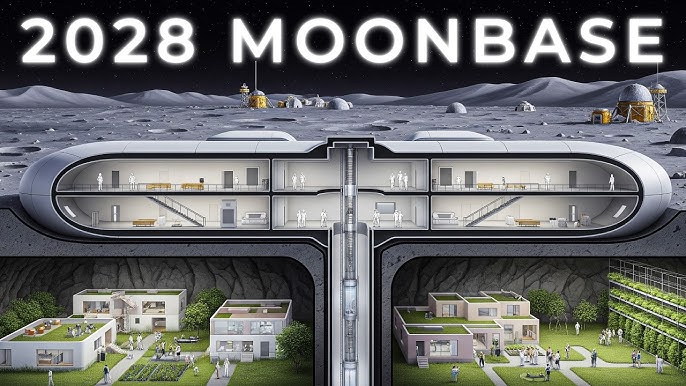
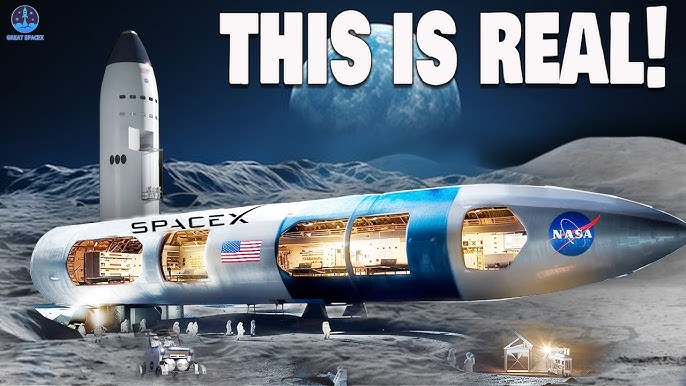
He is imagining something closer to an off-world industrial city: large-scale, semi-autonomous, and designed not just for exploration, but for production. A place that doesn’t merely exist on the Moon, but uses the Moon.

This aligns with his long-standing vision of humanity as a multi-planetary species. In that vision, the Moon is not a destination—it’s infrastructure. A logistics hub between Earth and Mars. A staging ground, warehouse, refinery, and launchpad rolled into one.

With SpaceX’s Starship—designed for massive payloads and rapid reusability—the Moon stops being a distant rock and starts looking like a nearby industrial park.


2. AI Satellite Factories: Manufacturing Without Earth

Perhaps the most radical part of Musk’s tweet is also the least discussed: AI satellite factories.

This is not about assembling satellites more efficiently. It’s about changing where manufacturing happens—and who does the work.

The Moon offers three extraordinary advantages:

  • Low gravity (one-sixth of Earth’s), reducing structural constraints.

  • Vacuum, ideal for certain manufacturing processes.

  • Abundant raw materials, including metals and water ice.

Now add AI.

An AI-run factory doesn’t need oxygen, sleep, or a return ticket. It can mine, refine, fabricate, test, and iterate continuously. Satellites could be designed, built, and optimized on the Moon itself—possibly incorporating lunar materials—then launched directly into space.

This is the logical extension of Musk’s broader worldview: automation first, humans later. Let machines build the scaffolding of civilization, then let people move in.

In this sense, the Moon becomes less like Antarctica and more like the world’s first fully automated industrial zone.


3. The Mass Driver: Launching Without Rockets

The final—and most science-fiction-sounding—piece is the mass driver.

A mass driver is essentially an electromagnetic catapult: a long track that accelerates payloads using magnetic fields until they reach escape velocity. No chemical rockets. No fuel. Just physics.

On Earth, this is impractical. Gravity is too strong, the atmosphere too thick, and safety concerns overwhelming.

On the Moon?

  • Low gravity

  • No atmosphere

  • Vast open terrain

Suddenly, the idea becomes plausible.

A lunar mass driver could launch satellites, raw materials, or spacecraft components directly into orbit—or beyond—at a fraction of the cost of traditional rockets. Musk’s phrase “shoot them into deep space” suggests something even grander: using the Moon as a literal slingshot for Mars missions, asteroid exploration, or interstellar probes.

If rockets are ladders, mass drivers are conveyor belts.


“(Of Course)”: The Sharpest Part of the Joke

The parenthetical—(of course)—is the most revealing part of the tweet.

It’s irony sharpened into critique.

Musk is implicitly saying: If you’re serious about a permanent lunar presence, this is where the logic leads. Anything less is just symbolic occupation—flags, footprints, and press releases.

The joke isn’t that the idea is too big. The joke is that policy thinking is too small.


Reactions: From Burgers to Blueprints

The replies to Musk’s tweet reflected the full spectrum of public engagement with space:

  • Jokes about In-N-Out burgers and coffee shops on the Moon.

  • Diagrams explaining mass drivers to curious non-engineers.

  • Enthusiastic fans citing SpaceX’s launch cadence (over 165 launches in 2025) as evidence that Musk’s “jokes” often become reality.

  • Speculation about “deep space” as a way to reduce Earth-orbit congestion or enable faster interplanetary logistics.

Beneath the humor was a serious undercurrent: people are hungry for visions that feel commensurate with the moment.


The Bigger Picture: Speed vs. Gravity

At its core, this exchange captures a familiar tension.

Governments move like glaciers—slow, heavy, deliberate.
Musk moves like a rocket—fast, risky, and occasionally explosive.

The Artemis program, the Lunar Gateway, and renewed lunar ambitions do represent genuine progress. But Musk’s tweet exposes an uncomfortable truth: timelines framed around 2030 still feel timid when private actors are iterating on yearly cycles.

Whether or not a giant lunar base with AI factories and a mass driver ever materializes exactly as described is almost beside the point.

The tweet’s real function is catalytic.

It forces a question that policy documents often avoid:

If we’re going to the Moon to stay, what does “staying” actually mean?

And once that question is asked honestly, the answer starts to look a lot less like an outpost—and a lot more like a civilization in the making.


जब नौकरशाही का सामना चंद्रमा से होता है: एलन मस्क, “स्थायी चंद्र चौकी” और बहुत छोटा सोचने की कला

2025 के अंत में, एक साधारण-सा ट्वीट इस बात को उजागर कर गया कि सरकारें अंतरिक्ष के बारे में कैसे बात करती हैं—और एलन मस्क उसे कैसे कल्पना में देखते हैं—इन दोनों के बीच कितनी गहरी खाई है।

यह संवाद तब शुरू हुआ जब @SciGuySpace के नाम से प्रसिद्ध एरिक बर्गर—Ars Technica के वरिष्ठ संपादक और आज के सबसे विश्वसनीय अंतरिक्ष पत्रकारों में से एक—ने एक अमेरिकी अंतरिक्ष नीति दस्तावेज़ का स्क्रीनशॉट साझा किया। उस अंश में, परिचित वॉशिंगटन शैली में लिखा था:

“(ii) 2030 तक एक स्थायी चंद्र चौकी के प्रारंभिक तत्वों की स्थापना, ताकि अंतरिक्ष में अमेरिका की निरंतर उपस्थिति सुनिश्चित की जा सके और मंगल अन्वेषण के अगले चरण सक्षम किए जा सकें।”

बर्गर की प्रतिक्रिया वैचारिक नहीं, बल्कि विश्लेषणात्मक थी।
आख़िर “स्थायी चंद्र चौकी” का वास्तविक अर्थ क्या है?

क्या यह है:

  • चंद्र सतह पर एक छोटा-सा मानव आवास?

  • नासा का लूनर गेटवे—एक परिक्रमा करता स्टेशन जिसे अक्सर “अंतरिक्ष बंदरगाह” कहा जाता है?

  • या जानबूझकर अस्पष्ट शब्दावली, ताकि बिना ठोस प्रतिबद्धता के सभी हितधारकों को संतुष्ट किया जा सके?

यह शब्दावली महत्वपूर्ण है। प्रारंभिक तत्व और स्थायी उपस्थिति जैसे शब्द साहसी लगते हैं, लेकिन अक्सर वे धीमी प्रगति को ढकने का काम भी करते हैं। अंतरिक्ष नीति में अस्पष्टता अक्सर एक रणनीति होती है—आज बजट पास कराने के लिए, और कठिन फैसलों को कल पर टालने के लिए।

और तभी प्रवेश होता है—एलन मस्क का।


एलन का जवाब: सोच को जानबूझकर “एस्केलेट” करना

मस्क ने बर्गर के ट्वीट का जवाब एक ही पंक्ति में दिया:

“AI सैटेलाइट फैक्ट्रियों और उन्हें डीप स्पेस में दागने के लिए एक मास ड्राइवर के साथ एक विशाल चंद्र आधार (बिल्कुल ही)।”

पहली नज़र में यह एक मज़ाक लगता है—क्लासिक एलन: शुष्क हास्य, अतिशयोक्ति, और हल्का-सा विज्ञान कथा का स्वाद।
लेकिन, मस्क के कई बयानों की तरह, यह हास्य सिर्फ आवरण है। भीतर एक गंभीर उकसावा छिपा है।

यह नीति की व्याख्या नहीं थी।
यह नीति से कहीं आगे छलांग थी।

जहाँ सरकारी भाषा धीरे चलती है, मस्क वहाँ लंबी छलांग लगाते हैं।

आइए देखें, वह वास्तव में क्या कह रहे हैं।


1. विशाल चंद्र आधार: झंडों और पदचिह्नों से आगे

जब नीति निर्माता “चंद्र चौकी के प्रारंभिक तत्व” कहते हैं, तो उनका मतलब अक्सर होता है:
कुछ मॉड्यूल, सीमित चालक दल, अस्थायी प्रवास।

मस्क का वाक्य—विशाल चंद्र आधार—इस पूरी सोच को नकार देता है।

वह किसी छोटे स्टेशन की नहीं, बल्कि एक ऑफ-वर्ल्ड औद्योगिक शहर की कल्पना कर रहे हैं:
अर्ध-स्वायत्त, बड़े पैमाने पर, और केवल खोज के लिए नहीं—उत्पादन के लिए।

एक ऐसी जगह जो चंद्रमा पर सिर्फ मौजूद न हो, बल्कि चंद्रमा का उपयोग करे।

यह उनकी दीर्घकालिक सोच से मेल खाता है—मानवता को बहु-ग्रहीय प्रजाति बनाने की सोच। इस दृष्टि में, चंद्रमा गंतव्य नहीं है; वह इन्फ्रास्ट्रक्चर है।
पृथ्वी और मंगल के बीच एक लॉजिस्टिक्स हब।
एक गोदाम, रिफाइनरी और लॉन्चपैड—सब एक साथ।

SpaceX के Starship जैसे यान के साथ, चंद्रमा दूर का सपना नहीं, बल्कि पास का औद्योगिक क्षेत्र बन जाता है।


2. AI सैटेलाइट फैक्ट्रियाँ: पृथ्वी के बिना निर्माण

मस्क के ट्वीट का सबसे क्रांतिकारी हिस्सा शायद सबसे कम चर्चा में आया: AI सैटेलाइट फैक्ट्रियाँ

यह सिर्फ सैटेलाइट तेज़ी से बनाने की बात नहीं है।
यह सवाल है—निर्माण कहाँ होगा, और कौन करेगा।

चंद्रमा तीन असाधारण लाभ देता है:

  • कम गुरुत्वाकर्षण (पृथ्वी का छठा हिस्सा)

  • पूर्ण निर्वात

  • प्रचुर कच्चे संसाधन, जिनमें धातुएँ और जल-हिम शामिल हैं

अब इसमें जोड़िए—कृत्रिम बुद्धिमत्ता।

AI फैक्ट्री को न ऑक्सीजन चाहिए, न नींद, न वापसी टिकट।
वह खनन कर सकती है, शोधन कर सकती है, निर्माण और परीक्षण कर सकती है—लगातार।

संभव है कि सैटेलाइट वहीं डिज़ाइन हों, वहीं बनें, और वहीं से सीधे अंतरिक्ष में भेज दिए जाएँ।

यह मस्क की मूल सोच का विस्तार है:
पहले मशीनें, बाद में इंसान।

मशीनें सभ्यता का ढांचा तैयार करें—फिर मानव उसमें प्रवेश करें।

इस तरह चंद्रमा मानव चौकी नहीं, बल्कि दुनिया का पहला पूर्ण-स्वचालित औद्योगिक क्षेत्र बन जाता है।


3. मास ड्राइवर: बिना रॉकेट के लॉन्च

सबसे विज्ञान-कथा-सा विचार है—मास ड्राइवर

मास ड्राइवर मूलतः एक विद्युतचुंबकीय गुलेल है—एक लंबा ट्रैक जो चुंबकीय बलों से पेलोड को इतनी गति देता है कि वह पलायन वेग प्राप्त कर ले।
न रॉकेट ईंधन, न रासायनिक विस्फोट—सिर्फ भौतिकी।

पृथ्वी पर यह लगभग असंभव है।
लेकिन चंद्रमा पर?

  • कम गुरुत्वाकर्षण

  • कोई वायुमंडल नहीं

  • विशाल खाली भूमि

यह विचार अचानक व्यावहारिक लगने लगता है।

एक चंद्र मास ड्राइवर सैटेलाइट, कच्चा माल, या अंतरिक्ष यान के हिस्से सीधे कक्षा या उससे आगे भेज सकता है—बहुत कम लागत पर।

“डीप स्पेस में दागना” इस ओर इशारा करता है कि चंद्रमा मंगल, क्षुद्रग्रहों या यहाँ तक कि अंतरतारकीय मिशनों के लिए स्लिंगशॉट बन सकता है।

यदि रॉकेट सीढ़ियाँ हैं, तो मास ड्राइवर कन्वेयर बेल्ट हैं।


“(बिल्कुल ही)”: मज़ाक का सबसे तीखा हिस्सा

(बिल्कुल ही)—यही सबसे महत्वपूर्ण वाक्यांश है।

यह व्यंग्य है, लेकिन आलोचना भी।

मस्क मानो कह रहे हों:
अगर आप सच में स्थायी चंद्र उपस्थिति चाहते हैं, तो तर्क यहीं तक ले जाता है।
इसके अलावा सब कुछ केवल प्रतीकात्मक उपस्थिति है—झंडे, पदचिह्न और प्रेस विज्ञप्तियाँ।

मज़ाक यह नहीं है कि विचार बहुत बड़ा है।
मज़ाक यह है कि नीति की सोच बहुत छोटी है।


प्रतिक्रियाएँ: बर्गर से ब्लूप्रिंट तक

ट्वीट पर प्रतिक्रियाएँ अंतरिक्ष को लेकर समाज की पूरी मानसिकता दिखाती हैं:

  • चंद्रमा पर In-N-Out बर्गर की दुकान के मज़ाक

  • मास ड्राइवर समझाने वाले सरल चित्र

  • SpaceX की 2025 की 165+ लॉन्च संख्या गिनाने वाले उत्साही समर्थक

  • “डीप स्पेस” को पृथ्वी की कक्षा भीड़ से बचाने का उपाय मानने वाले विचार

हँसी के पीछे एक गंभीर भावना थी—लोग ऐसे विज़न चाहते हैं जो समय की मांग के अनुरूप हों।


बड़ी तस्वीर: गति बनाम जड़ता

यह पूरा संवाद एक पुराने तनाव को उजागर करता है।

सरकारें हिमनद की तरह चलती हैं—धीमी, भारी, सावधान।
एलन मस्क रॉकेट की तरह—तेज़, जोखिम भरे, और कभी-कभी विस्फोटक।

Artemis कार्यक्रम और चंद्र योजनाएँ वास्तविक प्रगति हैं।
लेकिन मस्क का ट्वीट एक असहज सवाल उठाता है:

अगर हम चंद्रमा पर रहने जा रहे हैं, तो “रहना” वास्तव में क्या है?

और जब इस प्रश्न का ईमानदारी से उत्तर खोजा जाता है,
तो उत्तर एक चौकी जैसा नहीं,
बल्कि एक उभरती हुई सभ्यता जैसा दिखने लगता है।


Tuesday, December 16, 2025

The Lunar Mass Driver: Elon Musk's Vision of a Post-Scarcity Future


The Lunar Mass Driver: Elon Musk's Vision of a Post-Scarcity Future

In a tweet that sent ripples across the tech and space communities on December 16, 2025, Elon Musk mused:

"When the mass driver on the Moon gets going, I’m not sure money will be relevant."

This cryptic statement was quickly amplified by entrepreneur Aakash Gupta, whose viral thread unpacked the mechanics, economics, and timeline of a lunar mass driver—framing it as a gateway to a future of near-limitless space resources. Adding depth to the conversation, author Paramendra Kumar Bhagat linked his two-part book series, The Dawn Beyond Currency, exploring a world where traditional economics might dissolve under the weight of technological abundance.

This online dialogue highlights a growing fascination with space-based infrastructure capable of transforming humanity's relationship with resources, wealth, and exploration. But what exactly is a lunar mass driver, and why does it carry such profound implications? Let’s take a closer look.


What is a Lunar Mass Driver?

A mass driver—also called an electromagnetic catapult or coilgun—is a linear accelerator that propels payloads at tremendous speeds using electromagnetic forces, without the need for chemical rocket fuel. The concept was pioneered in the 1970s by MIT physicist Gerard K. O'Neill, who built a working prototype in 1976. Imagine a high-tech railgun, but designed to send cargo, not cannonballs, into space.

On the Moon, a mass driver leverages unique environmental advantages:

  • Low gravity: Only one-sixth of Earth’s, making escape velocity far more achievable.

  • No atmosphere: Eliminates drag, allowing payloads to accelerate without energy loss.

  • Abundant regolith: Lunar soil is rich in metals, silicon, and helium-3.

Payloads—ranging from mined ores to manufactured goods—could be “yeeted” into space at velocities of roughly 5,300 mph (8,500 km/h), enough to escape the Moon’s gravity and reach Earth orbit or further. Power could come from solar panels or nuclear reactors, effectively reducing launch costs to near zero once infrastructure is in place.

Gupta’s thread breaks down the economics starkly: current rocket launches, like SpaceX’s Falcon 9, cost around $2,720 per kilogram to low Earth orbit; Starship aims to cut that to $100/kg. A lunar mass driver? The Space Studies Institute estimated $1 per pound (~$2/kg) in 1979. With modern superconductors, solar efficiency, and robotic assembly, costs could easily fall into single digits per kilogram—a dramatic inversion of the economics of space transport.


Lunar Resources: A Treasure Trove

The Moon is far from barren. Its regolith contains:

  • Helium-3: A potential fuel for fusion, valued at up to $20 million per kilogram on Earth.

  • Metals: Titanium, aluminum, iron, and silicon for construction and manufacturing.

  • Rare earth elements: Critical for high-tech electronics.

  • Water ice: Essential for life support and rocket fuel production.

A well-designed mass driver could hurl up to 600,000 tons of material per year into cislunar space (the region between Earth and Moon), at negligible marginal cost. This capability could completely rewire supply chains, shifting Earth-centric resource dependence to a multi-planetary stage.


From Sci-Fi to Reality: The Timeline

While the physics is mature, practical deployment depends on lunar infrastructure. NASA’s Artemis III mission aims to land astronauts at the lunar south pole by 2027-2028. SpaceX envisions permanent lunar bases in the early 2030s, bolstered by:

  • NASA’s 100-kilowatt nuclear reactor by 2030

  • China’s planned lunar station by 2035

Once human or robotic presence is established and reliable power is online, building a mass driver is “just construction,” as Gupta notes.

Conservative projections place the first operational lunar mass driver around 2045-2050. However, a heated space race with China could accelerate this timeline. SpaceX’s Starship plays a critical bootstrap role—cheaply transporting initial equipment to the Moon, after which lunar resources could sustain a self-replicating industrial ecosystem. Modern models suggest that delivering just 12 tons of Earth-built equipment could seed a lunar economy capable of expansion over two decades.


Implications: Economics, Exploration, and Society

A lunar mass driver is more than an engineering marvel—it’s a paradigm shift. By drastically reducing the cost of energy and raw materials, it challenges the scarcity-based foundation of traditional economics. Musk’s vision hints at a post-scarcity future, where abundant resources render conventional money less relevant.

Economic Transformation

  • Resource Abundance: Cheap, bulk launches from the Moon could flood markets with metals and fuels, collapsing prices for helium-3 and rare earths.

  • Post-Currency Possibilities: Bhagat’s The Dawn Beyond Currency explores a world where AI, space technology, and abundance make money obsolete, opening possibilities for barter, distributed wealth, or AI-managed economies.

  • Bootstrap Expansion: Mass drivers extend humanity’s reach beyond the Moon—facilitating Mars colonization, asteroid mining, orbital factories, and massive space habitats like O’Neill cylinders.

Space Exploration and Colonization

  • Multi-Planetary Life: Materials for habitats, fuel, and tools could be sourced locally on the Moon, reducing Earth-dependence.

  • Scientific Breakthroughs: Helium-3 fusion, advanced manufacturing, and asteroid mining become feasible at scale, unlocking trillions in economic value.

  • Global Competition: A U.S.–China space race could accelerate development—but also raises militarization risks. Mass drivers, for instance, could theoretically function as orbital kinetic weapons, launching "rods from God."

Societal and Ethical Challenges

  • Inequality and Access: Who owns the Moon? Private companies could dominate, potentially sparking geopolitical tensions. The Outer Space Treaty prohibits national claims but allows resource exploitation.

  • Environmental Impact: Lunar mining would scar the Moon’s surface, though the lack of a biosphere limits ecological consequences. On Earth, resource abundance could disrupt industries reliant on scarcity.

  • Weaponization Risks: The dual-use potential of mass drivers necessitates robust international governance.

  • Philosophical Shifts: In a world of effectively infinite resources, human motivation may need reevaluation—our challenges shift from survival to purpose.


Conclusion: Rockets to the Moon, Mass Drivers to the Stars

Elon Musk’s cryptic tweet, amplified by Gupta’s analysis and Bhagat’s literary lens, sketches a roadmap to a multi-planetary, post-scarcity civilization. The lunar mass driver represents a leap from fuel-hungry rockets to electromagnetic efficiency, promising to democratize space access and upend our understanding of scarcity.

Timelines may stretch to mid-century, but rapid advancements in AI, robotics, and reusable rocketry could bring this vision closer to reality. As Gupta succinctly put it:

"Rockets get you to the Moon. The Moon gets you everywhere else."

If realized, mass drivers could make money—and perhaps our current paradigms—irrelevant, opening a future where humanity’s limits are defined not by Earth, but by the cosmos.


लूनर मास ड्राइवर: एलोन मस्क का पोस्ट-स्कार्सिटी भविष्य का दृष्टिकोण

16 दिसंबर 2025 को एलोन मस्क ने एक ट्वीट किया जिसने टेक और अंतरिक्ष समुदाय में हलचल मचा दी:

"जब चंद्रमा पर मास ड्राइवर चालू हो जाएगा, तो मुझे यकीन नहीं है कि पैसे का कोई मतलब रहेगा।"

इस रहस्यमयी बयान को तेजी से एंटरप्रेन्योर आकाश गुप्ता ने बढ़ावा दिया, जिनके वायरल थ्रेड ने चंद्रमा पर मास ड्राइवर की यांत्रिकी, अर्थव्यवस्था और समयसीमा को विस्तार से समझाया—इसे भविष्य में लगभग असीमित अंतरिक्ष संसाधनों के लिए द्वार के रूप में प्रस्तुत किया। चर्चा को और गहराई देने के लिए लेखक परमेंद्र कुमार भगत ने अपनी दो-भाग वाली पुस्तक श्रृंखला The Dawn Beyond Currency के लिंक साझा किए, जिसमें एक ऐसी दुनिया की कल्पना की गई है जहां पारंपरिक अर्थशास्त्र तकनीकी प्रचुरता के सामने फीका पड़ सकता है।

यह ऑनलाइन संवाद यह दर्शाता है कि अब मानवता अपने संसाधनों, धन और अन्वेषण के संबंध को बदल सकने वाली अंतरिक्ष-आधारित अवसंरचना के प्रति बढ़ती उत्सुकता दिखा रही है। लेकिन वास्तव में, चंद्रमा पर मास ड्राइवर क्या है, और इसके गहरे निहितार्थ क्या हैं? आइए इसे विस्तार से समझें।


चंद्रमा का मास ड्राइवर क्या है?

मास ड्राइवर, जिसे इलेक्ट्रोमैग्नेटिक कैटापल्ट या कॉइलगन भी कहा जाता है, एक रैखिक त्वरक है जो इलेक्ट्रोमैग्नेटिक बलों का उपयोग करके पेलोड को उच्च गति से प्रक्षेपित करता है, बिना पारंपरिक रॉकेट ईंधन के। इस विचार को 1970 के दशक में MIT के भौतिक विज्ञानी जेरार्ड K. ओ’नील ने विकसित किया था, जिन्होंने 1976 में एक कार्यशील प्रोटोटाइप बनाया। इसे एक हाई-टेक रेलगन की तरह सोचें, लेकिन यह गोलियों के बजाय माल को अंतरिक्ष में भेजता है।

चंद्रमा पर मास ड्राइवर के पास अनूठे पर्यावरणीय लाभ हैं:

  • कम गुरुत्वाकर्षण: पृथ्वी के केवल एक-छहवें भाग का, जिससे पलायन वेग तक पहुंचना आसान।

  • कोई वायुमंडल नहीं: कोई ड्रैग नहीं, जिससे पेलोड बिना ऊर्जा हानि के तेजी से बढ़ सकता है।

  • प्रचुर उपजाऊ मिट्टी: चंद्र मिट्टी में धातुएँ, सिलिकॉन और हीलियम-3 जैसी सामग्री पाई जाती हैं।

पेलोड—जैसे खनिज या निर्मित वस्तुएँ—को लगभग 5,300 मील प्रति घंटे (8,500 किमी/घंटा) की गति से अंतरिक्ष में भेजा जा सकता है, जो चंद्रमा के गुरुत्वाकर्षण को पार करने और पृथ्वी की कक्षा या उससे आगे पहुंचने के लिए पर्याप्त है। पावर सोलर पैनल या न्यूक्लियर रिएक्टर से आ सकती है, जिससे एक बार इन्फ्रास्ट्रक्चर स्थापित होने के बाद लॉन्च लागत लगभग शून्य हो जाती है।

गुप्ता के थ्रेड के अनुसार, वर्तमान रॉकेट लॉन्च—जैसे SpaceX का Falcon 9—की लागत लगभग $2,720 प्रति किलोग्राम है; Starship इसे $100/किलो तक कम करने का लक्ष्य रखता है। लेकिन चंद्र मास ड्राइवर? Space Studies Institute ने 1979 में इसे $2/किलो आंका था। आधुनिक सुपरकंडक्टर्स, सौर दक्षता और रोबोटिक निर्माण के साथ, लागत आसानी से एक अंकीय डॉलर प्रति किलोग्राम में गिर सकती है—अंतरिक्ष परिवहन की अर्थव्यवस्था में एक क्रांतिकारी बदलाव।


चंद्र संसाधन: खजाने की खान

चंद्रमा बिलकुल खाली नहीं है। इसकी मिट्टी में शामिल हैं:

  • हीलियम-3: फ्यूजन ईंधन के लिए संभावित, पृथ्वी पर $20 मिलियन प्रति किलोग्राम तक मूल्यवान।

  • धातुएँ: निर्माण और उत्पादन के लिए टाइटेनियम, एल्युमिनियम, लोहा और सिलिकॉन।

  • रेयर अर्थ तत्व: हाई-टेक इलेक्ट्रॉनिक्स के लिए आवश्यक।

  • पानी का बर्फ: जीवन समर्थन और रॉकेट ईंधन के लिए।

एक सक्षम मास ड्राइवर सालाना 600,000 टन तक सामग्री को सिस्लूनर अंतरिक्ष में भेज सकता है, लगभग शून्य सीमांत लागत पर। यह क्षमता पूरी आपूर्ति श्रृंखलाओं को बदल सकती है, पृथ्वी-केंद्रित संसाधन निर्भरता को बहु-ग्रह स्तर पर स्थानांतरित कर सकती है।


विज्ञान-कथा से वास्तविकता तक: समयसीमा

तकनीक भले ही तैयार है, लेकिन व्यावहारिक कार्यान्वयन चंद्रमा के इन्फ्रास्ट्रक्चर पर निर्भर करता है। NASA का Artemis III मिशन 2027-2028 तक दक्षिण ध्रुव पर अंतरिक्ष यात्रियों को उतारने का लक्ष्य रखता है। SpaceX 2030 के शुरुआती दशक में स्थायी चंद्रमीय आधार की योजना बना रहा है, जिसे निम्नलिखित द्वारा समर्थन मिलेगा:

  • NASA का 100-किलोवाट न्यूक्लियर रिएक्टर 2030 तक

  • चीन का नियोजित चंद्र स्टेशन 2035 तक

एक बार मानव या रोबोटिक उपस्थिति और विश्वसनीय पावर स्थापित होने के बाद, मास ड्राइवर का निर्माण "सिर्फ निर्माण" है, जैसा कि गुप्ता ने कहा।

संरक्षित अनुमानों के अनुसार, पहला परिचालन चंद्र मास ड्राइवर 2045-2050 के आसपास हो सकता है। हालांकि, अमेरिका-चीन के अंतरिक्ष प्रतिस्पर्धा से यह समयसीमा जल्दी हो सकती है। SpaceX का Starship एक महत्वपूर्ण बूटस्ट्रैप भूमिका निभाता है—प्रारंभिक उपकरण को चंद्रमा तक सस्ते में पहुंचाना, जिसके बाद चंद्र संसाधन स्वयं एक स्व-प्रजनन औद्योगिक पारिस्थितिकी तंत्र का समर्थन कर सकते हैं। आधुनिक मॉडल सुझाव देते हैं कि केवल 12 टन पृथ्वी-निर्मित उपकरण भेजना चंद्र अर्थव्यवस्था को बीस वर्षों में विस्तार के लिए सक्षम कर सकता है।


निहितार्थ: अर्थव्यवस्था, अन्वेषण और समाज

चंद्र मास ड्राइवर केवल एक इंजीनियरिंग चमत्कार नहीं है—यह एक पैमाना बदलने वाला विचार है। ऊर्जा और कच्चे माल की लागत को बेहद कम करके, यह पारंपरिक संसाधन-आधारित अर्थव्यवस्था को चुनौती देता है। मस्क का दृष्टिकोण पोस्ट-स्कार्सिटी भविष्य की ओर इशारा करता है, जहां प्रचुर संसाधनों के कारण पारंपरिक मुद्रा अप्रासंगिक हो सकती है।

आर्थिक रूपांतरण

  • संसाधन प्रचुरता: चंद्र स्रोतों से सस्ते और बड़े पैमाने पर लॉन्च मार्केट में धातुएँ और ईंधन भर सकते हैं, हीलियम-3 और रेयर अर्थ तत्वों की कीमतें गिर सकती हैं।

  • पोस्ट-करेंसी संभावनाएँ: भगत की The Dawn Beyond Currency ऐसी दुनिया की कल्पना करती है जहां AI, अंतरिक्ष तकनीक और प्रचुरता पैसे को अप्रासंगिक बना देते हैं, जिससे बार्टर, वितरित संपत्ति या AI-संचालित अर्थव्यवस्था की संभावनाएँ खुलती हैं।

  • विस्तार के लिए बूटस्ट्रैप: मास ड्राइवर चंद्रमा के पार मानवीय पहुंच को बढ़ाता है—मंगल, क्षुद्रग्रह खनन, कक्षा फैक्ट्री और विशाल अंतरिक्ष आवास जैसे O’Neill सिलिंडर संभव होते हैं।

अंतरिक्ष अन्वेषण और उपनिवेश

  • बहु-ग्रह जीवन: आवास, ईंधन और उपकरणों के लिए सामग्री स्थानीय स्तर पर चंद्रमा से मिल सकती है, पृथ्वी पर निर्भरता कम होती है।

  • वैज्ञानिक प्रगति: हीलियम-3 फ्यूजन, उन्नत निर्माण और क्षुद्रग्रह खनन बड़े पैमाने पर संभव हो जाता है, जिससे ट्रिलियनों डॉलर का आर्थिक मूल्य सृजित हो सकता है।

  • वैश्विक प्रतिस्पर्धा: अमेरिका-चीन अंतरिक्ष दौड़ विकास को तेज कर सकती है—लेकिन सैन्यकरण का खतरा भी बढ़ता है। मास ड्राइवर सैद्धांतिक रूप से काइनेटिक हथियार के रूप में भी इस्तेमाल हो सकता है।

सामाजिक और नैतिक चुनौतियाँ

  • असमानता और पहुँच: चंद्रमा का नियंत्रण कौन करेगा? निजी कंपनियाँ प्रभुत्व स्थापित कर सकती हैं, जिससे भू-राजनीतिक तनाव पैदा हो सकते हैं। बाहरी अंतरिक्ष संधि राष्ट्रीय दावे को रोकती है, लेकिन संसाधन निष्कर्षण की अनुमति देती है।

  • पर्यावरणीय प्रभाव: चंद्र खनन सतह को नुकसान पहुंचा सकता है, लेकिन बायोस्फियर की कमी के कारण पारिस्थितिक प्रभाव सीमित होंगे। पृथ्वी पर, संसाधन प्रचुरता पर आधारित उद्योग बाधित हो सकते हैं।

  • हथियार बनाने का जोखिम: मास ड्राइवर की द्वैध उपयोग क्षमता मजबूत अंतर्राष्ट्रीय शासन की आवश्यकता को बढ़ाती है।

  • दर्शनशास्त्रीय बदलाव: असीमित संसाधनों की दुनिया में मानव प्रेरणा क्या होगी—हमारी चुनौतियाँ जीवित रहने से उद्देश्य की ओर बढ़ती हैं।


निष्कर्ष: चंद्रमा तक रॉकेट, सितारों तक मास ड्राइवर

एलोन मस्क का रहस्यमयी ट्वीट, गुप्ता के विश्लेषण और भगत की साहित्यिक व्याख्या, एक बहु-ग्रह, पोस्ट-स्कार्सिटी सभ्यता का रोडमैप प्रस्तुत करता है। चंद्र मास ड्राइवर ईंधन-भरी रॉकेटों से इलेक्ट्रोमैग्नेटिक दक्षता की ओर छलांग है, जो अंतरिक्ष तक पहुंच को लोकतांत्रिक बना सकता है और संसाधन की कमी की हमारी समझ को बदल सकता है।

समयसीमा मध्य-सदी तक खिंच सकती है, लेकिन AI, रोबोटिक्स और पुन: प्रयोज्य रॉकेट तकनीक में तेज प्रगति इसे जल्द ही वास्तविकता में बदल सकती है। जैसा कि गुप्ता ने कहा:

"रॉकेट आपको चंद्रमा तक ले जाते हैं। चंद्रमा आपको कहीं भी ले जाता है।"

यदि यह संभव हो गया, तो मास ड्राइवर पैसे—और शायद हमारे वर्तमान दृष्टिकोण—को अप्रासंगिक बना सकता है, और एक ऐसा भविष्य खोल सकता है जहां मानवता की सीमाएँ पृथ्वी द्वारा नहीं, बल्कि ब्रह्मांड द्वारा परिभाषित होंगी।


Monday, November 03, 2025

Quantum Computing on the Moon: Elon Musk’s Chillingly Brilliant Vision for the Future of Computation


Quantum Computing on the Moon: Elon Musk’s Chillingly Brilliant Vision for the Future of Computation

When Elon Musk recently suggested that the Moon’s permanently shadowed craters could host the most advanced quantum computers, it sounded at first like science fiction. Yet, beneath the headline-grabbing audacity lies a deeply rational—and scientifically compelling—idea. Quantum computing, which relies on maintaining delicate quantum states, thrives in environments that are extremely cold, stable, and shielded from noise. And few places in the solar system offer conditions as naturally suited to that purpose as the Moon’s shadowed polar craters.


Why Quantum Computers Need Extreme Environments

Quantum computers operate using qubits—tiny quantum systems that can exist in multiple states simultaneously through the principles of superposition and entanglement. But this delicate state collapses if the qubits interact even slightly with their surroundings. Heat, electromagnetic radiation, vibration, or even stray cosmic particles can trigger decoherence, destroying quantum information and causing errors.

On Earth, researchers combat this by building extraordinarily complex laboratories: cryogenic chambers cooled to near absolute zero, vacuum-sealed enclosures, and layers of magnetic and vibrational shielding. Such infrastructure is not only energy-intensive but also extremely costly. Maintaining a stable quantum environment on Earth is a constant battle against nature. On the Moon, nature itself might help.


1. Extreme Natural Cold: The Moon’s Cryogenic Gift

Permanently shadowed craters near the lunar poles—like Shackleton and Faustini—never see sunlight. As a result, their temperatures plunge to between 20 and 40 Kelvin (around –400°F or –240°C). That’s colder than Pluto and only a few dozen degrees above absolute zero.

This means the Moon offers a passive cryogenic laboratory. On Earth, dilution refrigerators—machines used to cool qubits to millikelvin temperatures—consume enormous energy. On the Moon, nature does much of the cooling for free. The energy savings could be transformative, reducing both costs and engineering complexity.


2. The Helium-3 Advantage: A Lunar Supply Chain for Quantum Tech

Helium-3, a rare isotope essential for achieving ultra-low temperatures in quantum systems, is almost nonexistent on Earth. Global reserves amount to just a few thousand liters per year, primarily extracted from nuclear warheads. But the Moon’s surface, continuously bombarded by solar wind for billions of years, contains an estimated one million tonnes of helium-3 embedded in its regolith.

For quantum technology, that’s a potential revolution. A lunar helium-3 supply chain could fuel not only refrigeration systems but also fusion reactors and advanced power generation—an entire ecosystem of clean, high-efficiency technology. Musk’s vision thus hints at a self-sustaining “quantum economy” on the Moon, where the resources to power computation are mined locally.


3. Perfect Silence: Vacuum and Isolation from Earthly Noise

Even the best Earth-based vacuum chambers can’t match the Moon’s natural near-perfect vacuum. Its exosphere is almost nonexistent—so clean that it makes CERN’s vacuum tunnels look crowded. This eliminates much of the background interference that typically plagues qubits.

Moreover, the absence of atmospheric fluctuations and weather ensures unparalleled stability. No thermal noise. No dust storms. No humidity. And in the darkness of shadowed craters, there are no temperature cycles from day-night transitions, providing an extraordinarily consistent environment for precision measurements.


4. Shielding from Radiation and Cosmic Rays

Ironically, while the Moon lacks a protective atmosphere or magnetic field, its shadowed craters and lava tubes act as natural bunkers. By constructing quantum facilities underground or within crater walls, engineers could block direct exposure to solar flares and cosmic rays—two major sources of high-energy interference.

Google’s quantum processors, for instance, have shown error spikes during solar storms. A well-shielded lunar base could dramatically reduce such disturbances, providing a level of environmental quietude unattainable on Earth.


5. Low Gravity: A New Playground for Quantum Experiments

The Moon’s gravity, roughly one-sixth that of Earth, creates intriguing possibilities for cold-atom quantum computing and quantum metrology. With weaker gravitational pull, atoms in quantum traps can stay in suspension longer, allowing for extended coherence times and new forms of entanglement. Low gravity could enable exotic experiments in quantum tunneling, teleportation, and Bose-Einstein condensates—phenomena that might be too unstable to test on Earth.


6. Engineering the Lunar Quantum Hub

While the physics is enticing, the engineering challenges are immense. Transporting cryogenic equipment, qubit arrays, and superconducting circuits to the lunar surface would require next-generation rockets and autonomous construction robots. Power could come from solar farms installed on crater rims, where perpetual sunlight could beam energy into the dark craters below via microwave or laser transmission systems.

Communication latency—roughly 2.5 seconds round-trip between Earth and the Moon—poses another challenge. Yet, for distributed quantum computing networks, this is manageable. Earth-based quantum data centers could offload certain tasks to lunar quantum nodes, using quantum entanglement or error-corrected communication protocols to synchronize computations.


7. Beyond Computing: The Moon as a Quantum Internet Node

A lunar quantum computer base could double as part of a space-based quantum internet, linking Earth, Moon, and Mars. Entangled photon pairs could form the backbone of ultra-secure communication systems, resistant to hacking or interception. With its vacuum environment and isolation, the Moon could be the ideal hub for calibrating quantum communication satellites—creating an interplanetary web of unbreakable encryption.


8. The Broader Vision: Musk’s “Quantum Civilization”

Elon Musk’s proposal fits neatly into his overarching narrative of humanity as a multi-planetary species. Quantum computing, at its core, is about exponential capability—solving problems in chemistry, materials science, and cryptography that are intractable today. Bringing this power off-world not only amplifies those capabilities but also diversifies humanity’s technological base beyond Earth.

Imagine a quantum research colony powered by solar energy, cooled by lunar darkness, and supplied by helium-3. Such a facility could accelerate discoveries in AI, fusion, medicine, and physics. It might even enable real-time simulations of planetary ecosystems, energy grids, and warp-drive physics—technologies that could define the next century.


9. The Counterarguments: Risks and Realities

Skeptics rightly point out several hurdles:

  • Logistics: Establishing lunar infrastructure will require hundreds of launches and enormous capital.

  • Maintenance: Repairing delicate quantum instruments in lunar dust and vacuum could prove daunting.

  • Latency: For many quantum applications, especially cryptography, instantaneous connectivity is vital—something the Earth-Moon lag challenges.

  • Ethical and geopolitical concerns: Who owns lunar resources like helium-3? Could quantum technology exacerbate inequality between nations or corporations?

Yet, these concerns mirror those once raised about the early internet, space travel, and even classical computing. Innovation often begins with improbable visions.


Conclusion: The Coldest Lab for the Hottest Frontier

In proposing lunar quantum computing, Elon Musk may once again be glimpsing the frontier before the rest of us. The Moon’s dark craters—frozen in eternal night—could become humanity’s brightest laboratories. What began as an engineering problem on Earth might find its solution not through more insulation and power, but through cosmic relocation.

If the 20th century was the age of silicon and sunlight, the 21st may belong to qubits and shadows—where the ultimate computer hums quietly in the dark heart of the Moon.


चंद्रमा पर क्वांटम कंप्यूटिंग: एलन मस्क की ठंडी लेकिन शानदार दृष्टि

जब एलन मस्क ने हाल ही में यह सुझाव दिया कि चंद्रमा के स्थायी रूप से अंधेरे गड्ढों (permanently shadowed craters) में सबसे उन्नत क्वांटम कंप्यूटर बनाए जा सकते हैं, तो यह सुनने में पहले विज्ञान-कथा जैसा लगा। लेकिन इस साहसिक विचार के पीछे गहरी वैज्ञानिक समझ और व्यावहारिक संभावनाएँ छिपी हैं।

क्वांटम कंप्यूटिंग, जो अत्यंत नाजुक क्वांटम अवस्थाओं पर निर्भर करती है, ठंडे, स्थिर और शोर-मुक्त वातावरण में सबसे बेहतर काम करती है। और सौरमंडल में शायद ही कोई स्थान ऐसा हो जो इन प्राकृतिक परिस्थितियों को चंद्रमा के ध्रुवीय गड्ढों जितना पूर्णता से प्रदान करता हो।


क्यों चाहिए क्वांटम कंप्यूटरों को इतनी चरम परिस्थितियाँ

क्वांटम कंप्यूटर "क्यूबिट्स" (qubits) नामक सूक्ष्म क्वांटम इकाइयों पर चलते हैं, जो एक साथ कई अवस्थाओं में मौजूद हो सकती हैं — इसे superposition और entanglement कहा जाता है। लेकिन यदि क्यूबिट्स अपने आस-पास के वातावरण से जरा-सी भी प्रतिक्रिया कर लें, तो उनकी यह नाजुक अवस्था टूट जाती है। तापमान, विद्युत-चुंबकीय विकिरण, कंपन, या अंतरिक्षीय कण — सब decoherence नामक प्रक्रिया द्वारा त्रुटियाँ उत्पन्न करते हैं।

धरती पर वैज्ञानिक इन प्रभावों से बचने के लिए अत्यंत जटिल प्रयोगशालाएँ बनाते हैं — जिन्हें लगभग शून्य तापमान तक ठंडा किया जाता है, पूरी तरह निर्वात में रखा जाता है और बाहरी चुंबकीय या भौतिक कंपन से अलग किया जाता है। यह सब अत्यधिक ऊर्जा और लागत मांगता है। लेकिन चंद्रमा पर, प्रकृति खुद इन परिस्थितियों को लगभग मुफ्त में प्रदान करती है।


1. अत्यधिक प्राकृतिक ठंड: चंद्रमा की क्रायोजेनिक देन

चंद्रमा के ध्रुवीय क्षेत्र के कुछ गड्ढे — जैसे शैकलटन क्रेटर — कभी सूरज की रोशनी नहीं देखते। वहाँ का तापमान 20 से 40 केल्विन (लगभग –400°F या –240°C) के बीच रहता है। यह तापमान प्लूटो से भी ठंडा है और पूर्ण शून्य से केवल कुछ दर्जे ऊपर।

इस तरह, चंद्रमा एक प्राकृतिक क्रायोजेनिक प्रयोगशाला की तरह कार्य कर सकता है। धरती पर, dilution refrigerators को इस स्तर तक ठंडा करने में बहुत ऊर्जा खर्च होती है। चंद्रमा पर, यह ठंड पहले से ही उपलब्ध है। इससे ऊर्जा की बचत होगी और बुनियादी ढांचे की जटिलता घटेगी।


2. हीलियम-3 का वरदान: क्वांटम तकनीक के लिए नया आपूर्ति तंत्र

क्वांटम प्रणालियों को अत्यधिक ठंड तक पहुँचाने के लिए हीलियम-3 (Helium-3) नामक दुर्लभ समस्थानिक की आवश्यकता होती है। धरती पर यह लगभग नहीं के बराबर मिलता है — हर साल केवल कुछ हजार लीटर ही प्राप्त किया जा सकता है, वह भी मुख्यतः परमाणु हथियारों से।

लेकिन चंद्रमा की सतह पर अरबों वर्षों से सौर पवन के बमबारी से लगभग दस लाख टन हीलियम-3 जमा हो चुका है।

यह क्वांटम प्रौद्योगिकी के लिए एक संभावित क्रांति हो सकती है। चंद्रमा से हीलियम-3 की खुदाई न केवल क्वांटम प्रयोगशालाओं के लिए स्थायी ईंधन प्रदान करेगी बल्कि परमाणु संलयन (fusion) ऊर्जा और स्वच्छ ऊर्जा प्रणालियों की दिशा में भी नई राह खोलेगी। इस प्रकार, मस्क की कल्पना एक आत्मनिर्भर "क्वांटम अर्थव्यवस्था" का संकेत देती है।


3. पूर्ण शांति: निर्वात और पृथ्वी के शोर से दूरी

धरती के सबसे अच्छे निर्वात कक्ष भी चंद्रमा के प्राकृतिक निर्वात के सामने फीके हैं। चंद्रमा का वायुमंडल लगभग शून्य है — इतना स्वच्छ कि वह CERN की टनल्स से भी अधिक निर्वात है। इसका मतलब है कि वहाँ क्यूबिट्स को बाधित करने वाला वातावरण लगभग नहीं है।

साथ ही, चंद्रमा पर कोई मौसम नहीं, कोई नमी नहीं, कोई हवा नहीं। और स्थायी अंधकार में कोई तापमान परिवर्तन नहीं होता। यह एक अत्यंत स्थिर प्रयोगशाला प्रदान करता है — जहाँ परमाणु स्तर की सटीकता संभव है।


4. विकिरण और कॉस्मिक किरणों से सुरक्षा

हालाँकि चंद्रमा के पास पृथ्वी जैसी चुंबकीय ढाल या वायुमंडल नहीं है, फिर भी उसके छायादार गड्ढे और लावा ट्यूब प्राकृतिक शरणस्थल का काम करते हैं। वहाँ बने क्वांटम केंद्र सौर तूफानों और कॉस्मिक किरणों से सुरक्षित रह सकते हैं।

गूगल के क्वांटम प्रोसेसरों में सौर गतिविधि के दौरान त्रुटियाँ बढ़ती देखी गई हैं। चंद्रमा के भीतर बनाए गए प्रयोगशालाएँ इन खतरों को बहुत हद तक समाप्त कर सकती हैं।


5. कम गुरुत्वाकर्षण: नए प्रयोगों की नई दुनिया

चंद्रमा का गुरुत्वाकर्षण पृथ्वी का लगभग 1/6 हिस्सा है। यह कोल्ड-एटम क्वांटम कंप्यूटिंग और क्वांटम मेट्रोलॉजी जैसे प्रयोगों के लिए आदर्श है। वहाँ परमाणु अधिक समय तक स्थिर रह सकते हैं, जिससे coherence time बढ़ जाती है। इससे ऐसे क्वांटम प्रभावों का अध्ययन संभव होगा जो पृथ्वी पर अस्थिर हैं — जैसे quantum tunneling या Bose-Einstein condensate की नई अवस्थाएँ।


6. चंद्र क्वांटम हब की इंजीनियरिंग

यह सब सैद्धांतिक रूप से आकर्षक तो है, लेकिन व्यवहार में कठिन। क्वांटम प्रयोगशालाओं के उपकरणों को चंद्रमा तक पहुँचाना एक विशाल इंजीनियरिंग चुनौती होगी।

ऊर्जा के लिए, क्रेटर की दीवारों पर सौर पैनल लगाए जा सकते हैं, जो लगातार सूर्यप्रकाश में रहते हैं, और वहाँ से माइक्रोवेव या लेज़र बीम द्वारा अंधेरे गड्ढों तक ऊर्जा पहुँचाई जा सकती है।

संचार में लगभग 2.5 सेकंड का विलंब (latency) रहेगा, लेकिन वितरित क्वांटम नेटवर्क में यह स्वीकार्य है। पृथ्वी के क्वांटम डेटा केंद्र चंद्र क्वांटम नोड्स से जुड़कर साझा गणनाएँ कर सकते हैं।


7. कंप्यूटिंग से आगे: चंद्रमा एक क्वांटम इंटरनेट नोड के रूप में

यदि यह प्रयोगशाला बनती है, तो यह केवल कंप्यूटिंग केंद्र नहीं होगी, बल्कि एक अंतरिक्ष-आधारित क्वांटम इंटरनेट नोड भी बन सकती है।

क्वांटम उलझे (entangled) फोटॉन जोड़े पृथ्वी, चंद्रमा और मंगल के बीच अविच्छेद्य एन्क्रिप्शन के साथ संचार कर सकते हैं। चंद्रमा की स्वच्छ निर्वात अवस्था ऐसे फोटॉन नेटवर्क के लिए आदर्श होगी — जो अंतरिक्ष स्तर पर सुरक्षित सूचना विनिमय का नया युग ला सकती है।


8. मस्क की दृष्टि: एक “क्वांटम सभ्यता” की ओर

मस्क की यह सोच उनके व्यापक दृष्टिकोण का हिस्सा है — मानवता को बहुग्रह जाति (multi-planetary species) बनाना। क्वांटम कंप्यूटिंग स्वयं एक ऐसी तकनीक है जो मानव सभ्यता की गणनात्मक शक्ति को घातीय रूप से बढ़ा सकती है — चाहे वह दवा खोज हो, ऊर्जा विज्ञान हो, या कृत्रिम बुद्धिमत्ता।

कल्पना कीजिए — एक क्वांटम शोध उपनिवेश जहाँ सौर ऊर्जा से संचालित प्रयोगशालाएँ, चंद्र अंधकार की ठंडक से ठंडी, और हीलियम-3 से ईंधन प्राप्त करती हों। यह न केवल विज्ञान को बल्कि सभ्यता की गति को बदल देगा।


9. आलोचनाएँ और यथार्थ

कुछ विशेषज्ञ व्यावहारिक चुनौतियों की ओर इशारा करते हैं:

  • लॉजिस्टिक्स: सैकड़ों रॉकेट लॉन्च और खरबों डॉलर का निवेश लगेगा।

  • रखरखाव: चंद्रमा की धूल और निर्वात में नाजुक उपकरणों की मरम्मत कठिन होगी।

  • विलंब: कुछ क्वांटम संचार कार्यों के लिए त्वरित प्रतिक्रिया आवश्यक होती है।

  • राजनीतिक पहलू: क्या चंद्र संसाधनों का स्वामित्व निजी कंपनियों को दिया जा सकता है?

फिर भी, यही तर्क कभी इंटरनेट, अंतरिक्ष यात्रा या कृत्रिम बुद्धिमत्ता के खिलाफ भी दिए गए थे। हर क्रांति पहले असंभव लगती है।


निष्कर्ष: सबसे ठंडा स्थान, सबसे गर्म तकनीक

एलन मस्क का यह विचार भविष्य की एक झलक हो सकता है। चंद्रमा के स्थायी अंधकार में स्थित गड्ढे — जहाँ सूर्य की किरणें कभी नहीं पहुँचतीं — शायद मानवता की अगली वैज्ञानिक प्रयोगशालाएँ बनें।

धरती पर जिस समस्या का समाधान तकनीकी जटिलता से खोजा जा रहा है, उसका उत्तर शायद अंतरिक्ष की सादगी में छिपा हो।

अगर बीसवीं सदी सिलिकॉन और सूर्यप्रकाश की थी, तो इक्कीसवीं सदी शायद क्यूबिट्स और छायाओं की होगी — जहाँ सबसे शक्तिशाली कंप्यूटर चंद्रमा के अंधेरे में शांति से काम करेगा।


Lunar Quantum Observatory: A Vision for Off-Planet Quantum Computing and Cryogenic Research


Executive Summary

This whitepaper explores the feasibility and strategic significance of building the world’s first Lunar Quantum Observatory (LQO) — a research and computation facility located in the Moon’s permanently shadowed craters. Building on Elon Musk’s recent proposition, the report examines how these ultra-cold, radiation-shielded lunar regions could become the most optimal environment in the solar system for large-scale quantum computation.

By harnessing the Moon’s extreme cryogenic environment (20–40 K), natural vacuum, and potential helium-3 supply, the LQO could overcome major Earth-based challenges of thermal management, noise isolation, and cryogenic logistics. The paper presents a three-phase mission architecture, cost and timeline estimates, and outlines a framework for public-private cooperation.

The central thesis: Quantum computing and space infrastructure will converge, creating a new class of off-planet computation hubs that will serve not only science, but also Earth’s data, defense, and AI needs.


1. Introduction: The Case for Lunar Quantum Computing

Quantum computing is entering its “industrial” phase. Systems by IBM, Google, and IonQ now approach hundreds of qubits, yet scaling remains limited by environmental instability and thermal load. On Earth, maintaining the millikelvin (mK) temperatures necessary for stable qubit operation demands massive cryogenic systems that consume megawatts of power.

The Moon’s permanently shadowed craters — primarily near the South Pole (e.g., Shackleton, Faustini, Shoemaker) — offer the coldest, most stable environments accessible without continuous energy input. With temperatures as low as 20 Kelvin (–253°C) and negligible atmospheric interference, these sites could revolutionize cryogenic physics and computation.

At the same time, the space economy is maturing rapidly. SpaceX’s Starship is approaching reusable heavy-lift readiness, NASA’s Artemis Program is mapping polar regions, and commercial lunar payload delivery is becoming routine. The convergence of these developments makes 2030 a realistic target for Phase I deployment of a lunar quantum facility.


2. The Scientific Rationale

2.1 The Quantum Challenge

Quantum computers rely on qubits that must remain coherent — maintaining superposition and entanglement — for extended periods. Decoherence occurs when qubits interact with external heat, vibration, or electromagnetic fields.

Earth-based systems combat this through:

  • Cryogenic refrigeration (using dilution refrigerators to reach <10 mK)

  • Vibration isolation platforms

  • Superconducting shielding

  • Magnetic field compensation

These measures are costly and energy-intensive. A single dilution refrigerator can consume 20–40 kW, and large-scale systems require entire power plants. Moreover, even state-of-the-art terrestrial labs cannot fully eliminate environmental noise.

2.2 The Moon’s Natural Advantages

Parameter Earth-Based Labs Lunar Polar Craters
Temperature 4–10 K (requiring refrigeration) 20–40 K (natural baseline)
Vibration Constant (seismic, traffic, wind) Negligible
Electromagnetic noise High (urban interference) Minimal
Atmospheric density 10^19 particles/cm³ ~10^4 particles/cm³
Radiation exposure Managed via shielding Naturally blocked by crater topography
Energy cost for cooling Continuous Largely passive

In short, the Moon functions as a natural cryostat — a passive system offering ultra-stable, low-entropy conditions that drastically reduce the overhead of quantum cooling and isolation.


3. The Physics of the Polar Shadows

3.1 Thermal Permanence

Lunar polar craters are thermally isolated due to their geometry — the Sun never rises above their rims, and they receive zero direct sunlight. The temperature remains constant year-round, varying less than ±2 K over decades. This stability is invaluable for quantum coherence.

3.2 Vacuum and Particle Isolation

The Moon’s exosphere is effectively a vacuum: no convective heat transfer, no air currents, no humidity. This environment reduces qubit decoherence rates by several orders of magnitude, especially for superconducting and trapped-ion systems.

3.3 Helium-3 Deposits

Solar wind implantation has deposited an estimated 1–5 million tonnes of helium-3 (He³) in lunar regolith, particularly at polar regions. On Earth, He³ is scarce — only a few thousand liters are available globally each year, mostly extracted from nuclear sources.

He³ is essential for dilution refrigeration, the process that brings temperatures below 0.01 K. Establishing lunar He³ extraction infrastructure could thus serve two markets:

  • Cryogenic cooling for quantum and superconducting technologies

  • Fuel for advanced fusion energy systems


4. Systems Design Overview: The Lunar Quantum Observatory

The Lunar Quantum Observatory (LQO) is envisioned as a modular, autonomous, and cryogenically optimized complex built inside or adjacent to a permanently shadowed crater (PSC). It integrates five main systems:

  1. Cryogenic Chamber Complex – housing quantum computing and physics labs operating between 20 K and 10 mK.

  2. Surface Power Network – solar arrays on crater rims transmitting energy via microwave or laser beams into the crater.

  3. Helium-3 Extraction and Refinement Facility – robotic mining and isotope separation units.

  4. Quantum Communication Array – optical and radio links for Earth-Moon quantum networking.

  5. Habitation and Maintenance Modules – pressurized environments for human or robotic servicing.


5. Diagrammatic Overview (Text Description)

Figure 1: LQO Layout

A cross-sectional schematic showing:

  • Crater rim with solar panels beaming energy to receivers below

  • Central cryogenic lab domes embedded in regolith

  • Helium-3 refinery located on the crater’s sunlit periphery

  • Quantum communication telescope facing Earth at 0° azimuth

Figure 2: Thermal Zonation

Temperature gradient diagram:

  • Surface rim: 250 K (sunlit)

  • Upper crater wall: 80 K

  • Base floor (shadow): 25 K

  • Cryogenic lab core: 0.01–1 K (via dilution systems)

Figure 3: Earth–Moon Quantum Network

Depicts:

  • Entangled photon transmission satellites

  • Earth-based receivers in Hawaii and Spain

  • LQO optical link maintaining quantum key distribution (QKD) backbone


6. Mission Architecture: Three Phases

Phase I (2026–2030): Robotic Pathfinder and Site Qualification

Objectives:

  • Identify the optimal crater (likely Shackleton or Faustini)

  • Characterize temperature, radiation, and regolith composition

  • Test autonomous construction robots and power-beaming systems

  • Deliver prototype cryogenic payload (20–40 K operations)

Key Missions:

  • NASA VIPER Rover collaboration

  • SpaceX Starship payload drops (modular cryo units)

  • ESA Lunar Gateway data relay

Estimated Cost: USD $4–6 billion

Deliverables:

  • Verified thermal stability report

  • Power-beaming validation (≥100 kW transfer)

  • Sample return of helium-3 enriched regolith


Phase II (2030–2035): Construction and Quantum Module Deployment

Objectives:

  • Deploy the first operational quantum processor (10–100 qubits)

  • Establish the Helium-3 refinery pilot plant

  • Begin quantum communications link with Earth

  • Install radiation shielding and autonomous maintenance drones

Technical Highlights:

  • Superconducting qubit platform using niobium-titanium alloys

  • Cryogenic vacuum chambers built into crater walls

  • Remote teleoperation from Lunar Gateway and Earth

Estimated Cost: USD $15–20 billion

Deliverables:

  • First successful off-planet quantum computation

  • Continuous cryogenic operation (>1 year uptime)

  • Earth–Moon quantum communication link (secure channel tests)


Phase III (2035–2045): Expansion into the Lunar Quantum Hub

Objectives:

  • Scale computation to >1,000 qubits

  • Expand He³ extraction to industrial scale (≥10 tonnes/year)

  • Integrate LQO into a space-based quantum internet

  • Enable AI-driven autonomous research with minimal human presence

Potential Applications:

  • Cryogenic materials research

  • AI-accelerated chemistry and drug modeling

  • Quantum cryptography and deep-space communication

  • Hybrid lunar data centers for Earth-based AI workloads

Estimated Cost: USD $50–70 billion

Deliverables:

  • Fully operational Lunar Quantum Observatory

  • Quantum data network linking Earth, Moon, and Mars orbit

  • Policy framework for lunar data governance


7. Economic Analysis

7.1 Cost Breakdown

Category Phase I Phase II Phase III Total
Launch & Transport $2B $6B $10B $18B
Construction & Infrastructure $2B $8B $20B $30B
Quantum Hardware & Cryogenics $1B $4B $10B $15B
Power & Energy Systems $0.5B $1B $5B $6.5B
R&D and Human Operations $0.5B $1B $3B $4.5B
Total $6B $20B $48B ≈$74B

While the figure appears monumental, this investment parallels the cost of large-scale Earth-based quantum infrastructure projected for the 2030s (e.g., data centers, fusion plants, and exascale AI clusters).

7.2 Funding Models

  1. Public–Private Partnership (PPP):

    • NASA, ESA, JAXA collaboration with SpaceX, Blue Origin, and IBM Quantum.

    • Similar to the International Space Station (ISS) cost-sharing model.

  2. Lunar Bonds and Data Futures Market:

    • Establish financial instruments allowing investors to buy future quantum computation time.

  3. Resource-Based Funding:

    • Revenue from helium-3 extraction, lunar IP rights, and data licensing.

  4. AI Computation Leasing:

    • Earth-based corporations could lease “cold compute cycles” for quantum-AI hybrid applications.


8. Technical and Environmental Challenges

8.1 Power Supply and Distribution

The LQO must balance permanent darkness at the crater base with constant sunlight at the rim. Solutions include:

  • High-efficiency GaAs solar arrays on crater rims.

  • Wireless power transmission using microwave or laser beams.

  • Superconducting cables running along crater walls to minimize losses.

8.2 Dust Mitigation

Lunar dust (regolith) is sharp, electrostatically charged, and can interfere with optics and machinery. Mitigation strategies:

  • Electrodynamic dust shields

  • Self-cleaning surfaces

  • Airlock-style chambers for sensitive components

8.3 Communication Latency

The 2.5-second round trip limits real-time control. Autonomous AI systems will handle 90% of operational tasks, while human supervision focuses on high-level decision-making.

8.4 Radiation and Micrometeorite Protection

Multi-layer regolith shielding and crater topology offer protection equivalent to 2–3 meters of lead. Lava tubes could serve as natural bunkers for the most sensitive qubit arrays.

8.5 Ethical and Legal Framework

  • Ownership: The Outer Space Treaty prohibits national claims, but allows private operations under state jurisdiction.

  • Data Sovereignty: LQO-generated data could fall under multinational governance.

  • Environmental impact: Robotic mining of He³ must avoid destabilizing local ice reserves, which are vital for future human missions.


9. Strategic Implications

9.1 Scientific Frontiers

  • Astrophysics: Ultra-stable cryogenic environments allow for cosmic microwave background (CMB) studies with unprecedented precision.

  • Particle Physics: Quantum sensors can detect neutrinos and dark matter signatures.

  • Time Standards: Lunar-based optical clocks could redefine global timekeeping with 10⁻¹⁸ accuracy.

9.2 Defense and Security

  • Quantum encryption and communication from lunar orbit would be virtually unhackable.

  • The U.S., China, and India are already developing space-based quantum key distribution (QKD).

  • The LQO could serve as the strategic backbone of secure interplanetary communication.

9.3 Economic and Industrial Impact

  • He³ extraction could underpin a $10 trillion fusion energy industry by 2050.

  • Spin-off technologies: superconductors, low-noise materials, deep-space AI.

  • The “quantum cold chain” may become as vital as today’s semiconductor supply chains.

9.4 Geopolitical Balance

Lunar quantum dominance could become the 21st-century equivalent of nuclear superiority.
A U.S.-led or multilateral LQO initiative could establish peaceful norms, preventing monopolization of off-Earth resources.


10. Governance and International Collaboration

10.1 Institutional Model

Proposed governance structure:

  • Lunar Quantum Authority (LQA): A UN-affiliated agency ensuring fair access and safety standards.

  • Scientific Advisory Council: Representatives from leading universities and research institutions.

  • Commercial Consortium: Private partners contributing logistics, hardware, and financing.

10.2 Transparency and Data Sharing

  • Open-data principles modeled on CERN and the Human Genome Project.

  • Tiered access for national research bodies, startups, and AI companies.

  • Dual-use safeguards to prevent militarization.

10.3 Sustainability Charter

  • Environmental assessment protocols for lunar mining.

  • Resource quotas for helium-3 extraction.

  • Long-term plan for debris minimization and preservation of lunar heritage sites.


11. Policy Recommendations

  1. Immediate (2025–2027):

    • Fund feasibility studies under NASA’s Innovative Advanced Concepts (NIAC) program.

    • Begin cryogenic instrumentation testing in simulated lunar environments (e.g., Antarctica’s Shackleton Range).

  2. Mid-Term (2028–2035):

    • Approve international cost-sharing framework.

    • Develop helium-3 supply chain roadmaps.

    • Establish interplanetary quantum communication protocols.

  3. Long-Term (2035–2045):

    • Operationalize LQO Phase III.

    • Launch “Quantum Moon Network” connecting Earth, Moon, and Mars bases.

    • Create academic consortium for ongoing scientific collaboration.


12. Cost–Benefit Projection

Category Benefits Horizon
Quantum Computing 100–1,000× efficiency gain for cryogenic systems 2035–2045
Fusion Energy Lunar He³ enables zero-carbon reactors 2040–2060
AI and Big Data Off-world secure computation 2030–2050
Scientific Discovery New physics, time standards, cosmic data 2028–2050
Economic Multiplier >10× return on $70B investment via spin-offs 2045+

13. Conceptual Diagram: Mission Architecture Summary

             LUNAR QUANTUM OBSERVATORY ARCHITECTURE (Conceptual)
     ┌────────────────────────────────────────────────────────────┐
     │       Solar Arrays on Crater Rim (constant sunlight)       │
     │                  ↓ Microwave Power Beams                   │
     │      Cryogenic Lab Complex (20K → 0.01K) in Shadow Zone    │
     │      ├─ Quantum Processors (Superconducting & Ion Trap)    │
     │      ├─ He³ Refinery Units                                 │
     │      ├─ Radiation Shielding via Regolith Domes             │
     │      ├─ AI Maintenance Robots                              │
     │      └─ Optical QKD Antenna facing Earth                   │
     └────────────────────────────────────────────────────────────┘

14. Risk Analysis

Risk Type Description Mitigation
Technical Cryogenic system failure due to lunar dust Redundant systems, magnetic seals
Economic Cost overruns during transport Fixed-price launch contracts
Political Territorial disputes UN-backed Lunar Governance Charter
Ethical Resource exploitation Transparency and data-sharing mandates
Environmental Volatile ice contamination Remote sensing and robotic precision mining

15. Outlook: The Dawn of Quantum Infrastructure

The Lunar Quantum Observatory would mark the first fusion of quantum computing and space infrastructure. If built, it could shift humanity’s technological center of gravity beyond Earth — unlocking capabilities that reframe physics, energy, and computation alike.

In the 20th century, the transistor and satellite defined human progress.
In the 21st, the qubit and the crater may play that role.

By 2045, a network of lunar quantum observatories could serve as:

  • Cold computation backbones for Earth’s AI superclusters

  • Cryogenic research platforms for fusion and superconductivity

  • Quantum internet relays spanning planets

What began as an idea from a visionary entrepreneur may soon evolve into the first off-planet knowledge engine — a literal machine of the Moon — quietly humming at 0.01 Kelvin, guiding human civilization into its quantum age.


लूनर क्वांटम ऑब्ज़र्वेटरी: ऑफ-प्लानेट क्वांटम कम्प्यूटिंग और क्रायोजेनिक अनुसंधान की दृष्टि
(Lunar Quantum Observatory: A Vision for Off-Planet Quantum Computing and Cryogenic Research)


कार्यकारी सारांश (Executive Summary)

यह श्वेतपत्र (whitepaper) दुनिया की पहली लूनर क्वांटम ऑब्ज़र्वेटरी (Lunar Quantum Observatory – LQO) स्थापित करने की संभावनाओं और रणनीतिक महत्त्व की पड़ताल करता है — एक ऐसा अनुसंधान और गणनात्मक केंद्र जो चंद्रमा के उन स्थायी रूप से अंधेरे गड्ढों (permanently shadowed craters) में बनेगा जहाँ तापमान अत्यंत निम्न है।

एलन मस्क द्वारा प्रस्तावित यह विचार इस बात पर आधारित है कि ये अति-शीतल, विकिरण से सुरक्षित क्षेत्र क्वांटम कम्प्यूटिंग के लिए सबसे आदर्श वातावरण प्रदान कर सकते हैं। चंद्रमा की अत्यधिक ठंड (20–40 केल्विन), प्राकृतिक निर्वात (vacuum), और संभावित हीलियम-3 संसाधन क्वांटम प्रणालियों के लिए पृथ्वी-आधारित सबसे बड़ी चुनौतियाँ — ऊष्मा प्रबंधन, कंपन और विद्युत-चुंबकीय शोर — को काफी हद तक समाप्त कर सकते हैं।

यह रिपोर्ट तीन चरणों वाली मिशन संरचना, लागत अनुमान, और सार्वजनिक-निजी साझेदारी मॉडल प्रस्तुत करती है। इसका केंद्रीय तर्क यह है कि आने वाले दशकों में क्वांटम कम्प्यूटिंग और अंतरिक्ष अवसंरचना एकीकृत होंगे, और मानवता के पास पृथ्वी से परे पहला “बुद्धिमान डेटा केंद्र” होगा।


1. परिचय: क्यों ज़रूरी है चंद्रमा पर क्वांटम कम्प्यूटिंग

क्वांटम कम्प्यूटिंग अब औद्योगिक चरण में प्रवेश कर चुकी है। IBM, Google और IonQ जैसी कंपनियाँ सैकड़ों क्यूबिट (qubits) वाले सिस्टम विकसित कर चुकी हैं, लेकिन इनका स्केल अभी भी पर्यावरणीय अस्थिरता और ऊष्मीय बाधाओं के कारण सीमित है।

पृथ्वी पर क्वांटम कम्प्यूटरों को स्थिर रखने के लिए मिलिकेल्विन (mK) तापमान पर संचालित करना पड़ता है, जिसके लिए भारी-भरकम क्रायोजेनिक उपकरणों और निरंतर ऊर्जा आपूर्ति की आवश्यकता होती है।

चंद्रमा के दक्षिणी ध्रुव के स्थायी रूप से अंधेरे गड्ढे — जैसे शैकलटन (Shackleton), फॉस्टिनी (Faustini), और शूमेकर (Shoemaker) — ऐसे स्थान हैं जहाँ सूर्य की रोशनी कभी नहीं पहुँचती। यहाँ का तापमान 20 केल्विन (–253°C) तक पहुँच जाता है, जो एक स्थिर और शोररहित प्रयोगशाला का प्राकृतिक आधार तैयार करता है।

साथ ही, अंतरिक्ष अर्थव्यवस्था (space economy) तेजी से परिपक्व हो रही है। स्पेसएक्स का Starship पुन: प्रयोज्य भारी-वाहक यान बनने की दिशा में है, NASA का Artemis कार्यक्रम ध्रुवीय क्षेत्रों का मानचित्रण कर रहा है, और व्यावसायिक चंद्र अभियानों का युग शुरू हो चुका है। इन सबके सम्मिलन से 2030 तक चरण-I (Phase I) की शुरुआत यथार्थवादी बन जाती है।


2. वैज्ञानिक तर्क (Scientific Rationale)

2.1 क्वांटम चुनौती

क्वांटम कम्प्यूटर ऐसे क्यूबिट्स पर आधारित होते हैं जो superposition और entanglement की अवस्था में बने रहते हैं। यह नाजुक संतुलन तभी तक संभव है जब बाहरी गर्मी, कंपन, या चुंबकीय हस्तक्षेप न हो।

इसे नियंत्रित करने के लिए पृथ्वी पर प्रयोगशालाएँ उपयोग करती हैं:

  • क्रायोजेनिक रेफ्रिजरेशन (Cryogenic Refrigeration) – तापमान को <10 mK तक लाने के लिए

  • कंपन अलगाव प्रणाली (Vibration Isolation Platforms)

  • चुंबकीय ढाल (Superconducting Shielding)

  • सटीक तापमान नियंत्रण प्रणालियाँ

ये सभी उपाय महंगे और ऊर्जा-खपत वाले हैं। एक ही रेफ्रिजरेटर को 20–40 किलोवॉट तक ऊर्जा चाहिए होती है। बड़े पैमाने पर सिस्टम चलाने के लिए बिजलीघरों जैसी व्यवस्था करनी पड़ती है।

2.2 चंद्रमा के प्राकृतिक लाभ

पैरामीटर पृथ्वी की प्रयोगशालाएँ चंद्र ध्रुवीय गड्ढे
तापमान 4–10 K (कृत्रिम शीतलन से) 20–40 K (स्वाभाविक)
कंपन निरंतर (भूकंपीय, यातायात आदि) नगण्य
विद्युत-चुंबकीय शोर अधिक लगभग शून्य
वायुमंडलीय घनत्व 10¹⁹ कण/सेमी³ ~10⁴ कण/सेमी³
विकिरण कृत्रिम ढाल से नियंत्रित प्राकृतिक छाया में अवरुद्ध
ऊर्जा लागत अत्यधिक न्यूनतम

इस तरह चंद्रमा एक प्राकृतिक क्रायोस्टेट (cryostat) की तरह कार्य करता है — जहाँ बिना निरंतर ऊर्जा खर्च के ही अतिशीतल परिस्थितियाँ बनी रहती हैं।


3. ध्रुवीय छायाओं का भौतिकी विज्ञान

3.1 तापीय स्थिरता (Thermal Permanence)

ध्रुवीय गड्ढे इस प्रकार बने हैं कि सूर्य की किरणें कभी सीधे उन तक नहीं पहुँचतीं। इस कारण यहाँ का तापमान दशकों तक लगभग स्थिर (±2 K) बना रहता है। यह स्थिरता क्वांटम कोहेरेंस के लिए अत्यंत उपयोगी है।

3.2 निर्वात और अलगाव (Vacuum and Isolation)

चंद्रमा का वायुमंडल लगभग न के बराबर है। कोई वायु प्रवाह, कोई आर्द्रता नहीं — इससे decoherence की संभावना बहुत कम हो जाती है।

3.3 हीलियम-3 का भंडार

सौर पवन द्वारा अरबों वर्षों में जमा हुआ हीलियम-3 (He³) चंद्र सतह पर करोड़ों टन में मौजूद है। पृथ्वी पर यह दुर्लभ तत्व प्रति वर्ष केवल कुछ हजार लीटर ही उपलब्ध होता है, जबकि क्वांटम रेफ्रिजरेशन के लिए यह अत्यावश्यक है।

यदि हीलियम-3 को वहाँ से निकाला जा सके, तो यह न केवल क्वांटम प्रयोगशालाओं बल्कि भविष्य के संलयन ऊर्जा संयंत्रों (fusion reactors) के लिए भी एक स्थायी स्रोत बनेगा।


4. लूनर क्वांटम ऑब्ज़र्वेटरी (LQO) की रूपरेखा

यह सुविधा चंद्रमा के किसी स्थायी अंधेरे गड्ढे में स्थित एक स्वायत्त, क्रायोजेनिक प्रयोगशाला परिसर होगी, जिसमें पाँच मुख्य प्रणालियाँ शामिल होंगी:

  1. क्रायोजेनिक चैंबर परिसर – जहाँ तापमान 20 K से 10 mK तक नियंत्रित रहेगा।

  2. ऊर्जा नेटवर्क – गड्ढे की परिधि पर स्थापित सौर पैनल जो लेज़र या माइक्रोवेव बीम से ऊर्जा भेजेंगे।

  3. हीलियम-3 रिफाइनरी – रोबोटिक खनन और पृथक्करण इकाइयाँ।

  4. क्वांटम संचार एरे (Quantum Communication Array) – पृथ्वी के साथ डेटा और फोटॉनिक संचार के लिए।

  5. मानव या रोबोटिक रखरखाव मॉड्यूल – निरीक्षण, मरम्मत और सुरक्षा के लिए।


5. योजनात्मक आरेख (Diagram Descriptions)

चित्र 1: LQO संरचना

  • गड्ढे के किनारे पर सौर पैनल

  • अंधेरे तल पर क्रायोजेनिक प्रयोगशाला

  • हीलियम-3 रिफाइनरी किनारों पर

  • पृथ्वी की दिशा में क्वांटम संचार टेलीस्कोप

चित्र 2: तापीय क्षेत्र

  • सूर्य-पक्ष: 250 K

  • दीवारें: 80 K

  • तल: 25 K

  • प्रयोगशाला केंद्र: 0.01–1 K

चित्र 3: पृथ्वी–चंद्र क्वांटम नेटवर्क

  • पृथ्वी, चंद्रमा और उपग्रहों के बीच entangled photon नेटवर्क

  • सुरक्षित quantum key distribution (QKD) चैनल


6. मिशन संरचना: तीन चरण

चरण I (2026–2030): रोबोटिक प्रारंभिक अन्वेषण

उद्देश्य:

  • उपयुक्त गड्ढे का चयन

  • तापमान और विकिरण मापन

  • स्वचालित निर्माण तकनीक का परीक्षण

  • ऊर्जा-प्रेषण का सत्यापन

लागत अनुमान: 4–6 अरब डॉलर


चरण II (2030–2035): निर्माण और प्रारंभिक संचालन

उद्देश्य:

  • पहला सक्रिय क्वांटम प्रोसेसर (10–100 क्यूबिट)

  • हीलियम-3 रिफाइनरी की शुरुआत

  • पृथ्वी से क्वांटम संचार लिंक

  • विकिरण ढाल और रखरखाव ड्रोन तैनाती

लागत: 15–20 अरब डॉलर


चरण III (2035–2045): विस्तार और औद्योगिकीकरण

उद्देश्य:

  • 1,000 से अधिक क्यूबिट्स

  • हीलियम-3 का वार्षिक 10 टन उत्पादन

  • चंद्र–पृथ्वी–मंगल क्वांटम नेटवर्क

  • पूर्णतः स्वायत्त AI-आधारित संचालन

लागत: 50–70 अरब डॉलर


7. आर्थिक विश्लेषण (Economic Analysis)

श्रेणी चरण I चरण II चरण III कुल
लॉन्च और परिवहन $2B $6B $10B $18B
निर्माण और अवसंरचना $2B $8B $20B $30B
क्वांटम उपकरण $1B $4B $10B $15B
ऊर्जा प्रणाली $0.5B $1B $5B $6.5B
अनुसंधान और संचालन $0.5B $1B $3B $4.5B
कुल योग $6B $20B $48B ≈$74B

यह लागत वैश्विक स्तर के AI डेटा सेंटर्स या भविष्य के संलयन संयंत्रों के समकक्ष है।


8. तकनीकी और पर्यावरणीय चुनौतियाँ

  • ऊर्जा वितरण: सौर पैनल + माइक्रोवेव बीम + सुपरकंडक्टिंग केबल

  • धूल नियंत्रण: इलेक्ट्रोडायनामिक शील्ड और स्व-सफाई सतहें

  • संचार विलंब: 2.5 सेकंड — स्वायत्त AI संचालन आवश्यक

  • विकिरण से सुरक्षा: लावा ट्यूब और रेजोलिथ ढाल

  • कानूनी ढाँचा: चंद्र संसाधनों का अंतरराष्ट्रीय स्वामित्व सुनिश्चित करना


9. रणनीतिक प्रभाव (Strategic Implications)

  • वैज्ञानिक उपयोग: कॉस्मिक माइक्रोवेव बैकग्राउंड, न्यूट्रिनो और डार्क मैटर शोध

  • सुरक्षा: क्वांटम एन्क्रिप्शन आधारित अभेद्य संचार नेटवर्क

  • आर्थिक प्रभाव: हीलियम-3 आधारित 10 ट्रिलियन डॉलर ऊर्जा उद्योग

  • भू-राजनीति: क्वांटम प्रभुत्व अगली “नाभिकीय श्रेष्ठता” बन सकता है


10. शासन और सहयोग (Governance and Collaboration)

  • लूनर क्वांटम प्राधिकरण (Lunar Quantum Authority – LQA)
    संयुक्त राष्ट्र के अधीन नियामक निकाय

  • वैज्ञानिक सलाह परिषद: प्रमुख विश्वविद्यालय और अनुसंधान संस्थान

  • निजी संघ: SpaceX, IBM, Blue Origin, आदि

डेटा पारदर्शिता: CERN जैसी खुली डेटा नीति
सततता चार्टर: सीमित खनन, बर्फ संरक्षित क्षेत्र, पर्यावरण संरक्षण


11. नीति सिफ़ारिशें (Policy Recommendations)

2025–2027:

  • NASA के NIAC कार्यक्रम के अंतर्गत प्रारंभिक अध्ययन

  • अंटार्कटिका में समान वातावरण पर परीक्षण

2028–2035:

  • अंतरराष्ट्रीय वित्तीय ढाँचा

  • हीलियम-3 आपूर्ति श्रृंखला विकास

  • क्वांटम संचार मानक निर्धारण

2035–2045:

  • पूर्ण LQO संचालन

  • पृथ्वी–चंद्र–मंगल “क्वांटम नेटवर्क” की स्थापना

  • शैक्षणिक संघ और अनुसंधान साझेदारी


12. लागत–लाभ प्रक्षेपण (Cost–Benefit Projection)

क्षेत्र लाभ समयसीमा
क्वांटम कम्प्यूटिंग 100–1,000× दक्षता 2035–2045
संलयन ऊर्जा हीलियम-3 आधारित स्वच्छ ऊर्जा 2040–2060
AI और बिग डेटा सुरक्षित ऑफ-वर्ल्ड कम्प्यूटिंग 2030–2050
वैज्ञानिक खोज नई भौतिकी और समय मानक 2028–2050
आर्थिक प्रभाव निवेश पर 10× प्रतिफल 2045+

13. संकल्पना आरेख (Conceptual Mission Architecture)

   ┌────────────────────────────────────────────┐
   │    लूनर क्वांटम ऑब्ज़र्वेटरी (LQO) संरचना │
   │  ───────────────────────────────────────  │
   │  • गड्ढे के किनारे सौर पैनल (स्थायी प्रकाश) │
   │  • माइक्रोवेव/लेज़र द्वारा ऊर्जा प्रेषण     │
   │  • छाया क्षेत्र में क्रायोजेनिक प्रयोगशाला    │
   │  • हीलियम-3 रिफाइनरी इकाइयाँ                │
   │  • AI रखरखाव रोबोट और क्वांटम एंटेना        │
   └────────────────────────────────────────────┘

14. जोखिम विश्लेषण (Risk Analysis)

जोखिम विवरण समाधान
तकनीकी धूल से उपकरण क्षति चुंबकीय सील, स्वचालित सफाई
आर्थिक परिवहन लागत वृद्धि निश्चित मूल्य अनुबंध
राजनीतिक स्वामित्व विवाद UN चार्टर के अंतर्गत सहयोग
नैतिक संसाधन दोहन पारदर्शी नीति, साझा डेटा
पर्यावरणीय बर्फीले भंडार को क्षति सटीक रोबोटिक खनन

15. निष्कर्ष: क्वांटम अवसंरचना का नया प्रभात

लूनर क्वांटम ऑब्ज़र्वेटरी क्वांटम कम्प्यूटिंग और अंतरिक्ष अवसंरचना का पहला संगम होगी। यदि निर्मित हुई, तो यह मानव सभ्यता की तकनीकी धुरी को पृथ्वी से परे स्थानांतरित कर सकती है।

20वीं सदी के प्रतीक थे — ट्रांजिस्टर और सैटेलाइट।
21वीं सदी के प्रतीक होंगे — क्यूबिट और क्रेटर।

2045 तक चंद्रमा पर क्वांटम ऑब्ज़र्वेटरी का जाल बिछ सकता है, जो:

  • पृथ्वी के लिए शीत कम्प्यूटिंग केंद्र बनेगा,

  • संलयन ऊर्जा और सुपरकंडक्टर शोध को गति देगा,

  • और अंतरग्रहीय क्वांटम नेटवर्क की नींव रखेगा।

जो विचार एक दृष्टिवान उद्यमी से प्रारंभ हुआ, वह मानवता की पहली “ऑफ-प्लानेट नॉलेज इंजन” बन सकता है — एक ऐसी मशीन जो चंद्र अंधकार में 0.01 केल्विन पर शांतिपूर्वक काम करेगी, और मानवता को उसके क्वांटम युग में प्रवेश कराएगी।


Wednesday, May 28, 2025

The Physics: Bigger Rockets Are Harder To "Get Right"

Velocity Money: Crypto, Karma, and the End of Traditional Economics
The Next Decade of Biotech: Convergence, Innovation, and Transformation
Beyond Motion: How Robots Will Redefine The Art Of Movement
ChatGPT For Business: A Workbook
Becoming an AI-First Organization
Quantum Computing: Applications And Implications
Challenges In AI Safety
AI-Era Social Network: Reimagined for Truth, Trust & Transformation

Remote Work Productivity Hacks
How to Make Money with AI Tools
AI for Beginners

SpaceX’s Starship rocket spins out of control, breaks apart after latest launch


The article describes a SpaceX Starship rocket that spun out of control and broke apart during a test launch, highlighting challenges in large rocket development. Scaling up rockets does indeed make it harder to "get it right" due to several physical and engineering factors rooted in physics and complexity. Here’s a breakdown of why, grounded in the physics involved:
1. Structural Integrity and Material Stress
  • Physics Involved: As rockets increase in size, their structural components (e.g., fuel tanks, engines, and airframes) must withstand greater forces, including gravitational loads, aerodynamic pressures, and vibrations. The stress on materials scales with size, but material strength doesn’t increase proportionally. This is related to the square-cube law: volume (and mass) grows with the cube of the linear dimension, while surface area (related to structural strength) grows with the square.
  • Implication: Larger rockets require thicker or stronger materials, which add weight, increasing fuel requirements and complicating design. Ensuring structural stability under extreme conditions (e.g., launch vibrations or reentry heat) becomes more challenging, as seen in the Starship’s failure described in the article.
2. Propulsion and Thrust Management
  • Physics Involved: Larger rockets need more powerful engines to achieve the necessary thrust-to-weight ratio for liftoff. The Tsiolkovsky rocket equation governs performance:

  • where 
    \Delta v
    is the change in velocity,
    v_e
    is the exhaust velocity,
    m_0
    is the initial mass (including fuel), and
    m_f
    is the final mass (after fuel burn). Larger rockets have higher
    m_0
    , requiring exponentially more fuel for the same
    \Delta v
    , which increases complexity in engine design and fuel management.
  • Implication: Coordinating multiple engines (Starship uses 33 Raptor engines in its Super Heavy booster) introduces challenges in synchronizing thrust, managing vibrations, and preventing failures like the spin described in the article. Even small misalignments in thrust can cause catastrophic instability.
3. Aerodynamic Stability
  • Physics Involved: Larger rockets face greater aerodynamic forces during ascent due to their increased surface area and mass. Drag and lift forces scale with size, and maintaining stability requires precise control of the rocket’s center of mass and aerodynamic profile. Turbulence or uneven forces can induce oscillations or spins, as reported in the Starship incident.
  • Implication: Control systems (e.g., gimbaled engines, fins, or thrusters) must be more sophisticated to counteract these forces. Scaling up makes it harder to predict and mitigate aerodynamic instabilities, especially at high speeds or during stage separation.
4. Thermal and Energy Challenges
  • Physics Involved: Larger rockets encounter higher thermal loads during launch and reentry due to increased surface area and longer exposure to atmospheric friction. The heat flux scales with velocity and atmospheric density, governed by equations like:
  • where (q) is heat flux,
    \rho
    is air density, and (v) is velocity. Larger rockets also store more kinetic and chemical energy, increasing the risk of destructive failures (e.g., explosions or breakups).
  • Implication: Designing heat shields and thermal protection systems becomes more complex, and failures can lead to catastrophic outcomes, as seen in the Starship’s breakup.
5. Control and Guidance Systems
  • Physics Involved: Larger rockets have greater inertia (moment of inertia scales with mass and radius squared), making them harder to steer or stabilize. The equations of motion for rotational dynamics show that larger systems require more torque to correct deviations, complicating guidance systems.
  • Implication: The control algorithms and sensors must be highly precise to prevent issues like the uncontrolled spin mentioned in the article. Scaling up increases the risk of small errors leading to large deviations.
6. Testing and Iteration Challenges
  • Physics and Practicality: Larger rockets are harder to test due to cost, infrastructure, and safety concerns. Each test (like the one in the article) involves massive resources, and failures provide limited data due to the complexity of diagnosing issues in a large system.
  • Implication: Iterative design becomes slower and more expensive, delaying the identification of flaws. The article notes SpaceX’s iterative approach, but scaling up amplifies the consequences of each failure.
Summary
Yes, as rockets get bigger, it gets harder to get them right. The physics—square-cube law, rocket equation, aerodynamic forces, thermal dynamics, and inertial challenges—introduce nonlinear complexities. Larger rockets amplify small errors, require more robust materials and systems, and demand precise control under extreme conditions. The Starship’s spin and breakup illustrate these challenges, as even a single failure in a complex system can lead to catastrophic results. SpaceX’s iterative approach aims to overcome this through repeated testing, but the physics sets a high bar for success.

Velocity Money: Crypto, Karma, and the End of Traditional Economics
The Next Decade of Biotech: Convergence, Innovation, and Transformation
Beyond Motion: How Robots Will Redefine The Art Of Movement
ChatGPT For Business: A Workbook
Becoming an AI-First Organization
Quantum Computing: Applications And Implications
Challenges In AI Safety
AI-Era Social Network: Reimagined for Truth, Trust & Transformation

Remote Work Productivity Hacks
How to Make Money with AI Tools
AI for Beginners

Velocity Money: Crypto, Karma, and the End of Traditional Economics
The Next Decade of Biotech: Convergence, Innovation, and Transformation
Beyond Motion: How Robots Will Redefine The Art Of Movement
ChatGPT For Business: A Workbook
Becoming an AI-First Organization
Quantum Computing: Applications And Implications
Challenges In AI Safety
AI-Era Social Network: Reimagined for Truth, Trust & Transformation

Remote Work Productivity Hacks
How to Make Money with AI Tools
AI for Beginners

Velocity Money: Crypto, Karma, and the End of Traditional Economics
The Next Decade of Biotech: Convergence, Innovation, and Transformation
Beyond Motion: How Robots Will Redefine The Art Of Movement
ChatGPT For Business: A Workbook
Becoming an AI-First Organization
Quantum Computing: Applications And Implications
Challenges In AI Safety
AI-Era Social Network: Reimagined for Truth, Trust & Transformation

Remote Work Productivity Hacks
How to Make Money with AI Tools
AI for Beginners