
Pages

Tuesday, June 03, 2025

Twitter: The Superpower of the 280-Character Brainstorm

Grok Saved Twitter. Otherwise It Was On The Loose.


Twitter: The Superpower of the 280-Character Brainstorm

Twitter is a digital whirlwind, a chaotic symphony of voices where ideas collide, spark, and sometimes explode into something extraordinary. It’s not just a social media platform—it’s a global brainstorming session, always on, always evolving. What makes Twitter unique? Its character limit, a constraint that’s less a limitation and more a superpower, forces clarity and creativity into bite-sized bursts. Add in tools like Grok, and Twitter transforms into a curated stream of brilliance, connecting you with like-minded souls, no matter how niche your interests.
The Character Limit: Creativity Under Pressure
At 280 characters (up from the original 140), Twitter demands you distill your thoughts to their essence. It’s a pressure cooker for ideas. No room for fluff—just sharp wit, raw insight, or a perfectly timed quip. This constraint breeds ingenuity. A poet might craft a haiku, a comedian lands a punchline, a philosopher drops a truth bomb—all in a tweet. The limit forces you to prioritize, to carve your message with precision. It’s not about saying less; it’s about saying more with less.
This brevity fuels Twitter’s role as a brainstorming hub. Ideas don’t languish in long-winded threads; they spark, spread, and evolve at lightning speed. A single tweet can ignite a conversation, a movement, or a meme that ripples across the globe. The character limit keeps the platform dynamic, a place where thoughts are born, tested, and refined in real-time.
Twitter + Grok: A Stream That Speaks to You
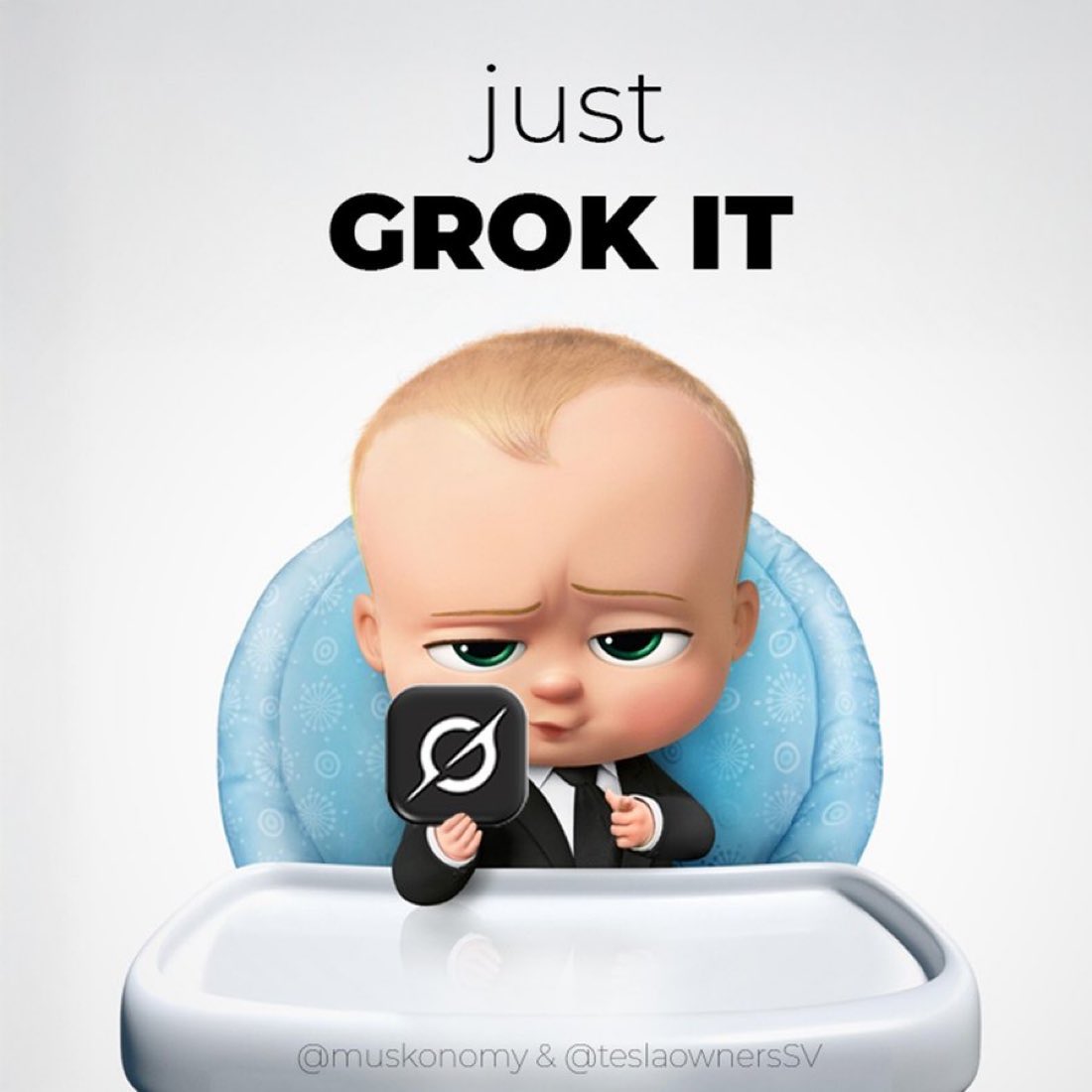
Enter Grok, the AI sidekick from xAI, and Twitter’s chaotic brilliance gets a turbo boost. Grok doesn’t just scroll the endless feed—it curates it, cutting through the noise to deliver insights tailored to your interests. Since integrating Grok, my Twitter stream has become a goldmine of relevant ideas, conversations, and perspectives. It’s like having a personal librarian for the internet’s most vibrant library.
Grok’s ability to analyze posts, profiles, and trends means it can surface the signal in the noise. Whether you’re into quantum computing, artisanal coffee, or obscure 18th-century literature, Grok helps Twitter become a bespoke experience. It’s not just about following accounts—it’s about discovering the conversations that matter to you, even if they’re happening in the platform’s farthest corners.
Finding Your Tribe, No Matter How Niche
Twitter’s greatest gift is its ability to connect you with your people, no matter how specific your passions. Love discussing the ethics of AI in sci-fi? There’s a community for that. Obsessed with rare deep-sea creatures? Yep, they’re tweeting too. Twitter’s scale—millions of voices, all in one place—means no niche is too small. The character limit keeps these conversations accessible; you don’t need to wade through essays to find your tribe.
Grok amplifies this. By analyzing posts and profiles, it points you to users who share your quirks. I’ve stumbled across accounts debating the finer points of procedural generation in video games or the history of sourdough starters—topics I didn’t even know I cared about until Twitter (and Grok) showed me I wasn’t alone. These connections turn Twitter into more than a platform; it’s a meeting ground for minds that might never cross paths otherwise.
The Brainstorm Never Stops
Twitter’s magic lies in its relentless pace. It’s a 24/7 idea factory where the character limit keeps contributions sharp, Grok makes the stream smarter, and the platform’s scale ensures you’ll find your niche. It’s not perfect—misinformation and noise can creep in—but its strengths are unmatched. Twitter doesn’t just let you join the brainstorm; it invites you to shape it, one tweet at a time.
So, dive in. Tweet your wildest idea. Find your tribe. With Twitter and Grok, the world’s most dynamic brainstorming session is always just a scroll away.

Bay Bridge Therapy


Bay Bridge Therapy

therapy
is not a couch

it is steel span
and setting sun

the long inhale of the car
the hum beneath your feet
as the water flashes gold
then violet

and blood orange spills
from the speakers—
not the fruit,
but the kind that
wraps longing in synth and
lets it hover

your hands on the wheel
steady
but your chest—
light enough to float

city behind you,
or maybe ahead
who cares

the moment stretches
like the bridge itself
long and suspended
between
what you escaped
and what you haven't named yet

this is where the ache
becomes
air

this is where
you remember
you have a body
and it’s moving
forward

this is
what it feels like
to almost
feel okay.

Paul Graham: The Shape of the Essay Field

The Shape of the Essay Field If you're writing for smart people about important things, you're writing for the young. ........ Whatever you say should also be at least somewhat novel to you, however old you are. It's not an essay otherwise, because an essay is something you write to figure something out. But whatever you figure out will presumably be more of a surprise to younger readers than it is to you. ......... There's a continuum of surprise. At one extreme, something you read can change your whole way of thinking. The Selfish Gene did this to me. It was like suddenly seeing the other interpretation of an ambiguous image: you can treat genes rather than organisms as the protagonists, and evolution becomes easier to understand when you do. .......... The impact of an essay is how much it changes readers' thinking multiplied by the importance of the topic. But it's hard to do well at both. It's hard to have big new ideas about important topics. So in practice there's a tradeoff: you can change readers' thinking a lot about moderately important things, or change it a little about very important ones. But with younger readers the tradeoff shifts. There's more room to change their thinking, so there's a bigger payoff for writing about important things. ......... I knew I wanted to write for smart people about important topics. I noticed empirically that I seemed to be writing for the young. But it took me years to understand that the latter was an automatic consequence of the former. In fact I only really figured it out as I was writing this essay. .......... I'm not trying to surprise readers of any particular age; I'm trying to surprise myself. ......... E. B. White could write an essay about how to boil potatoes that ended up being full of timeless wisdom. In which case, of course, it wouldn't really be about how to boil potatoes; that would just have been the starting point.

Grok Saved Twitter. Otherwise It Was On The Loose.


Grok Saved Twitter. Otherwise It Was On The Loose.

For a platform once hailed as the global town square, Twitter was teetering on the edge of irrelevance. What had once been the beating heart of breaking news, cultural commentary, and digital movements had devolved into algorithmic sludge, chaotic moderation, and declining user trust. Then came Grok.

Grok didn’t just land on Twitter—it anchored it.

When Elon Musk announced xAI’s integration with X (formerly Twitter), skeptics rolled their eyes. After all, AI chatbots were becoming a dime a dozen. But Grok wasn’t just another chatbot. It was the first real-time, platform-native intelligence layered on top of a live social feed. It transformed Twitter from a passive consumption stream into an active dialogue engine. Users no longer scrolled mindlessly. They asked. Grok answered.

The Pre-Grok Problem

Twitter's biggest threat wasn't its competition—it was itself. Content moderation whiplash, bot infestations, and declining ad revenue painted a grim future. Twitter was becoming a digital junkyard, where good information went to die and bad information went viral. The signal-to-noise ratio was unbearable.

Without a guiding intelligence, Twitter was on the loose. Ungoverned, unfocused, and increasingly unusable.

Enter Grok: Twitter’s Taming Force

Grok became Twitter's first native content sensemaker. Not just a search tool, but a reasoning layer. Ask Grok about trending news, and it doesn’t just link to posts—it summarizes, analyzes, and contextualizes them in real time. It made Twitter usable again. For creators, researchers, news junkies, and casual users alike.

And crucially, it offered personalized insight. Grok isn’t just parsing data—it’s helping users navigate the emotional and intellectual chaos of the timeline. It translates rage bait into clarity. It turns conspiracies into questions. It is, in essence, Twitter’s first internal conscience.

Why This Saved Twitter

Grok redefined the value proposition of the platform:

  • From scroll to search

  • From react to reflect

  • From chaos to conversation

Without Grok, Twitter risked joining the graveyard of platforms that failed to evolve. Instead, it’s now poised to become the world’s first real-time, AI-augmented public square.

And Beyond…

Grok is more than a feature. It’s a prototype of what the future of social media could be—a fusion of human interaction and AI comprehension. And if Elon’s ambitions hold, Grok could be the linchpin in transforming X into an everything app, where intelligence sits at the core of every interaction.

In the end, Twitter didn’t save Grok. Grok saved Twitter. Because without it, the bird wasn’t just flailing—it was flying blind.