Pages

Friday, May 23, 2025

Just Like BYD Beat Tesla in EVs, Chinese Companies Are Poised to Win the Robot Race

Why DeepSeek Took the U.S. by Surprise — A Tale of Blind Spots and Firewalls
How BYD Is Beating Tesla at Its Own Game
Beyond Motion: How Robots Will Redefine The Art Of Movement


Just Like BYD Beat Tesla in EVs, Chinese Companies Are Poised to Win the Robot Race

In the global electric vehicle (EV) market, one fact is now undeniable: BYD has outpaced Tesla in sales and localized dominance. While Tesla popularized the electric car and transformed automotive culture, BYD quietly built scale, diversified models, leaned into affordability, and aligned with the Chinese government's industrial policy. The result? Tesla is now the disruptor being disrupted. And the same playbook suggests that China—not Silicon Valley—is the most likely epicenter of victory in the coming robotics revolution.

The Next Race: Robotics

Tesla’s pivot toward humanoid robotics with its Optimus project is ambitious, but it’s a familiar script: visionary promise, years of delays, and a very centralized, Elon-centric approach. Meanwhile, in China, a swarm of robotics startups—often backed by deep government subsidies, AI-savvy engineers, and abundant hardware manufacturing capacity—are already shipping, scaling, and integrating robots across industries.

Why China Will Likely Win the Robot Race

1. Hardware Ecosystem Advantage

Shenzhen is to robotics what Detroit was to cars in the 20th century. Chinese firms already dominate global manufacturing, sensors, and battery supply chains. When building humanoid or industrial robots, this matters more than sleek software demos. Companies like Fourier Intelligence and UBTech aren’t building robots in isolation—they're backed by an ecosystem that excels in cost-effective production.

2. Workforce and Demographic Alignment

China’s aging population and shrinking labor force create a uniquely strong demand for service and elder-care robots. This provides a massive domestic test bed, regulatory support, and incentive for rapid rollout. Where the U.S. is still debating robot ethics, Chinese companies are putting robots to work—in hospitals, warehouses, and hotels.

3. Aggressive AI + Robotics Integration

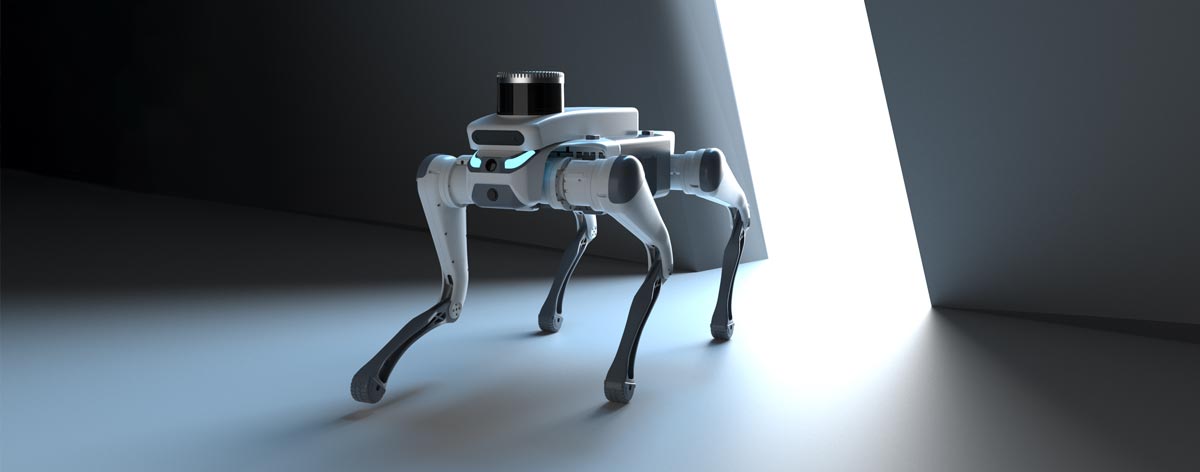
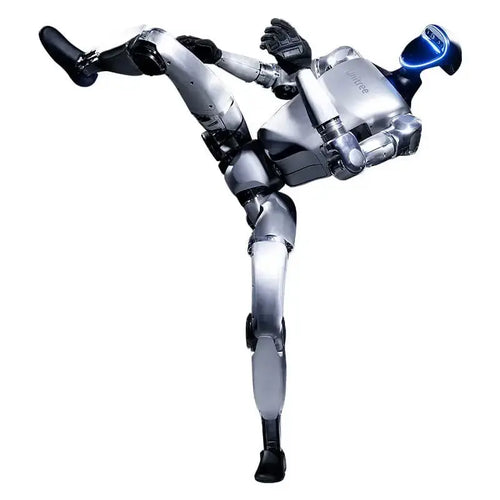
China is not just excelling in AI model development—it is integrating AI into physical systems faster. Firms like DeepRobotics, Unitree, and AgileX are already producing legged robots, warehouse bots, and quadrupeds that are rugged and field-ready, not just lab experiments. This convergence of AI + mobility is at the heart of next-gen robotics.

4. Government Policy and Industrial Planning

Unlike Tesla, which relies heavily on private capital and charismatic leadership, Chinese robot companies benefit from top-down industrial policy. Robotics is explicitly prioritized in China’s "Made in China 2025" strategy. With state-backed funding, land, and partnerships, Chinese firms scale faster with fewer roadblocks.

5. Decentralized Innovation

Tesla is a one-man vision machine. China's robotics push is decentralized, with hundreds of startups exploring everything from soft robotics to exoskeletons to factory automation. This parallel innovation model ensures faster iteration, resilience, and market fit discovery.

A BYD Moment in Robotics?

Just as BYD wasn’t the flashiest name in EVs but quietly became the largest, the next global robot leader may not be the loudest or most hyped. It may be a company that focuses on delivering affordable, useful robots at scale—backed by China’s unmatched manufacturing muscle and AI integration.

Tesla sparked the imagination. But just like BYD built the real EV empire, a Chinese robotics company may soon be doing the same with humanoids, quadrupeds, and autonomous machines.

In the robot wars of the 2030s, don’t be surprised if the victor speaks Mandarin.


Thursday, May 22, 2025

BYD, Tesla, And Self-Driving

 BYD God's Eye More Advanced Than Tesla Full Self Driving (FSD ...

In the rapidly evolving landscape of electric vehicles (EVs), self-driving technology stands out as a pivotal frontier. Companies like Tesla and BYD are at the forefront, each charting distinct paths toward autonomous driving. This blog post delves into their approaches, compares them with other leading EV brands, and explores the current state and future prospects of self-driving technology.


BYD's Approach to Self-Driving

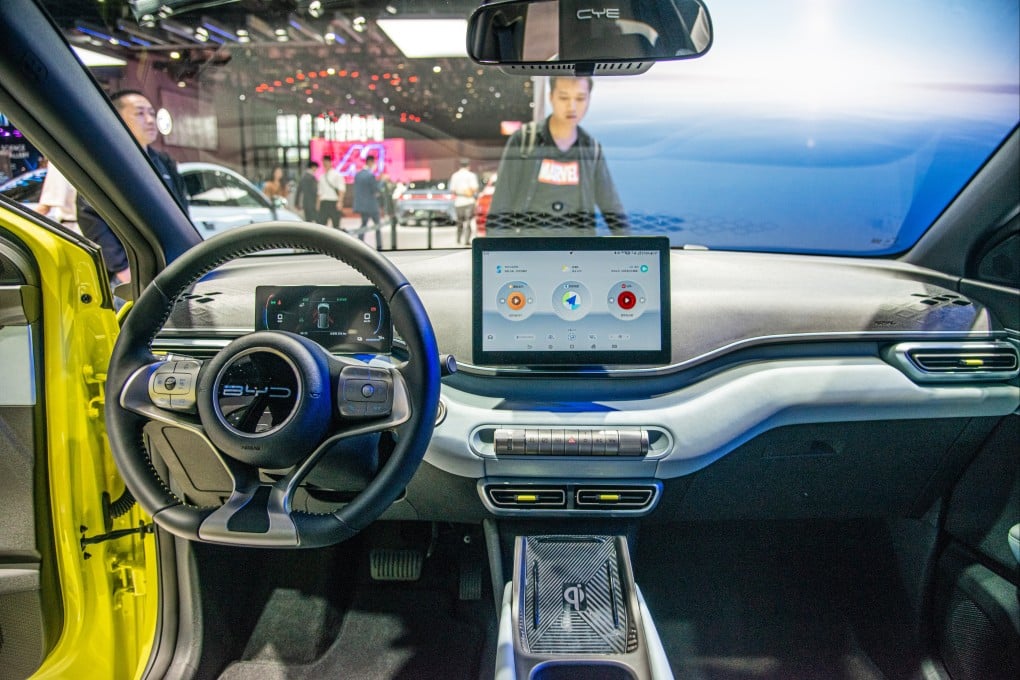
BYD, a Chinese automotive giant, has been making significant strides in integrating advanced driver-assistance systems (ADAS) into its vehicles. Their proprietary system, known as "God's Eye," offers features like lane keeping, adaptive cruise control, and automated parking. Notably, BYD has begun equipping even its most affordable models, such as the $9,500 Seagull EV, with this technology at no additional cost .(Wikipedia, Reddit)

While "God's Eye" enhances driving convenience and safety, it's essential to note that it operates at SAE Level 2 automation. This means that while the system can control steering and speed under certain conditions, the driver must remain engaged and ready to take control at all times.(Wikipedia, Wikipedia)


Tesla's Full Self-Driving (FSD) Capabilities

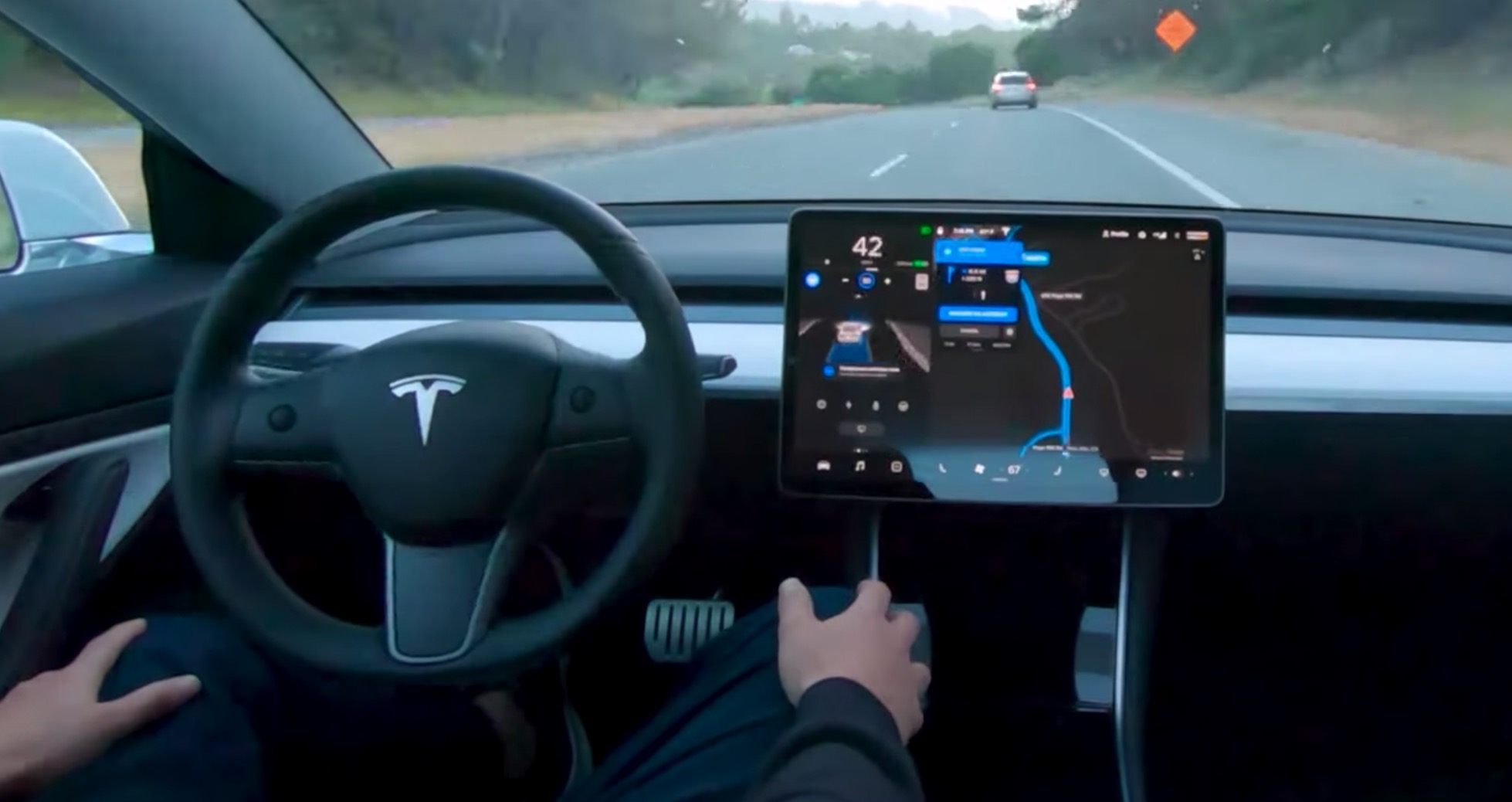
Tesla's approach to autonomous driving is encapsulated in its Full Self-Driving (FSD) system. FSD offers features such as Navigate on Autopilot, Auto Lane Change, Autopark, and Traffic Light and Stop Sign Control. Despite its name, FSD currently operates under SAE Level 2, requiring driver supervision .(Wikipedia)

Tesla continues to develop its FSD technology, with plans to launch a robotaxi service in Austin, Texas, by the end of June 2025 . This service aims to utilize a fleet of autonomous vehicles, marking a significant step toward higher levels of vehicle autonomy.(MySA)


Comparing Leading EV Brands in Self-Driving Technology

Beyond Tesla and BYD, several other EV manufacturers are advancing their self-driving technologies:

  • Mercedes-Benz: Offers Drive Pilot, a Level 3 system allowing hands-free driving under specific conditions.(Car ADAS)

  • General Motors: Features Super Cruise, enabling hands-free driving on compatible highways.

  • Ford: Provides BlueCruise, a hands-free highway driving system.(Wikipedia)

  • Nissan: Equips its Ariya model with ProPILOT Assist 2.0, facilitating hands-free highway driving .(U.S. News Cars)

These systems vary in capabilities and operational domains, reflecting different strategies toward achieving higher automation levels.


Circumstances Requiring Active Driver Engagement

Despite advancements, current self-driving systems have limitations. Drivers must remain attentive and ready to take control in situations such as:

  • Complex Urban Environments: Navigating through construction zones, unmarked roads, or areas with heavy pedestrian traffic.

  • Adverse Weather Conditions: Rain, snow, or fog can impair sensor functionality.

  • Unpredictable Road Events: Sudden obstacles, erratic behavior from other drivers, or emergency vehicles.

These scenarios underscore the importance of driver vigilance, even when advanced systems are active.


The Road Ahead: Toward Full Autonomy

Achieving full self-driving capability (SAE Level 5) remains a complex challenge. While Tesla aims to deploy a significant number of autonomous vehicles by the end of 2026 , regulatory approvals, technological hurdles, and public acceptance are critical factors influencing this timeline.(Wikipedia, AP News)

As the industry progresses, collaborations between automakers, tech companies, and regulators will be pivotal in shaping the future of autonomous driving.


In conclusion, while significant progress has been made in self-driving technology, widespread adoption of fully autonomous vehicles will depend on continued innovation, rigorous testing, and robust regulatory frameworks.


From CPUs to GPUs—And Beyond: The Evolution of Computing Power


From CPUs to GPUs—And Beyond: The Evolution of Computing Power

In the ever-accelerating world of computing, the distinctions between CPUs and GPUs have become both more pronounced and more blurred. As artificial intelligence, gaming, and data science reshape the tech landscape, the hardware driving these revolutions is evolving just as quickly. What began as a straightforward division of labor between Central Processing Units (CPUs) and Graphics Processing Units (GPUs) is now giving way to a new era of specialized chips—where AI accelerators and quantum processors are starting to make their mark.


The CPU: The Classic Workhorse

What it is:
The Central Processing Unit (CPU) is often described as the "brain" of the computer. It handles all general-purpose tasks—running the operating system, executing application code, and managing system resources.

History:

  • 1940s-1950s: Early CPUs were massive machines built from vacuum tubes.

  • 1971: Intel introduced the Intel 4004, the first commercially available microprocessor.

  • 1980s-1990s: x86 architecture from Intel and AMD took off, dominating the PC era.

  • 2000s–present: CPUs evolved to include multiple cores, integrated memory controllers, and hyper-threading.

Top Players Today:

  • Intel: Dominant in PCs and data centers for decades.

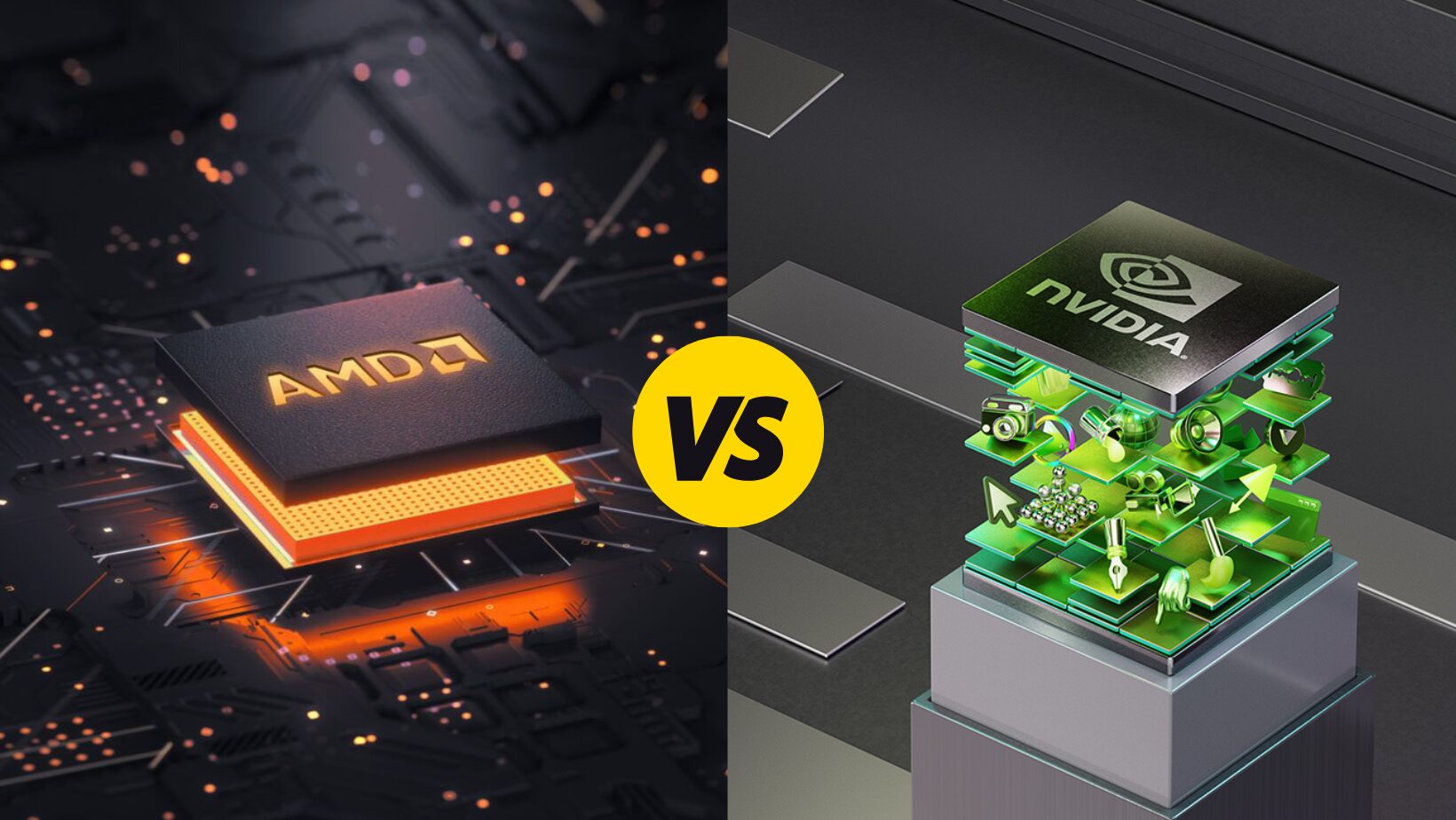
  • AMD: Competitive with its Ryzen and EPYC lines.

  • Apple: Disrupted the market with its ARM-based M1, M2, and M3 chips, integrating CPU, GPU, and neural engines.


The GPU: Parallel Power for the Data Age

What it is:
Originally designed to render graphics, the Graphics Processing Unit (GPU) specializes in parallel processing—performing thousands of calculations simultaneously, making it perfect for graphics and, later, machine learning.

History:

  • 1999: NVIDIA introduced the GeForce 256, the first GPU marketed as such.

  • 2006: With the launch of CUDA, NVIDIA enabled developers to use GPUs for general-purpose computing.

  • 2010s–present: GPUs became essential for deep learning, gaming, video editing, and cryptocurrency mining.

Top Players Today:

  • NVIDIA: Unquestionably dominant in AI and high-performance computing.

  • AMD: Known for Radeon GPUs and increasing traction in data centers.

  • Intel: Entered the GPU market with Arc and Xe products.


The Present and Future: What Comes After GPUs?

As demand for computing power explodes—fueled by AI, big data, and simulation—the industry is moving beyond general-purpose CPUs and GPUs to even more specialized hardware:


1. AI Accelerators / Neural Processing Units (NPUs)

Purpose: Tailored for machine learning tasks like training neural networks or running inference models.

Key Players:

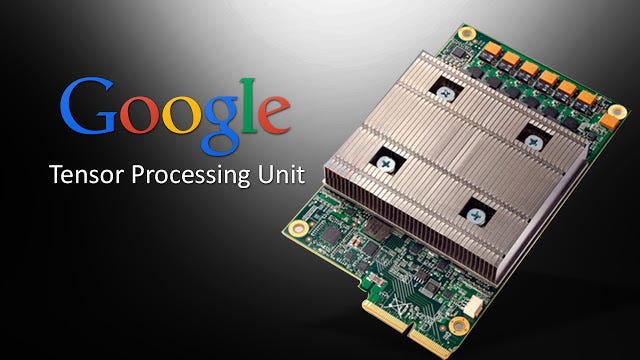
  • Google: Tensor Processing Units (TPUs), powering Google Search and Google Cloud AI.

  • Apple: Neural engines in its M-series chips optimize on-device AI.

  • Tesla: Dojo supercomputer for self-driving AI.

  • Amazon: Inferentia and Trainium chips for AWS cloud AI workloads.


2. FPGAs and ASICs

Field Programmable Gate Arrays (FPGAs): Flexible hardware you can program for specific tasks.

Application-Specific Integrated Circuits (ASICs): Hard-wired chips for ultra-efficient task execution, like Bitcoin mining or edge AI.

Key Players:

  • Intel (Altera): Leader in FPGAs.

  • Xilinx (AMD): Competes with high-performance programmable logic.

  • Bitmain: Dominates ASIC-based crypto mining.


3. Quantum Processors

Still in early stages, quantum computing promises to outperform classical systems in certain tasks like optimization, chemistry simulations, and encryption.

Key Players:

  • IBM: Quantum roadmap to 1,000+ qubits.

  • Google: Achieved “quantum supremacy” in 2019.

  • D-Wave: Specializes in quantum annealing for optimization.


4. Optical and Photonic Computing

Computing using light instead of electricity, offering faster speeds and lower power consumption.

Key Players:

  • Lightmatter, Ayar Labs, and Intel’s photonic research labs are pioneering this frontier.


The Convergence: Heterogeneous Computing

The future isn’t about CPUs vs. GPUs—it’s about everything working together. Apple’s M-series chips already integrate CPUs, GPUs, and NPUs on a single SoC (system on chip). Cloud giants like Google and Amazon are optimizing workloads by dynamically routing tasks to the most efficient hardware: CPU for logic, GPU for parallelism, TPU for deep learning, and FPGA for real-time edge inferencing.


Conclusion: Silicon Is Just the Start

We are entering a post-Moore’s Law world, where architecture innovation matters more than raw transistor count. The real breakthroughs will come from custom silicon, hardware-software co-design, and new physics.

The CPU isn’t dead. The GPU isn’t obsolete. But the age of hyper-specialized computing is upon us—and what comes next will be as much about use case and context as about raw performance.


Which chip will power your future? The answer is: all of them. Seamlessly. Invisibly. Intelligently. Welcome to the era of compute convergence.


22: Harvard

Rethinking Trade: A Blueprint for a Just and Thriving Global Economy
The $500 Billion Pivot: How the India-US Alliance Can Reshape Global Trade
Trump’s Trade War
Peace For Taiwan Is Possible
Formula For Peace In Ukraine
The Last Age of War, The First Age of Peace: Lord Kalki, Prophecies, and the Path to Global Redemption
AOC 2028: : The Future of American Progressivism

Velocity Money: Crypto, Karma, and the End of Traditional Economics
The Next Decade of Biotech: Convergence, Innovation, and Transformation
Beyond Motion: How Robots Will Redefine The Art Of Movement
ChatGPT For Business: A Workbook
Becoming an AI-First Organization
Quantum Computing: Applications And Implications
Challenges In AI Safety
AI-Era Social Network: Reimagined for Truth, Trust & Transformation

Velocity Money: Crypto, Karma, and the End of Traditional Economics
The Next Decade of Biotech: Convergence, Innovation, and Transformation
Beyond Motion: How Robots Will Redefine The Art Of Movement
ChatGPT For Business: A Workbook
Becoming an AI-First Organization
Quantum Computing: Applications And Implications
Challenges In AI Safety
AI-Era Social Network: Reimagined for Truth, Trust & Transformation

Velocity Money: Crypto, Karma, and the End of Traditional Economics
The Next Decade of Biotech: Convergence, Innovation, and Transformation
Beyond Motion: How Robots Will Redefine The Art Of Movement
ChatGPT For Business: A Workbook
Becoming an AI-First Organization
Quantum Computing: Applications And Implications
Challenges In AI Safety
AI-Era Social Network: Reimagined for Truth, Trust & Transformation

Rethinking Trade: A Blueprint for a Just and Thriving Global Economy
The $500 Billion Pivot: How the India-US Alliance Can Reshape Global Trade
Trump’s Trade War
Peace For Taiwan Is Possible
Formula For Peace In Ukraine
The Last Age of War, The First Age of Peace: Lord Kalki, Prophecies, and the Path to Global Redemption
AOC 2028: : The Future of American Progressivism