
Edge AI. Living on the edge. Not connected to the Internet, not to any server.
— Paramendra Kumar Bhagat (@paramendra) March 12, 2026
Edge AI + IOT (Internet Of Things).
— Paramendra Kumar Bhagat (@paramendra) March 12, 2026
Edge AI Meets IoT: The Dawn of Decentralized IntelligenceOn March 12, 2026, a brief but powerful exchange unfolded on X. In response to the idea that “Decentralized intelligence is the future. Your AI. Owned by you,” one user distilled it perfectly: “Edge AI. Living on the edge. Not connected to the Internet, not to any server.” The follow-up was even more concise: “Edge AI + IOT (Internet Of Things).”
These three tweets capture a seismic shift happening right now. Edge AI — artificial intelligence that runs locally on devices rather than in distant cloud servers — is merging with the Internet of Things (IoT). The result is a new generation of intelligent, private, and resilient systems that finally deliver on the promise of technology you truly own.What Is Edge AI?Traditional AI sends data to massive cloud data centers for processing. Edge AI flips the script: it runs lightweight AI models directly on the device where the data is created — a smartphone, a factory sensor, a security camera, or even a smart thermostat. No round-trip to the cloud. No constant internet connection required.
This “living on the edge” approach slashes latency to milliseconds, preserves bandwidth, and keeps sensitive data on the device itself.What Is IoT?IoT is the network of billions of physical objects — sensors, cameras, wearables, industrial machines — embedded with connectivity so they can collect and exchange data. Alone, most IoT devices are “dumb”: they gather information and ship it elsewhere for decisions.Edge AI + IoT = AIoT: Intelligence at the SourceWhen you combine the two, IoT devices stop being passive data collectors. They become active thinkers. Sensors process data locally, run AI inference in real time, and make decisions on the spot. This fusion is often called AIoT (AI + IoT), and in 2026 it is moving from pilot projects to mainstream deployment. Here’s a clear visual of the difference:
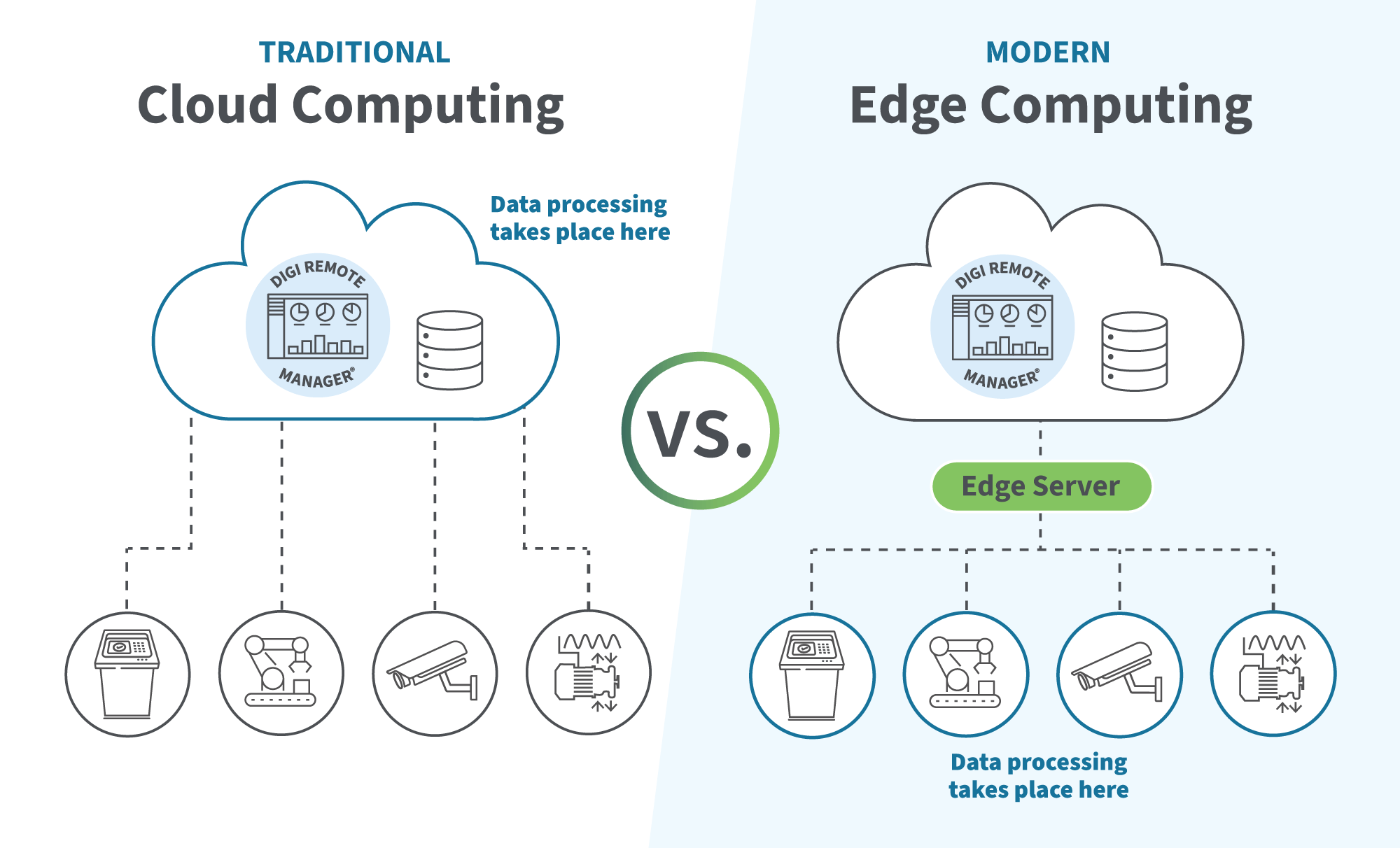
Traditional cloud computing sends everything upward. Modern edge computing processes data where it lives — dramatically faster, cheaper, and more private.Why This Matters: The Key Benefits
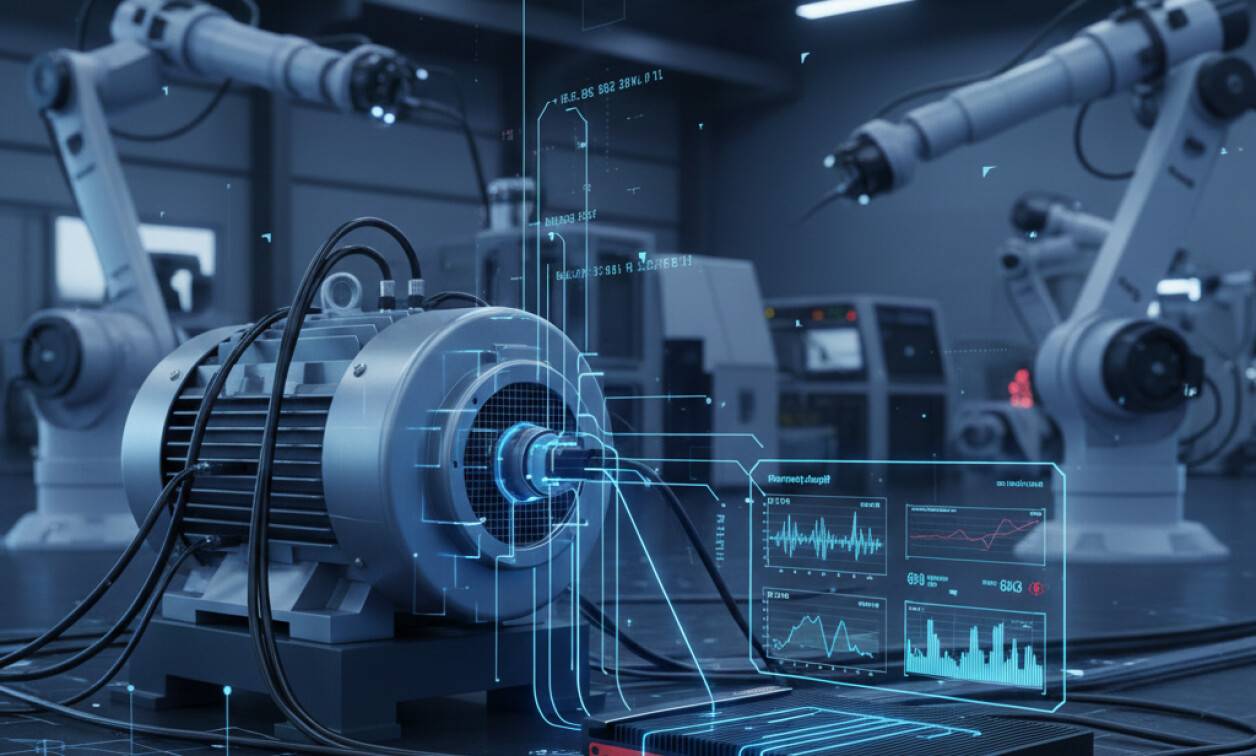
Factories are deploying edge AI for predictive maintenance. Vibration sensors on motors run tiny AI models that detect anomalies instantly and schedule repairs before breakdowns occur. One factory floor can monitor thousands of machines without flooding the cloud.
Smart Homes
Security cameras now analyze video locally to detect people or packages without streaming raw footage to the cloud. Voice assistants respond instantly even if your internet is down. Thermostats learn your habits and adjust in real time.

Healthcare Wearables
Glucose monitors or ECG patches run AI models on-device to detect irregularities immediately and alert the user — without waiting for cloud approval.
Autonomous Vehicles and Retail
Self-driving cars make split-second decisions at the edge. Smart retail shelves use on-device vision AI to track inventory and prevent theft in real time.Challenges and the Road AheadEdge devices still have limited compute power and memory, so developers rely on tiny, efficient models (often called Small Language Models or SLMs) and specialized hardware like NPUs (Neural Processing Units). Security at the edge also requires new approaches — protecting thousands of distributed devices instead of one central server.
Yet 2026 is widely seen as the inflection year. Hardware has finally caught up, cloud costs keep rising, and privacy regulations are tightening. Edge AI IoT devices are moving from experiments into mass-market product lines across industries. The Bigger Picture: Your AI, Owned by YouThe original tweet thread nailed the deeper meaning. When AI lives on your devices — powered by Edge AI + IoT — it stops belonging to big tech cloud providers. It becomes your intelligence: private, always available, and under your control. This is decentralized intelligence made real.
As one industry report put it, edge AI is where “AI becomes personal, contextual, and owned.”
The three tweets posted today weren’t just clever one-liners. They were a glimpse of the future already arriving: intelligence that lives where life happens — on the edge, inside the Internet of Things, and ultimately in your hands.
These three tweets capture a seismic shift happening right now. Edge AI — artificial intelligence that runs locally on devices rather than in distant cloud servers — is merging with the Internet of Things (IoT). The result is a new generation of intelligent, private, and resilient systems that finally deliver on the promise of technology you truly own.What Is Edge AI?Traditional AI sends data to massive cloud data centers for processing. Edge AI flips the script: it runs lightweight AI models directly on the device where the data is created — a smartphone, a factory sensor, a security camera, or even a smart thermostat. No round-trip to the cloud. No constant internet connection required.
This “living on the edge” approach slashes latency to milliseconds, preserves bandwidth, and keeps sensitive data on the device itself.What Is IoT?IoT is the network of billions of physical objects — sensors, cameras, wearables, industrial machines — embedded with connectivity so they can collect and exchange data. Alone, most IoT devices are “dumb”: they gather information and ship it elsewhere for decisions.Edge AI + IoT = AIoT: Intelligence at the SourceWhen you combine the two, IoT devices stop being passive data collectors. They become active thinkers. Sensors process data locally, run AI inference in real time, and make decisions on the spot. This fusion is often called AIoT (AI + IoT), and in 2026 it is moving from pilot projects to mainstream deployment. Here’s a clear visual of the difference:
Traditional cloud computing sends everything upward. Modern edge computing processes data where it lives — dramatically faster, cheaper, and more private.Why This Matters: The Key Benefits
- Near-zero latency — Critical for autonomous vehicles, robotic arms, or medical monitors that must react in milliseconds.
- Privacy and security — Data never leaves the device (or your local network). No more feeding sensitive health, factory, or home data to distant servers.
- Bandwidth and cost savings — Only summaries or exceptions travel to the cloud, slashing connectivity bills and reducing network congestion.
- Offline resilience — Devices keep working during internet outages — a game-changer for remote sites, disaster zones, or developing regions.
- Energy efficiency and sustainability — Local processing often uses far less power than constant cloud uploads.
Factories are deploying edge AI for predictive maintenance. Vibration sensors on motors run tiny AI models that detect anomalies instantly and schedule repairs before breakdowns occur. One factory floor can monitor thousands of machines without flooding the cloud.
Smart Homes
Security cameras now analyze video locally to detect people or packages without streaming raw footage to the cloud. Voice assistants respond instantly even if your internet is down. Thermostats learn your habits and adjust in real time.
Healthcare Wearables
Glucose monitors or ECG patches run AI models on-device to detect irregularities immediately and alert the user — without waiting for cloud approval.
Autonomous Vehicles and Retail
Self-driving cars make split-second decisions at the edge. Smart retail shelves use on-device vision AI to track inventory and prevent theft in real time.Challenges and the Road AheadEdge devices still have limited compute power and memory, so developers rely on tiny, efficient models (often called Small Language Models or SLMs) and specialized hardware like NPUs (Neural Processing Units). Security at the edge also requires new approaches — protecting thousands of distributed devices instead of one central server.
Yet 2026 is widely seen as the inflection year. Hardware has finally caught up, cloud costs keep rising, and privacy regulations are tightening. Edge AI IoT devices are moving from experiments into mass-market product lines across industries. The Bigger Picture: Your AI, Owned by YouThe original tweet thread nailed the deeper meaning. When AI lives on your devices — powered by Edge AI + IoT — it stops belonging to big tech cloud providers. It becomes your intelligence: private, always available, and under your control. This is decentralized intelligence made real.
As one industry report put it, edge AI is where “AI becomes personal, contextual, and owned.”
The three tweets posted today weren’t just clever one-liners. They were a glimpse of the future already arriving: intelligence that lives where life happens — on the edge, inside the Internet of Things, and ultimately in your hands.
Federated Learning in Edge AI: Collaborative Intelligence Without Compromising Privacy
In the world of Edge AI + IoT we explored earlier, devices finally think for themselves — processing data locally for speed, efficiency, and ownership. But one missing piece was how these scattered devices could learn together and get smarter over time without shipping sensitive data to the cloud. That piece is Federated Learning (FL).
FL is the privacy-first training method that turns millions of edge devices into a decentralized university. Each device studies its own local data, shares only tiny model updates, and together they build one powerful global AI model. By 2026, FL has become the standard way to scale Edge AI across IoT networks while keeping data where it belongs — on your device. How Federated Learning Actually Works on the EdgeHere’s the process in a typical Edge AI + IoT setup:
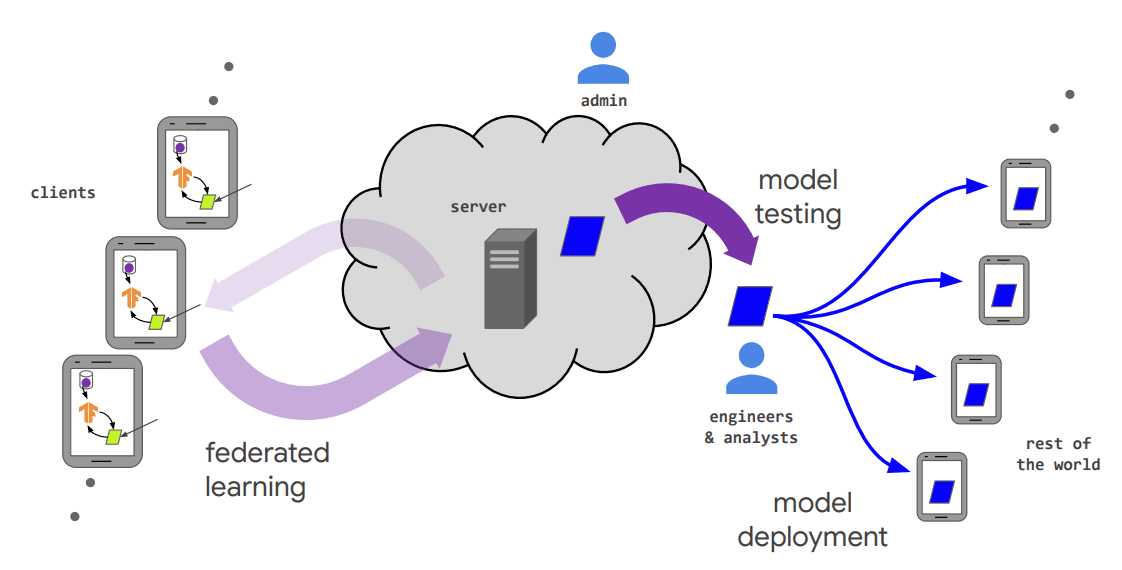
Clients (edge devices) train locally → send updates to the server → global model is improved and redeployed. No raw data ever moves.
Variants in 2026 include:
Key Benefits
Factories use FL so vibration sensors on machines train anomaly-detection models locally. Each factory keeps its proprietary data private, yet the global model gets smarter across thousands of sites. Recent 2025–2026 papers show FL + Edge AI delivering real-time failure prediction with lower latency and energy use.
Healthcare & Wearables
ECG patches or glucose monitors train personalized models on your body’s data. Hospitals collaborate across institutions without sharing patient records. FL enables continuous improvement while keeping health data strictly local.
Smart Cities & Autonomous Systems
Traffic cameras and vehicle sensors collaboratively train object-detection models. Cities reduce congestion and improve safety without streaming raw footage to the cloud.
Consumer IoT
Voice assistants and security cameras learn your habits locally and improve collectively across millions of homes — all while your conversations and video stay private.
Recent X discussions in early 2026 highlight exactly this progression: IoT sensors → Edge AI → Federated Learning → Predictive, self-healing systems. Challenges (and How 2025–2026 Solved Them)FL isn’t magic — it has real hurdles, especially at the resource-constrained edge:
We’re already seeing production deployments in IIoT, healthcare, and smart infrastructure. As 6G rolls out and tiny NPUs become standard, expect FL-powered Edge AI to become invisible infrastructure — quietly making every connected device smarter, safer, and more private.
Federated Learning isn’t just a technique. In the Edge AI + IoT era, it’s the mechanism that finally makes decentralized intelligence real. The future isn’t data in the cloud. It’s intelligence everywhere — trained together, but never shared.
In the world of Edge AI + IoT we explored earlier, devices finally think for themselves — processing data locally for speed, efficiency, and ownership. But one missing piece was how these scattered devices could learn together and get smarter over time without shipping sensitive data to the cloud. That piece is Federated Learning (FL).
FL is the privacy-first training method that turns millions of edge devices into a decentralized university. Each device studies its own local data, shares only tiny model updates, and together they build one powerful global AI model. By 2026, FL has become the standard way to scale Edge AI across IoT networks while keeping data where it belongs — on your device. How Federated Learning Actually Works on the EdgeHere’s the process in a typical Edge AI + IoT setup:
- A central server (or edge aggregator) broadcasts an initial global model to participating devices.
- Each device (phone, sensor, camera, industrial machine) trains the model locally using only its own private data.
- Instead of sending raw data, the device sends back only the model updates (weights or gradients).
- The server aggregates these updates (classically using FedAvg — Federated Averaging) into an improved global model.
- The updated model is sent back to devices for the next round.
Clients (edge devices) train locally → send updates to the server → global model is improved and redeployed. No raw data ever moves.
Variants in 2026 include:
- Decentralized / Peer-to-Peer FL (no single server — devices talk directly)
- Split Federated Learning (part of the model lives on-device, part on a nearby edge server)
- Hierarchical FL (edge servers aggregate first, then send to cloud)
Key Benefits
- Privacy by design — Raw data stays on-device. Ideal for healthcare wearables, smart homes, or factory floors. Complies with GDPR and emerging 2026 regulations.
- Dramatically lower bandwidth — Only model updates (kilobytes) are sent, not gigabytes of video or sensor streams. Communication costs drop 25%+ in recent frameworks.
- Continuous, real-world learning — Models improve from diverse, real-time edge data (non-IID data from different users/devices).
- Offline resilience — Devices can keep training and inferring even when disconnected.
- Scalability — Works for billions of IoT devices without massive cloud bills.
Factories use FL so vibration sensors on machines train anomaly-detection models locally. Each factory keeps its proprietary data private, yet the global model gets smarter across thousands of sites. Recent 2025–2026 papers show FL + Edge AI delivering real-time failure prediction with lower latency and energy use.
Healthcare & Wearables
ECG patches or glucose monitors train personalized models on your body’s data. Hospitals collaborate across institutions without sharing patient records. FL enables continuous improvement while keeping health data strictly local.
Smart Cities & Autonomous Systems
Traffic cameras and vehicle sensors collaboratively train object-detection models. Cities reduce congestion and improve safety without streaming raw footage to the cloud.
Consumer IoT
Voice assistants and security cameras learn your habits locally and improve collectively across millions of homes — all while your conversations and video stay private.
Recent X discussions in early 2026 highlight exactly this progression: IoT sensors → Edge AI → Federated Learning → Predictive, self-healing systems. Challenges (and How 2025–2026 Solved Them)FL isn’t magic — it has real hurdles, especially at the resource-constrained edge:
- Heterogeneous devices — Phones vs. tiny sensors have wildly different compute power and data distributions.
Solution: Lightweight models, adaptive aggregation, and hardware-software co-design now common in 2026 deployments. - Communication overhead & stragglers — Slow or intermittent devices slow everyone down.
Solution: Compression, selective participation, and edge-cloud hierarchies cut costs dramatically. - Privacy leaks via model updates — Sophisticated attacks can sometimes reverse-engineer data.
Solution: Differential privacy, secure aggregation, and even blockchain for tamper-proof updates. - Model accuracy on non-IID data — Real edge data is messy.
Solution: New frameworks (FedACS, RaFed, etc.) deliver 10–15% accuracy gains while optimizing resources.
We’re already seeing production deployments in IIoT, healthcare, and smart infrastructure. As 6G rolls out and tiny NPUs become standard, expect FL-powered Edge AI to become invisible infrastructure — quietly making every connected device smarter, safer, and more private.
Federated Learning isn’t just a technique. In the Edge AI + IoT era, it’s the mechanism that finally makes decentralized intelligence real. The future isn’t data in the cloud. It’s intelligence everywhere — trained together, but never shared.

No comments:
Post a Comment